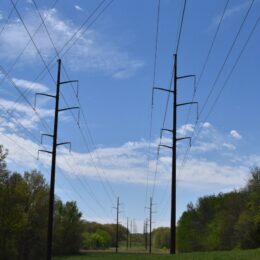
One of the ways Kosciusko REMC has been investing in the local community is through the EnviroWatts Grant Program. Members who choose to participate donate 1 cent per kilowatt-hour they use, up to $7.50 per member per month. This makes up the EnviroWatts fund, which provides grants to local nonprofit organizations improving the environment in Kosciusko County and the surrounding area. These kilowatt hours are also guaranteed to be generated from a renewable, environmentally preferred source, thanks to our partnership with Wabash Valley Power Alliance.
Last year, we awarded grants to seven non-profit organizations for a variety of projects, from educating students about environmental issues to planting trees. Here is a glimpse of two projects completed last year.
Tree-rific campus
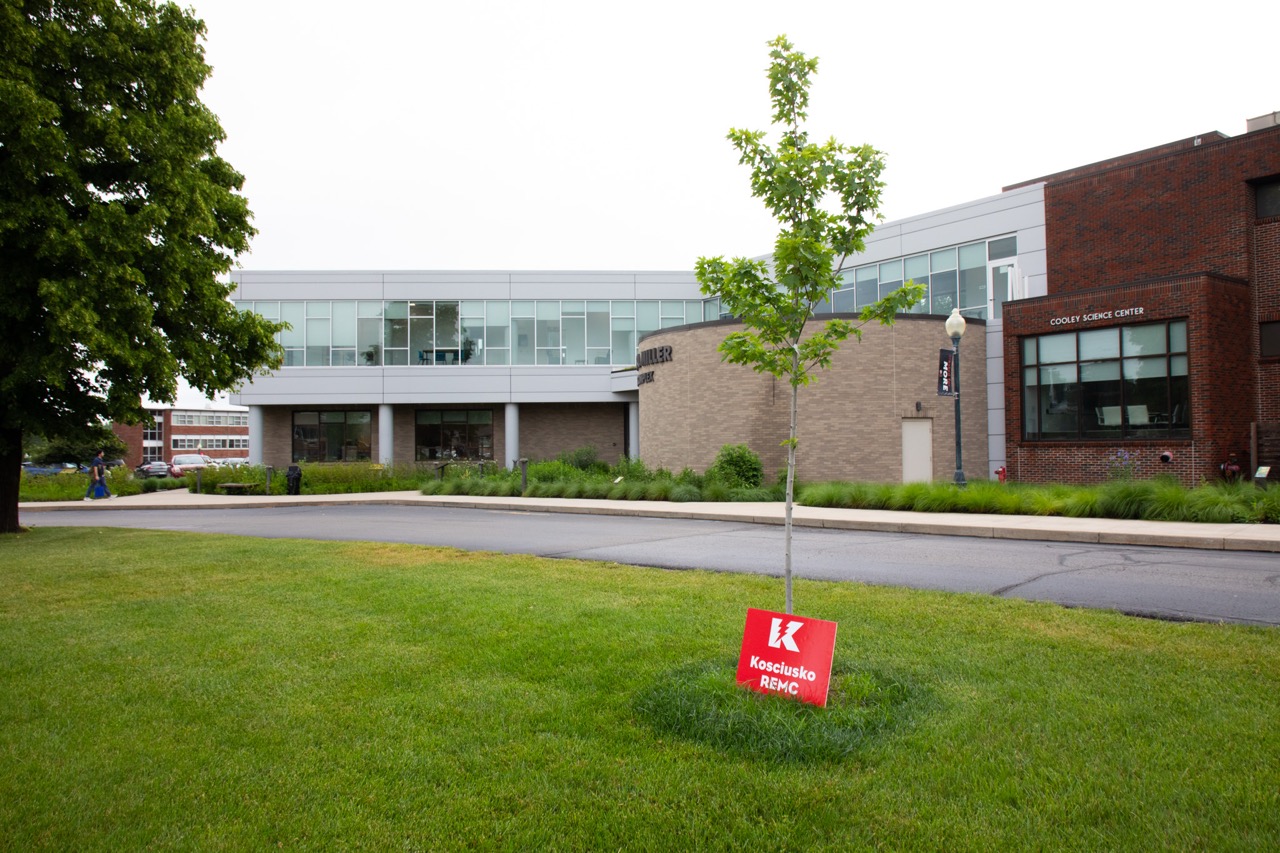
Last year, The Lily Center for Lakes & Streams received a grant for a tree planting initiative on the Grace College campus. This project was led by a student environmental group created through the Lily Center for Lakes & Streams. Their ultimate goal is to plant all 101 native Indiana tree species on campus. The funds from the EnviroWatts grant were used to plant eight trees total, with species including Allegheny Serviceberry, Black Gum, Chinkapin Oak, Autumn Blaze Maple, Yellowwood, and White Oak. To date, 45 native tree species are growing on the Grace College campus.
This process requires careful planning and a staggered approach to create a range of trees of different ages across campus. This allows for more sustainable removable and replacement later on down the road. These students’ hard work has paid off, as Grace College campus has been recognized by the Arbor Day Foundation as a Tree Campus, along with 16 other universities in the state of Indiana.
Composting in Claypool
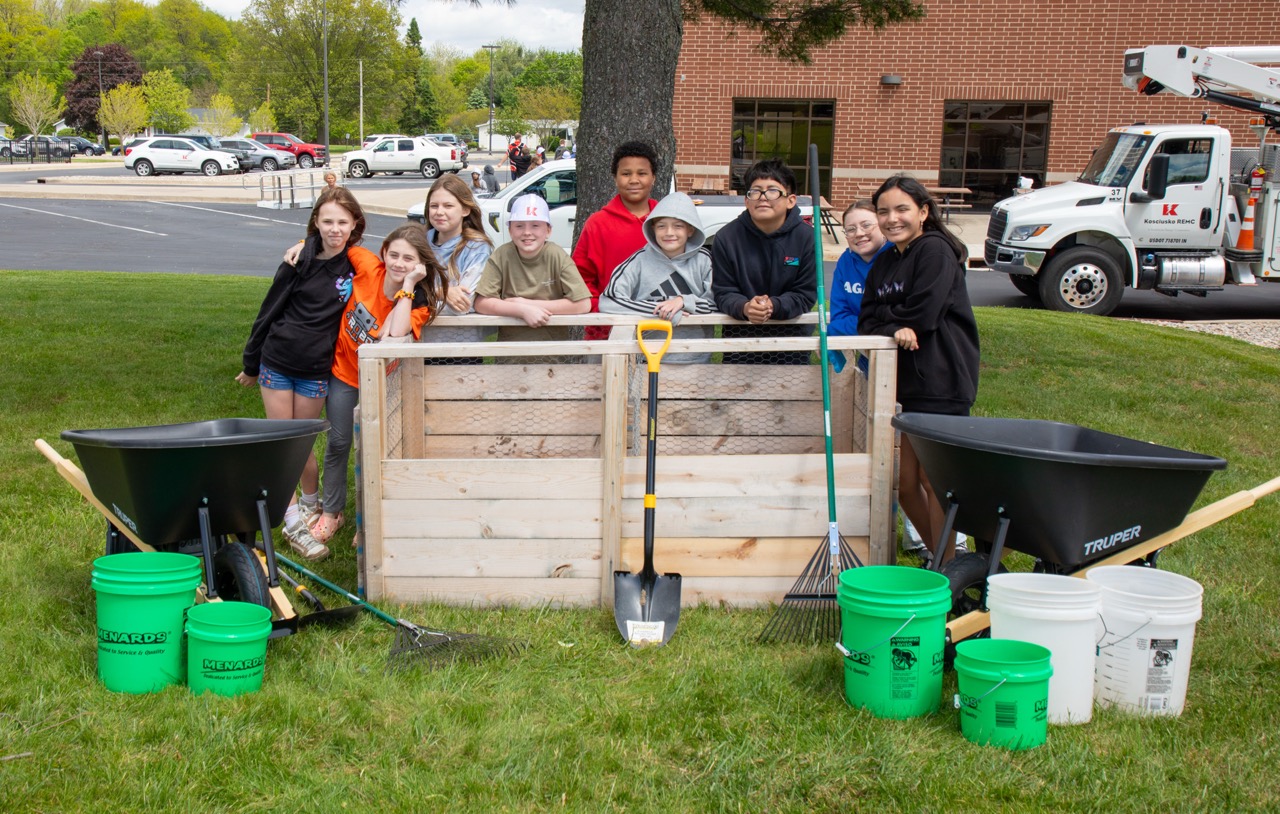
This past school year, Claypool Elementary School received an EnviroWatts grant to launch a student-led composting initiative that promotes responsibility and hands-on learning. The fifth-grade students built and maintained a compost bin, learning construction tasks like sawing, drilling, and stapling chicken wire along the way. The school cafeteria will now collect organic food scraps, such as banana peels and apple cores, to add to the compost bin, and maintenance will also add leaves and grass clippings. Eventually, this compost will be used in the second-graders pollinator garden at the school. This project taught students real-world problem-solving and a practical way to recycle and care for the environment.
If you are a KREMC member who wants to contribute to this program, or if you are a non-profit organization that would like to apply for an EnviroWatts grant, visit kremc.com/community/envirowatts-program to learn more.