By Brian D. Smith
Leanna Rotondo didn’t set out to prove there was a need for her new product. A varsity soccer player at Charlestown High School, she drew on her own experience to create soccer socks with more grip and less slip — features designed to enhance performance and reduce the odds of serious injury.
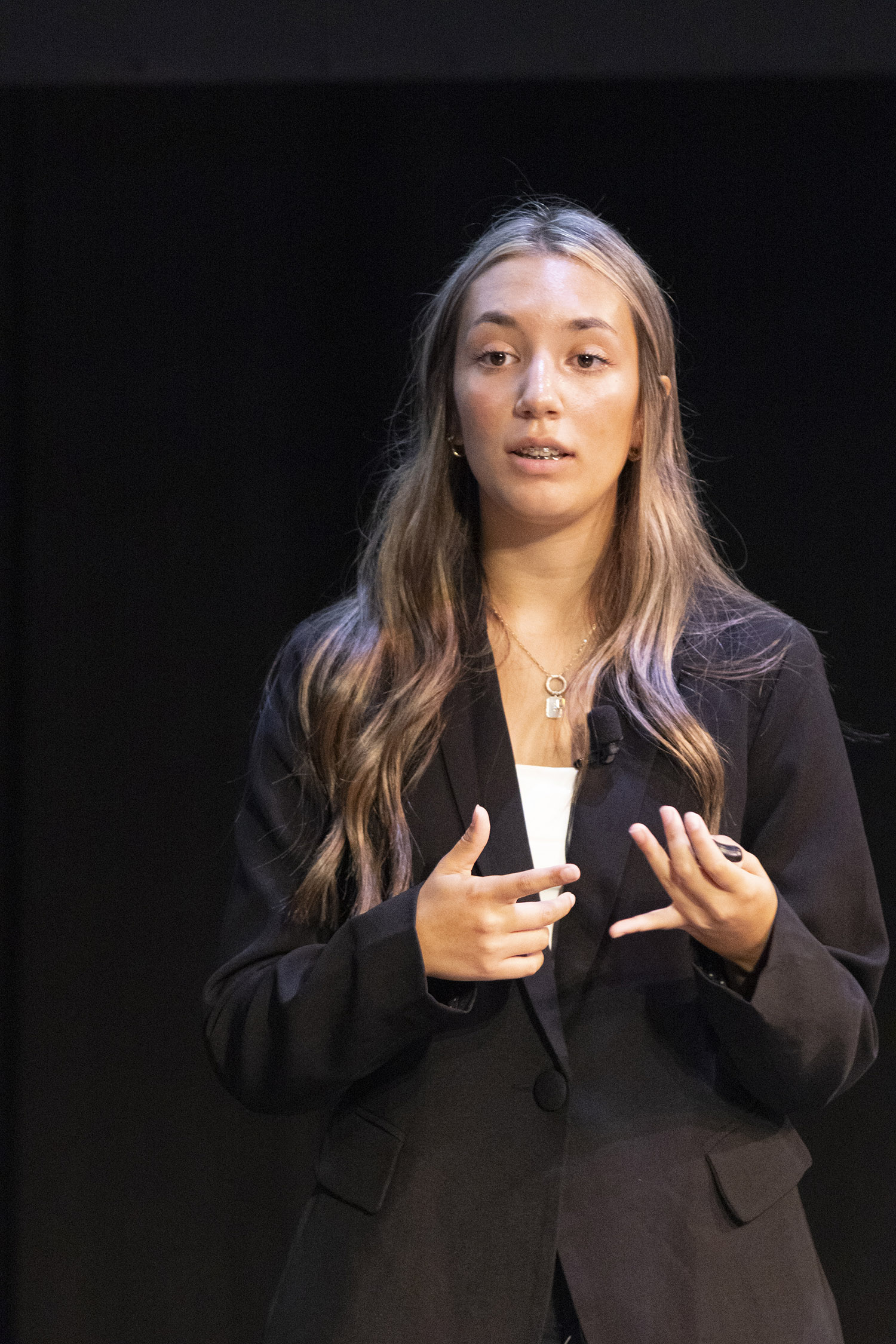
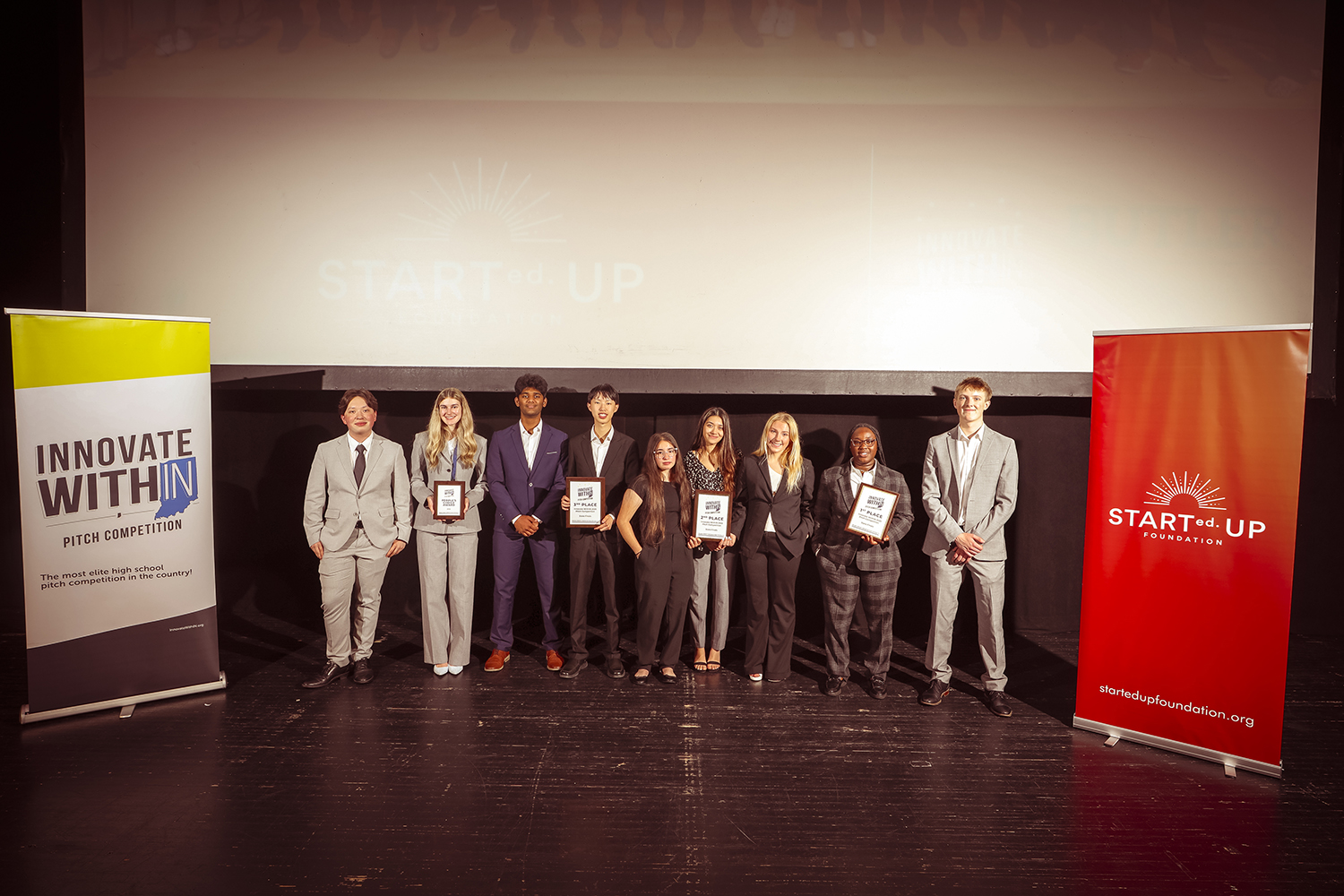
Known as GripGuard Soccer Sox, her January 2025 innovation landed Rotondo in the state finals of the STARTedUP Foundation’s annual entrepreneurial pitch competition, where high school students present their original products and services in a format reminiscent of TV’s “Shark Tank.” Though Rotondo finished outside the top three (and the accompanying seed money awards of $2,500 to $25,000), her soccer socks garnered positive feedback and interest — along with a finalist prize of $1,000 to refine the idea.
Then, two months after the June finals, she inadvertently demonstrated why her product — “created to prevent horrendous and career-changing injuries,” according to her promotional video — should perhaps have already been on the market. During a soccer game, Rotondo suffered a rotational fracture of her left fibula, the smaller of two bones between the knee and ankle. “I planted my foot in the ground, and it slid inside my cleat,” she said. “It was pretty gnarly.” The injury required surgery and six months of recuperation — but fortunately didn’t cost her a promised full scholarship from Berea College, an NCAA Division III school in Kentucky.
A new movement in education
If Indiana seems an unlikely place for an event billed as “the nation’s premier high school entrepreneurial pitch competition,” that’s only the most visible part of the picture. In 2018, veteran educator Don Wettrick and former student Hunter Stone formed the non-profit STARTedUP Foundation to promote youth entrepreneurship. Wettrick, the current CEO, envisioned a new movement in education. Rather than merely reading textbooks, memorizing answers, and passing tests, high school students would identify real-world problems and devise solutions.
The need for such an approach was evident. “I was hearing from employers that were hiring students who couldn’t get off the phone and who couldn’t think independently,” he said. “They wanted employees to take initiative and not wait around for instructions … employees who were looking for problems to solve.”
So Wettrick resolved to solve the problem of not enough problem-solvers.
He founded STARTedUP with the intent of turning high school classrooms into “innovation hubs … where real-world problem-solving, creativity, and entrepreneurial mindsets become integrated into daily learning,” as the STARTedUP website explains. Eight years later, the Indiana-based program has reached about 22,000 students and 190 teachers in 168 schools. They represent 62 counties, more than two-thirds of the state’s 92.
STARTedUP invites high school teachers to sign up for its free Innovation Accelerator program, which begins with six core lessons, such as “Observing and identifying problems in local communities.” Said Wettrick: “Our whole mission is to get students to see problems as opportunities.”
Although entrepreneurship is traditionally associated with business courses, teachers from any subject area may enroll. “Teachers know more people in their community than almost anyone,” said Wettrick. “They are the conduit of real change and innovation in their schools and towns. What we’ve built with the Innovation Accelerator is a massive network that wants to pour time, attention, and connection into our educators.”
The foundation wants young entrepreneurs to “develop crucial life skills — from critical thinking and resilience to communication and collaboration.” Students meet and learn from local business leaders, public officials, industry professionals, and special guests. Last year, for instance, STARTedUP hosted a simulcast for Indiana high schools featuring Jesse Cole, founder of the Savannah Bananas, a barnstorming exhibition baseball team whose wacky on-field antics follow the tradition of basketball’s Harlem Globetrotters.
Wettick likes to say that “the world is full of moaners and groaners. I wanted to create seekers and peekers.” In his view, “seekers” hear other people’s complaints and envision solutions, while “peekers” look beyond today and anticipate future trends and developments.
Students who exemplify the qualities of “seekers and peekers” often find their way to the regionals and state finals of the pitch competition, now known as the STARTedUP Challenge. But the Challenge is not the sole measure of a student’s entrepreneurial aptitude, said Wettrick. “We have a lot of success from students that didn’t even make it to the finals,” he noted. “They took an idea, saw it through, got shot down, and that’s OK. They built a network, and that’s the most important thing you can do.”
Hoosier high schoolers, who can compete solo or in a two- or three-member team, enter the Challenge by submitting a four-minute video chronicling a problem they’ve identified and the solution they propose. Over 2,000 students, in over 1,000 teams, submitted videos for the 2026 competition. From these submissions, 70 teams, 10 for each of the seven regions in the state, earned a ticket to the regional finals.
This year’s top 10, consisting of the seven regional winners and three wild card teams, will advance to the STARTedUP Challenge Finals at the STARTedUP Summit on June 12 at Butler University. They will also participate in an six-week STARTedUP Bootcamp, honing their pitches under the tutelage of established entrepreneurs. This year’s state finalists will also attend the inaugural INovation Tour — a tour around central and northern Indiana, including Allen, Hamilton, Lake, and Marion Counties. All regional finalists can join the STARTedUP Alumni Association and gain access to additional business connections.
Connecting school and community
The curriculum calls on first-year entrepreneurial students to deliver an “elevator pitch” — a 60-second summary of a problem and a suggested solution. That’s what happened at North Putnam High School, where “every kid in business class gave a pitch,” said Superintendent Dustin LeMay. Two years into the program, North Putnam has yet to enter the state pitch competition but looks to increase its participation gradually. “We’re early in our implementation,” he said, “but it’s just going to grow from here.”
STARTedUP trains students to identify problems in their own community, and LeMay has already seen examples. A plan to bring food trucks to the city of Bainbridge inspired one freshman girl to consider North Putnam’s special needs classes as a resource. Knowing that the students were spending Fridays learning to cook, she envisioned a collaboration in which the kids would find jobs and the food trucks would gain new hires.
That’s one of the things LeMay likes about entrepreneurial-focused classwork — “it breaks down the wall between school and community” — and the students seem energized, too. “Their interest peaked when they got to do something different,” he said. “And we’re proud of our teachers for going outside their comfort zone.”
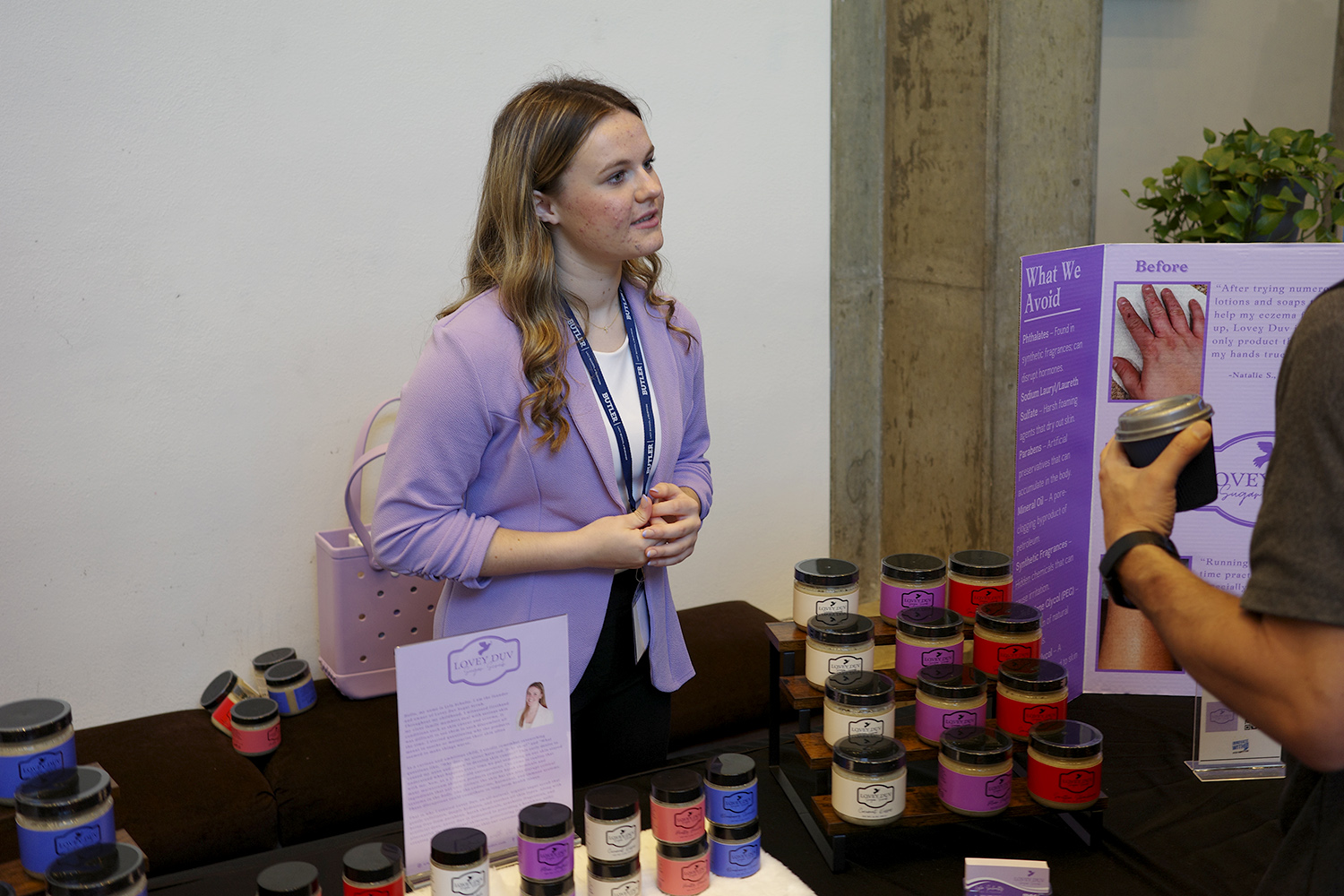
Further down the entrepreneurial trail is Perry Central High School, which joined the program about five years ago. The school not only participates in the STARTedUP Challenge but last year boasted a state finalist, then-sophomore Lyla Schultz. Moved by the plight of family members with skin cancer and eczema, and their frustration with mainstream skincare products that only worsened their irritation, she created the gentler, all-natural Lovey Duv sugar scrub. She now sells it online and in local stores, offering colorfully named scents such as Smitten Strawberry, Blueberry Crumble, Santa’s Cookies, and Cozy Colada.
Schultz didn’t place among the three leaders, but “even if you don’t win, you’re a winner,” said Jody French, director of career and technical education and work-based learning at Perry Central. “They’re really learning the entire process of starting a small business. Basically, it’s teaching kids to see a problem and solve a problem.”
Having to pitch a product before a regional or state finals audience can unnerve even the most confident high schooler. “There are hundreds of people there, and it’s live on the internet. We’ve had tears,” French said. “But once they do it, even if it’s not perfect, they feel like superstars.”
Camaraderie is a big benefit
Some past finalists are marketing the products they pitched as high schoolers. In 2021, Southern Indiana Bait Co., operated by brothers Zion and Xavier Dunaway of Salem, won the STARTedUP State Finals with a homemade selection of fishing lures.
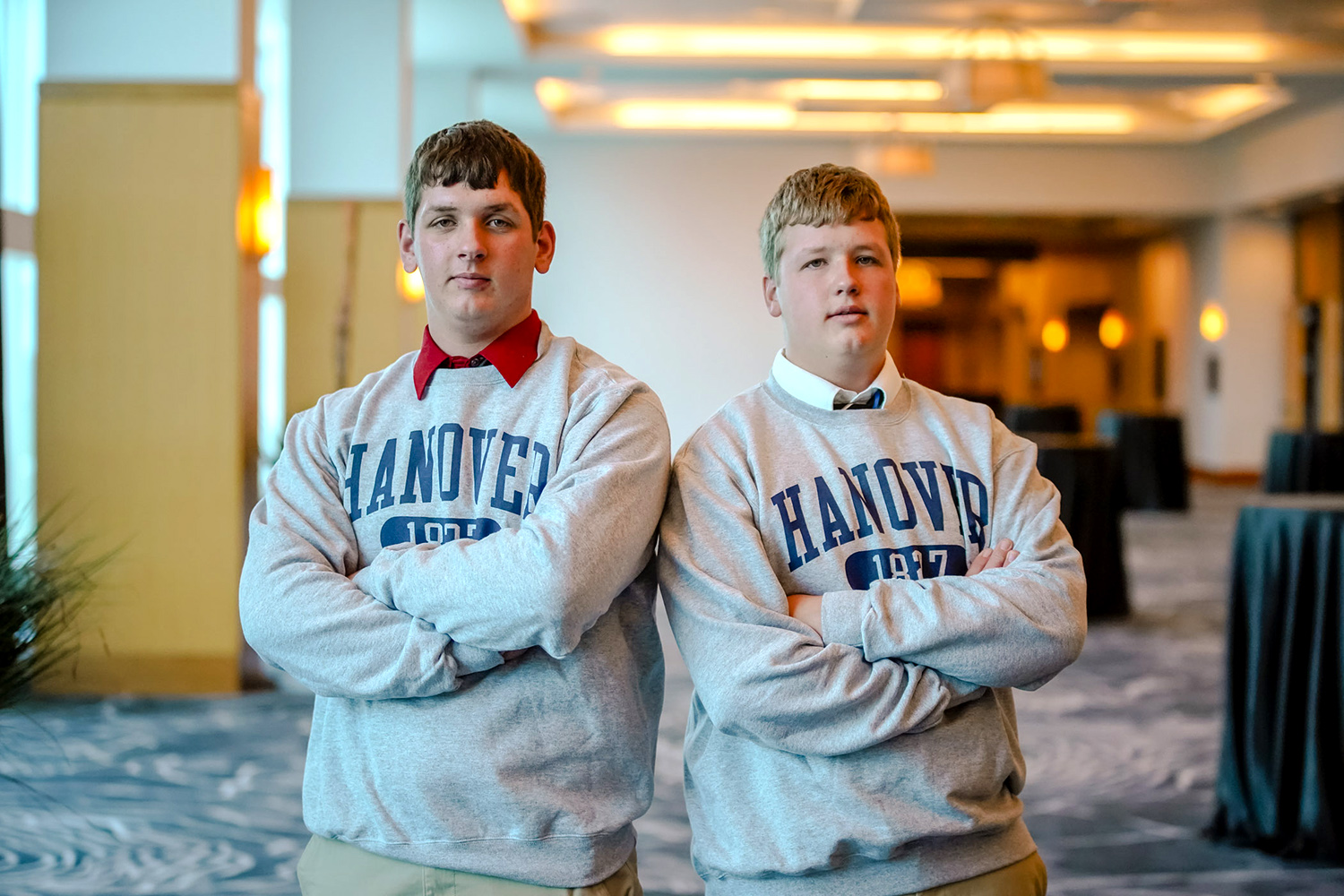
“It was one of the only times I’ve truly been speechless,” Zion said, recalling the impressive competition. “There were kids creating their own AI software for Ford and GM to use in their hiring. We were just a small business making fishing lures in our garage.”
The Dunaways got started by watching YouTube videos on how to make lures, initially selling them to local fishermen. Entering the pitch competition wasn’t even their idea — a teacher at Salem High School told them about it, and when Zion said he would consider it, the teacher said, “No, I signed you up. You’re doing it.”
Though still a part-time venture, their bait business has found a following, with orders from every state but Hawaii. “The past three years, we haven’t put a dime of our own money into it,” Zion said, adding that one of their lures has earned nearly $70,000 in fishing tournament winnings. He speaks fondly of the STARTedUP Challenge. “Throughout the competition, you’re surrounded by high school entrepreneurs like yourself,” said Zion. “The connection part, the camaraderie, is the biggest plus of the competition.”
Business in a box
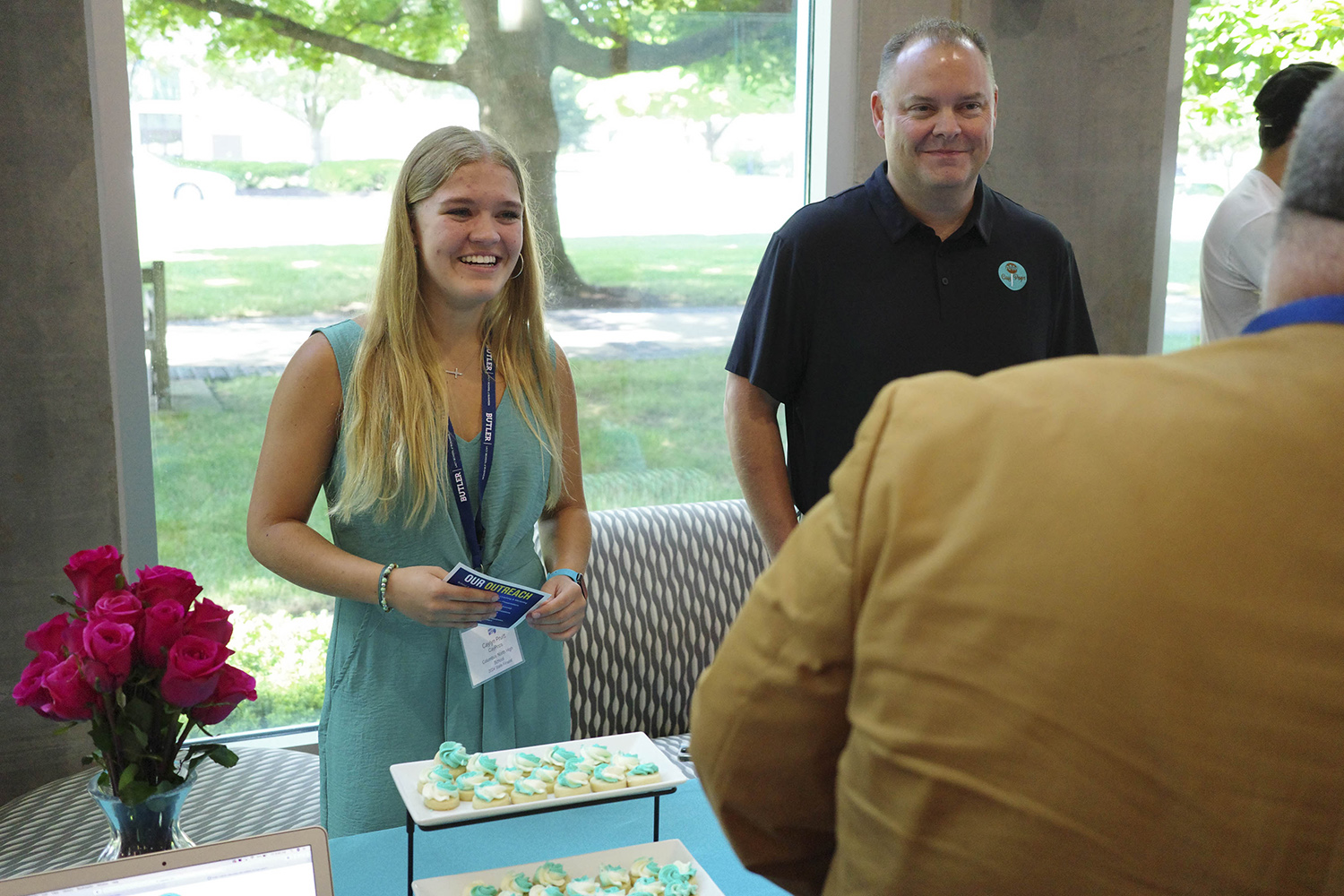
Caylyn Pruitt was only 15 when she started her bakery. “This was a COVID hobby,” said the Columbus North High School graduate, now 19. “I got really interested in watching the Food Network and the Kids Baking Championship. I was testing recipes and getting into it.” Before long, she was selling treats from her home, but she still had a lot to learn. Her participation in the pitch contest required her to solve a bigger problem than how to sell more sugar cookies, so she tackled franchising.
As CayPops Bakery, she advanced to the state finals with the idea of offering “business in a box” — a stay-at-home opportunity to become the next CayPops baker, with Pruitt providing everything from recipes to a grand opening celebration. So far, her only franchisee is her aunt in Bowling Green, Kentucky, but her original bakery is thriving in Columbus. Unlike a traditional storefront operation, CayPops takes orders online and schedules pickup or delivery. One of Pruitt’s specialties is cake pops — mashed-up cake with a chocolate coating on a stick — and her custom treats are popular for birthday parties, bridal showers, gender reveals, and other special occasions.
Entrepreneurial thinking brought her success in the pitch competition and beyond. “Find something you really enjoy and care about,” she said. “For me, I had always enjoyed baking. You don’t have to solve world hunger or climate change.”
It’s easy to underestimate young entrepreneurs who start a business before finding a career. But, CayPops’ totals speak for themselves — 45,000 baked goods sold and $130,000 earned, giving Pruitt financial independence (and paying for college tuition and a car) before she was out of her teens.
And don’t ask whether her mother actually supplied the recipes and guided the business from the background. “That’s what people assume, said Pruitt, “but it was all me.”
Editor’s Note: The 2026 STARTedUP Challenge Regionals took place throughout April. Here is a list of the Regional Finalists:
Region 1: PageMD
Region 2: OccluSense
Region 2 (Wildcard): Dermi
Region 3: Luna Bandages
Region 3 (Wildcard): Iconic Looks
Region 4: Course Caddy
Region 4 (Wildcard): NAM
Region 5: Reese Olivia Creative
Region 6: Roots2Results
Region 7: Phoenix Phuel
Learn more about the teams heading to the State Finals here: startedupfoundation.org/state-finals