
For many students, heading off to college is an exciting milestone. Whether they’re moving into a dorm room, apartment, or off-campus housing, it’s often their first experience living away from home and managing a space on their own.
Between laptops, gaming systems, mini refrigerators, microwaves, coffee makers, and phone chargers, college students rely on more electrical devices than ever before. While these items help make dorm life more comfortable, they can also create electrical hazards if not used properly.
DON’T OVERLOAD OUTLETS
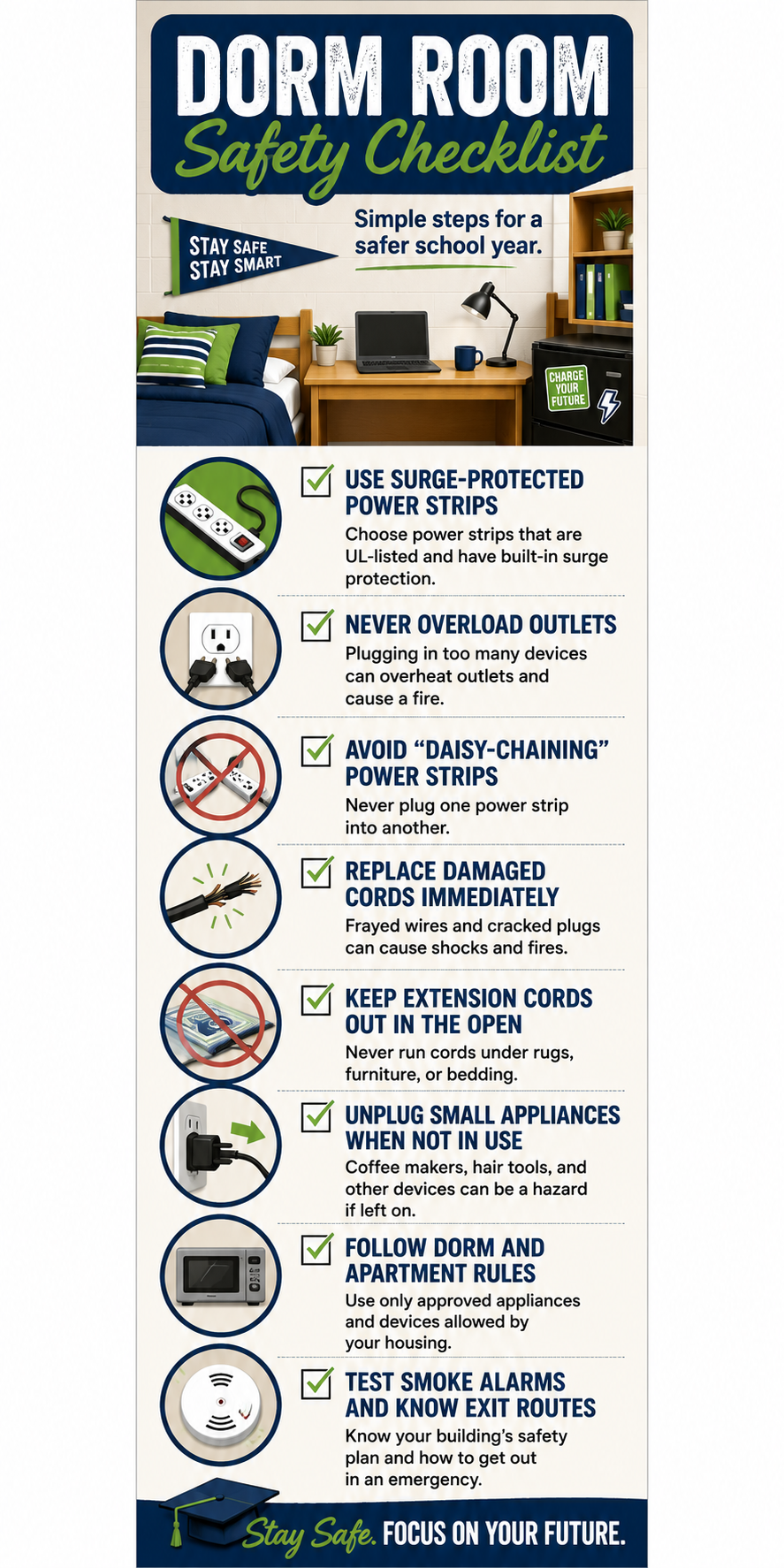
One of the most common safety mistakes is overloading outlets. Dorm rooms often have limited electrical outlets, leading students to plug multiple devices into power strips and extension cords. Before move-in day, make sure any power strips you use are UL-listed and equipped with built-in surge protection. Never plug multiple power strips or extension cords into one another, a practice commonly known as “daisy chaining,” which can increase the risk of overheating and fire.
CARE FOR THOSE CORDS
Extension cords should be used only as a temporary solution. They should never be run under rugs, furniture, or bedding where heat can build up unnoticed. If a student needs additional outlets, a properly rated surge protector is usually the safer choice.
Students should also inspect chargers and cords regularly. Frayed wires, cracked plugs, or damaged cables should be replaced immediately. Damaged cords can create shock hazards and increase the risk of electrical fires.
KNOW THE RESTRICTIONS
Many dormitories and apartment complexes have restrictions on appliances such as hot plates, space heaters, and other high-wattage devices. Students should familiarize themselves with housing policies and only use approved appliances.
UNPLUG WHEN NOT IN USE
Another important habit is unplugging small appliances when they’re not in use. Coffee makers, hair-styling tools, and other devices can pose safety hazards if accidentally left on while students rush off to class.
As students settle into a new school year, taking a few simple precautions can help create a safer living environment. Learning good electrical safety habits now not only protects students during college but also helps prepare them for safe living in the future.
Heartland REMC wishes all students a successful school year and encourages families to include electrical safety on their back-to-school checklist.