
By Brian D. Smith
Winter’s done and spring’s begun. Tired of living on the run?
Maybe it’s time for a breather — nothing grandiose, just a getaway that’s not too long, not too far, and
not horrendously pricey. A placid place surrounded by woods, water, and wildlife.
Here’s the good news: There’s room at the inns. Of the 24 Indiana State Parks, seven offer overnight accommodations, and they’ll soon be joined by an eighth, Potato Creek. Spanning the state from the extreme northeast to the Ohio River, they feature more than 600 rooms for around $85 to $250 per night — with consecutive-date discounts of two-for-one in the winter and 25 percent in the spring and fall on select nights. (Information: 877-LODGES-1 and in.gov/dnr/state-parks.)
Long-term planners, take note: Room reservations can be made as early as two years before your preferred date. “And the best part about that is that rates are set for what they are now,” said Christopher Fouke, business development manager for Indiana State Park Inns. “So, the earlier you book, the less it’s going to be.”
Don’t limit yourself to warm weather. Today’s state parks are year-round destinations packed with natural and manmade attractions, making it easy to create a plan for all seasons.
Heavy snow and frozen lakes bring out the skis, skates, sleds, and snowshoes at Pokagon, not to mention 30 mph runs on the park’s iconic toboggan. Spring rains feed the four waterfalls at Clifty Falls. Summer finds Fort Harrison’s nationally acclaimed public golf course in full swing. And nothing says autumn like a leaf-peeping trek to Brown County.
Nor should wicked weather put a damper on your great escape. Parents with cooped-up kids can take their bouncing brood to a game room or an indoor pool, while adults seeking less kinetic endeavors can curl up in a library, a wildlife observation area, or a fireplace-toasted lounge on chilly days.
Sound appealing? Read on for a deeper dive into the seven inns and the state parks that host them. You’ll find enough possibilities to turn your in-state excursion into an inside-the-park home run.
Brown County State Park
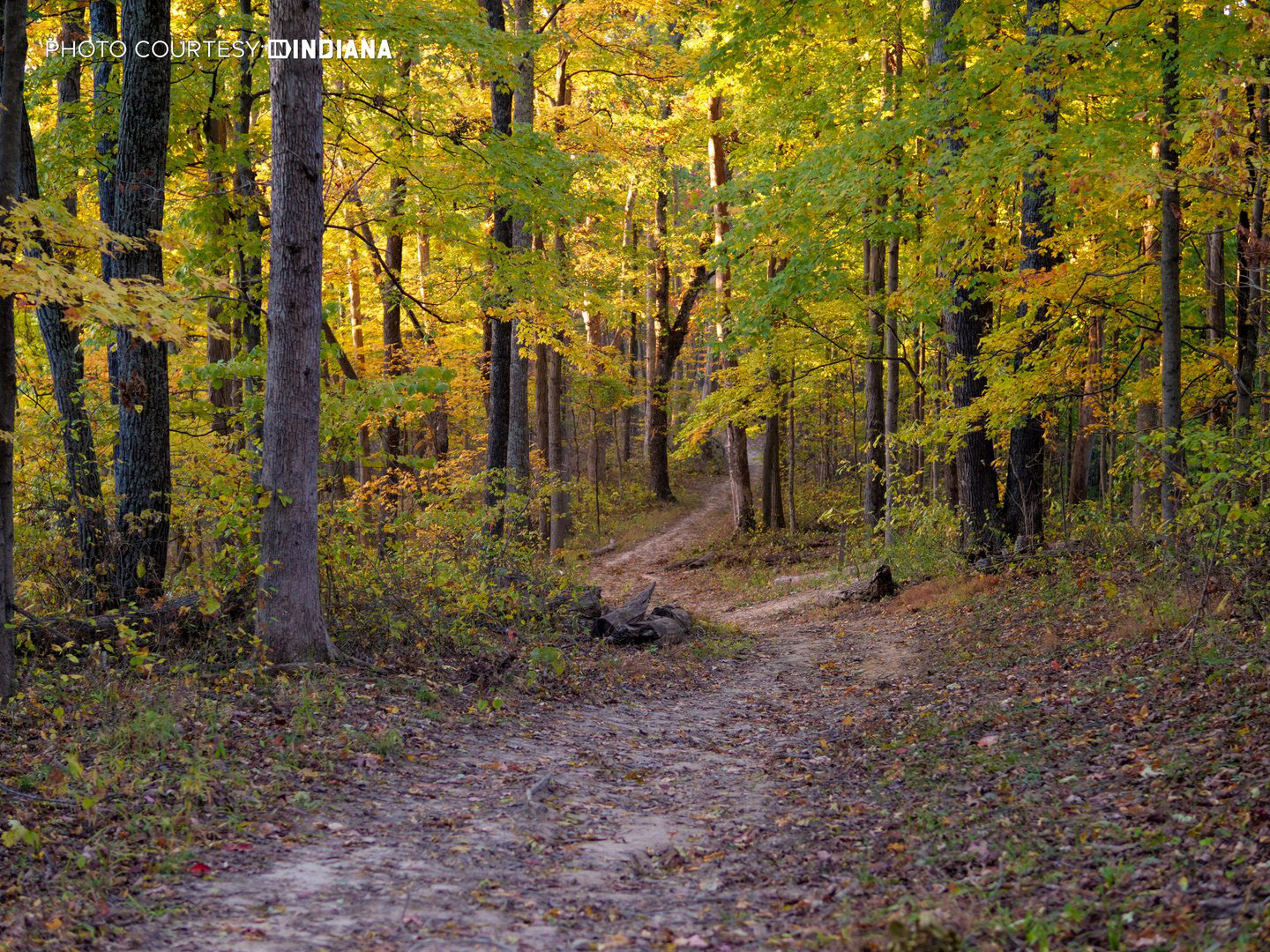
Brown County State Park joined the Hoosier parks system in 1929, but its condition during the Great Depression was greatly depressing. A deforested tangle of weeds and briars, it regained its sylvan splendor through the tireless tree-planting of the Civilian Conservation Corps (CCC).
This 15,815-acre expanse ranks as Indiana’s largest state park — more than 10 times the size of Clifty Falls or Spring Mill — and with 1.5 million visitors per year, second only to Indiana Dunes in popularity. Fall foliage draws the masses, but its year-round offerings include 150 miles of roads and trails accommodating legs and wheels of two and four.
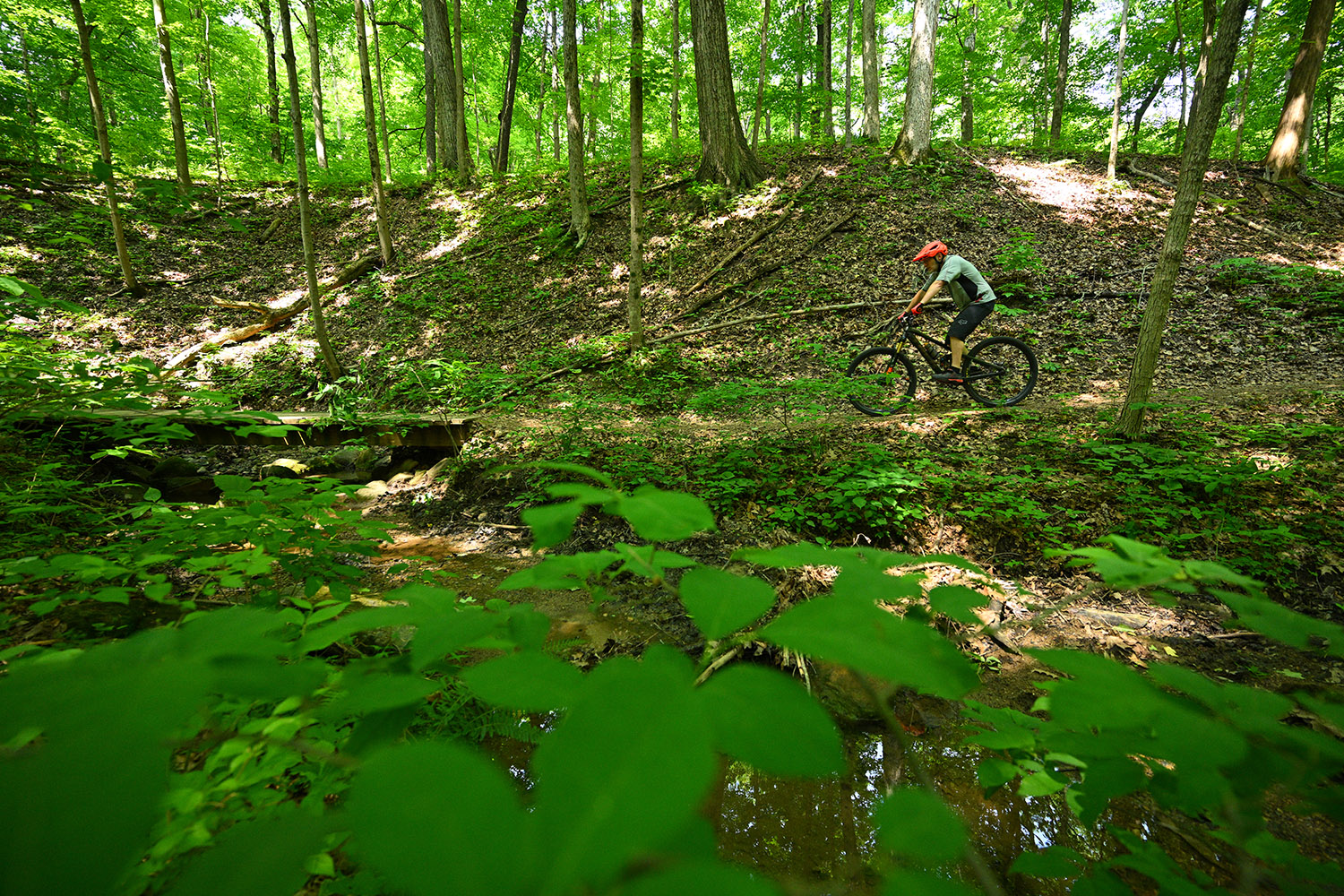
Hikers can choose from 13 paths leading to destinations such as the Ogle Hollow Nature Preserve, home to the Indiana-endangered yellowwood tree. The saddle barn caters to horse lovers with guided trail rides and pony rides for all ages. Mountain bikers regard the park as one of the Midwest’s best destinations. And your family car will take you to an 1838 covered bridge, an hour-long audio tour, and the scenic Seven Vista Challenge.
Fishing, boating, tennis, and pickleball await guests on suitable days. And if it’s damp outside, you can get damper inside at the Abe Martin Inn aquatic center, home of a water slide and zero-entry (gradually sloping) swimming pool. The 84-room inn, which also rents cabins, is named after an early-20th-century comic character from Brown County who dispensed homespun wisdom such as, “A good listener is usually thinking about something else.”
Pro tip: For a drone’s-eye view of the park, climb the 90-foot fire tower, built in 1930.
Fort Harrison State Park
During its 90 years as a U.S. Army post, Fort Benjamin Harrison remained off-limits to most outsiders — particularly unescorted women, who in earlier times were stopped, questioned, and shown the front gate if they lacked authorization. Then, in 1996, Fort Ben became Fort Has-Ben, trading its military stripes for civilian life as a 1,744-acre state park that retained 70% of the original property.
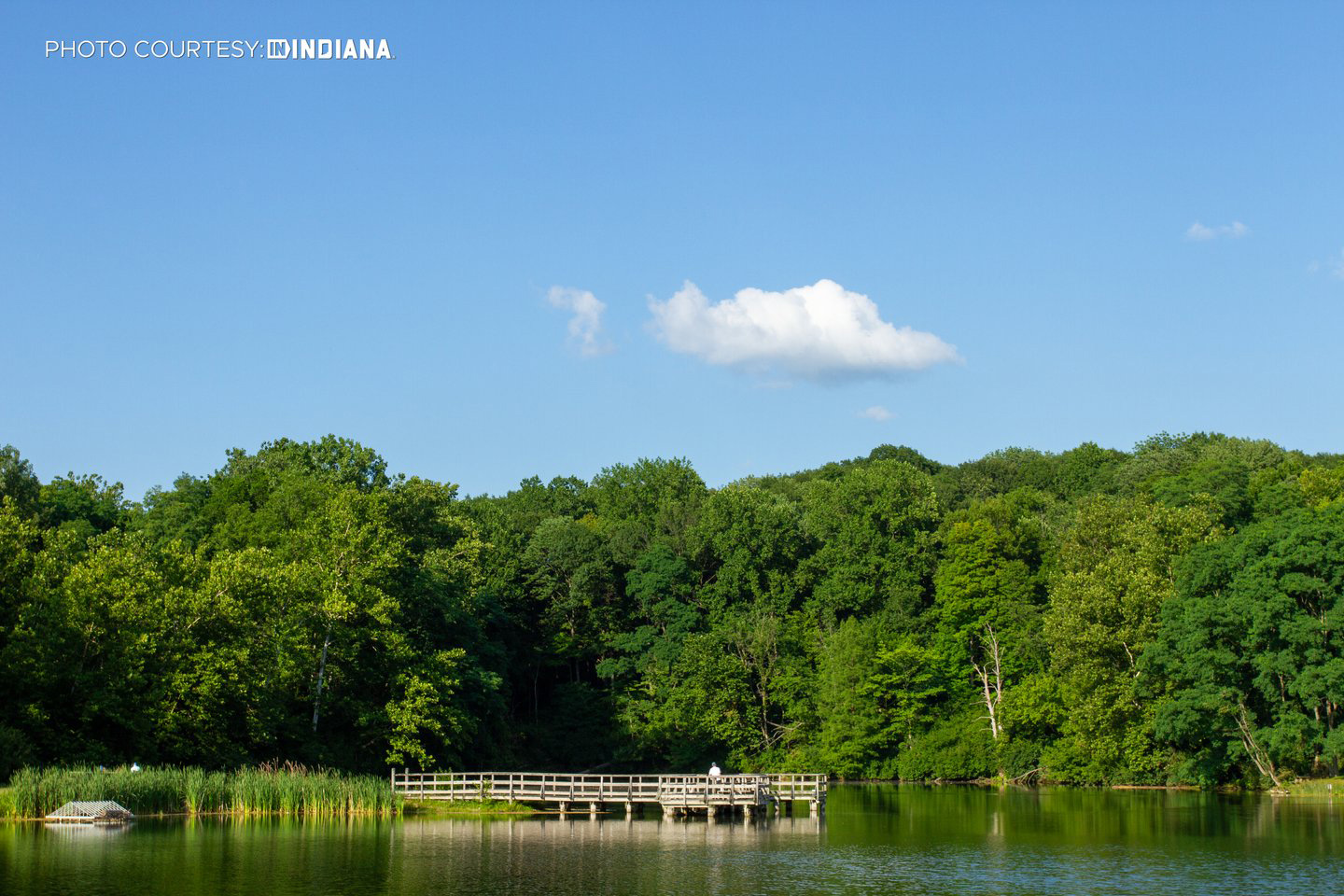
Today, more than a million visitors a year are discovering the secrets of Fort Harrison State Park, situated nine miles northeast of downtown Indianapolis in suburban Lawrence. Start with The Fort Golf Resort, a Pete Dye-designed layout that once ranked third on Golf Digest’s “Best Affordable New Public Courses” list. Originally nine holes and expanded to 18 in 1972, the former GI links remain one of Indiana’s best.
For history buffs, the Museum of 20th Century Warfare displays artifacts from former Fort Harrison soldiers, and two districts listed in the National Register of Historic Places invite exploration. Military history even encompasses the lodgings — the 28-room Fort Harrison Inn was a
post hospital, and the Harrison House and Officer Homes accommodated visiting brass.
The roll call of activities includes 15 miles of hiking trails (one paved), guided horseback rides, picnicking, fishing, and on snowy days, sledding on a popular hill — possibilities well worth saluting.
Pro tip: A 10-acre dog park, accessible only from the north, contains three separate play areas.
Pokagon State Park
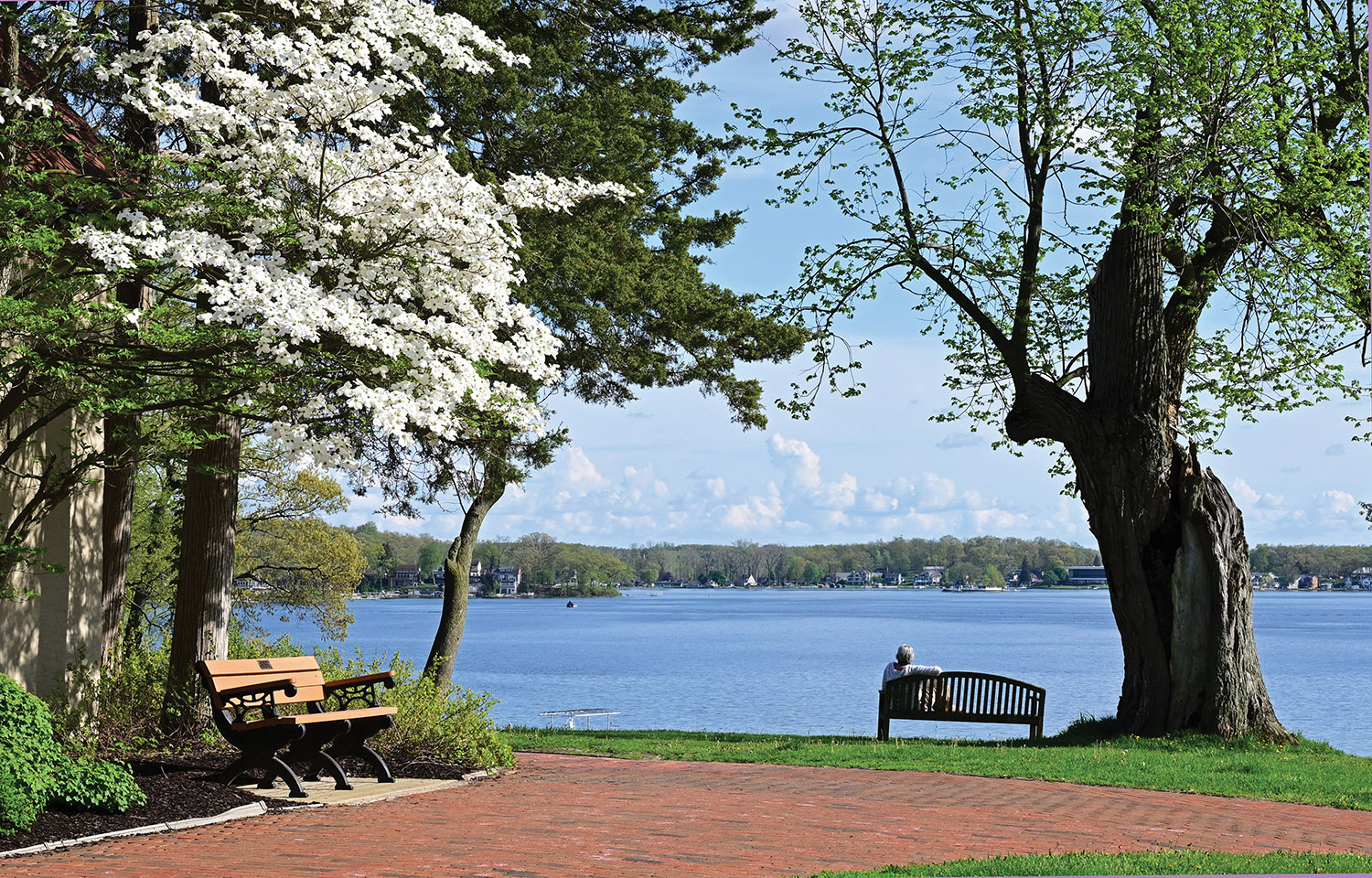
For most Hoosiers, the easiest way to reach Pokagon State Park is to head north on I-69 and exit four miles before you run out of Indiana. The 1,260-acre Steuben County property tucks into the state’s northeast corner like a kitchen tile wedged between Michigan and Ohio.
This is lake country, a gift of the glaciers that melted 15,000 years ago, and as Indiana counties go, Steuben is one of the “lake-iest” with more than 100. Pokagon visitors enjoy swimming, fishing, and boating on Lake James — the state’s third-largest natural freshwater lake – along with its two beaches.
Pokagon (pronounced “Po-KAY-gun”), which turned 100 last year, was originally known as Lake James State Park until its 1937 relabeling to honor Leopold and Simon Pokagon, father-and-son leaders of the Potawatomi (“Pot-a-WOT-a-me”) tribe. The namesake Potawatomi Inn offers 126 rooms plus cabins, and guests can access 14 miles of trails, bicycle rental, and a saddle barn.
In winter the park comes alive with cross-country skiing, ice skating, and snowshoes. Indoor offerings include a pool, a hot tub, a sauna, a game room, two restaurants, and several fireplaces.
But Pokagon’s claim to fame is its toboggan, initially constructed in 1935 by the CCC. Sleds on two tracks slide from a 30-foot tower onto the quarter-mile course, which plunges 90 vertical feet.
It’s all downhill from there.
Pro tip: For an outdoor workout (and a souvenir for completion), try the Hell’s Point Challenge, an eight-mile hike with an 84-step climb to the park’s highest spot.
Clifty Falls State Park
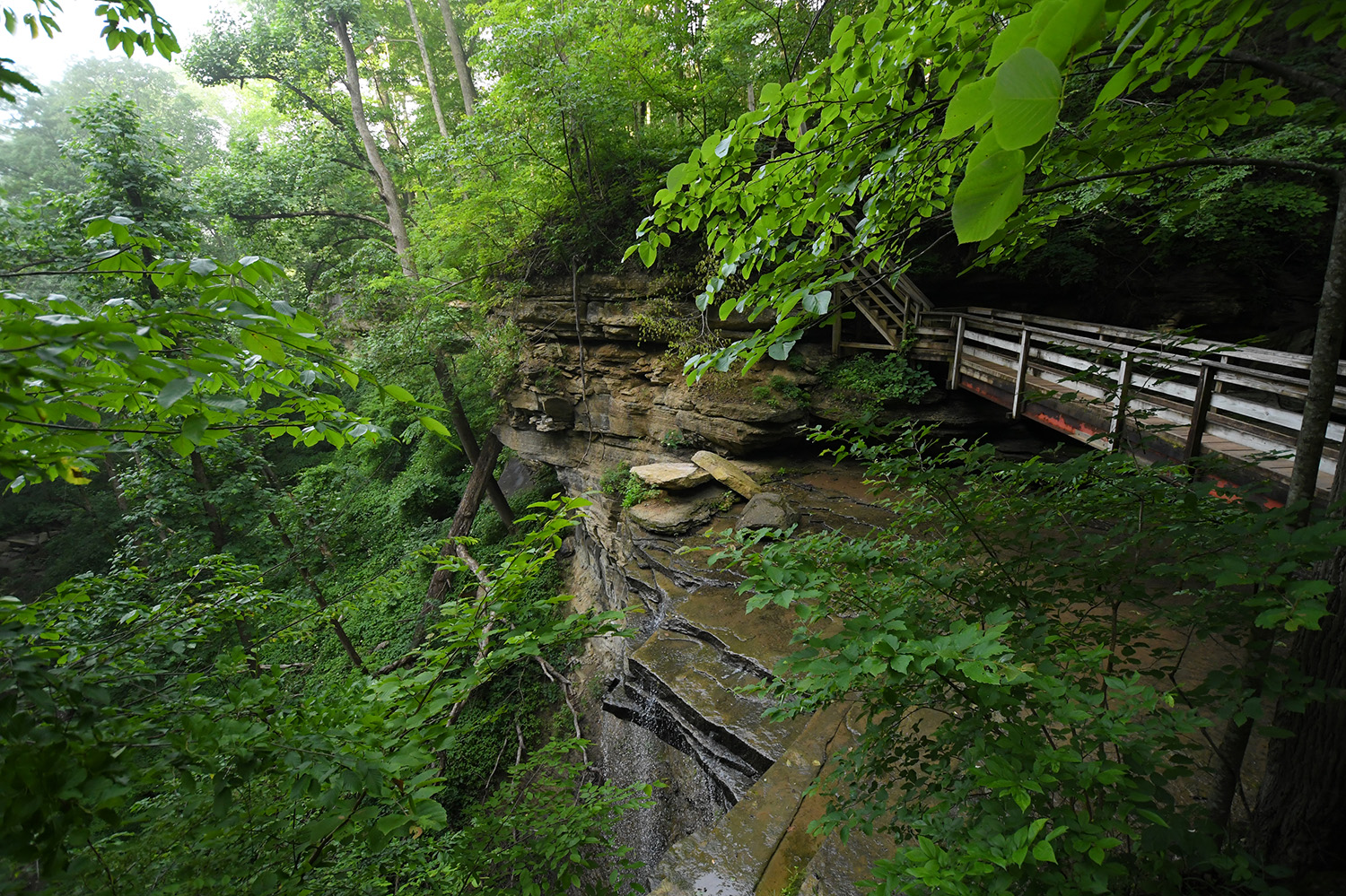
Eleanor Roosevelt slept here. En route from Lexington, Kentucky, to the Chicago World’s Fair in 1934, she and two female companions found lodgings at the Clifty Inn — where, clutching a pair of binoculars, the First Lady glimpsed the Ohio River from the 400-foot bluffs.
The same spectacular view comes free with any stay at Clifty Falls State Park, along with access to four waterfalls and the city of Madison, whose 133 downtown blocks form a National Historic Landmark district. No wonder the late TV reporter Charles Kuralt — known for his “On the Road” segments with CBS Evening News — dubbed Madison “the most beautiful river town in America.” Meanwhile, USA Today readers have voted it the Best Small Town in the Midwest for the past two years.
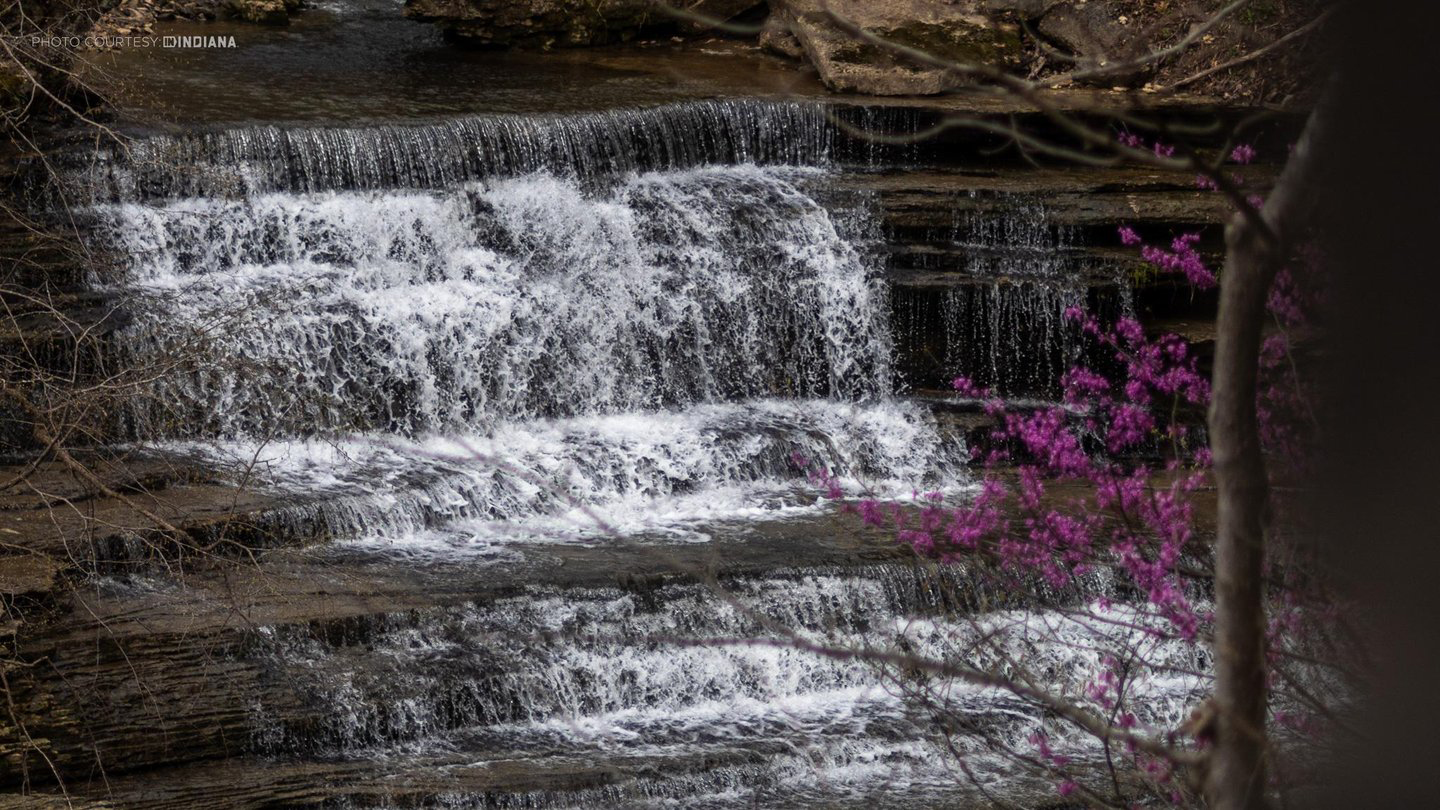
Within the 1,519-acre park, history and hiking mingle in the traces of an 1850s railroad project that went off track before it ever got any. Scattered remnants lie along the 15 miles of trails — limestone bridge abutments, retaining walls, and a 600-foot tunnel that’s currently closed to all but the bats, frogs, and salamanders that call it home. Hikers can also tackle the Four Falls Challenge, a four-mile trek to every waterfall in the park and receive a souvenir sticker to document it.
The Clifty Inn encompasses 71 rooms classified as riverside or parkside, depending on the view, and The Falls restaurant serves homestyle delights such as the Hoosier Tenderloin and Fried Biscuits and Apple Butter. Other amenities include an indoor and Olympic-size outdoor swimming pool, tennis courts, and a sun porch.
Pro tip: Waterfalls vary from a roar to a trickle depending on recent precipitation, so you’ll likely find them at their most photogenic in winter and spring.
McCormick’s Creek State Park
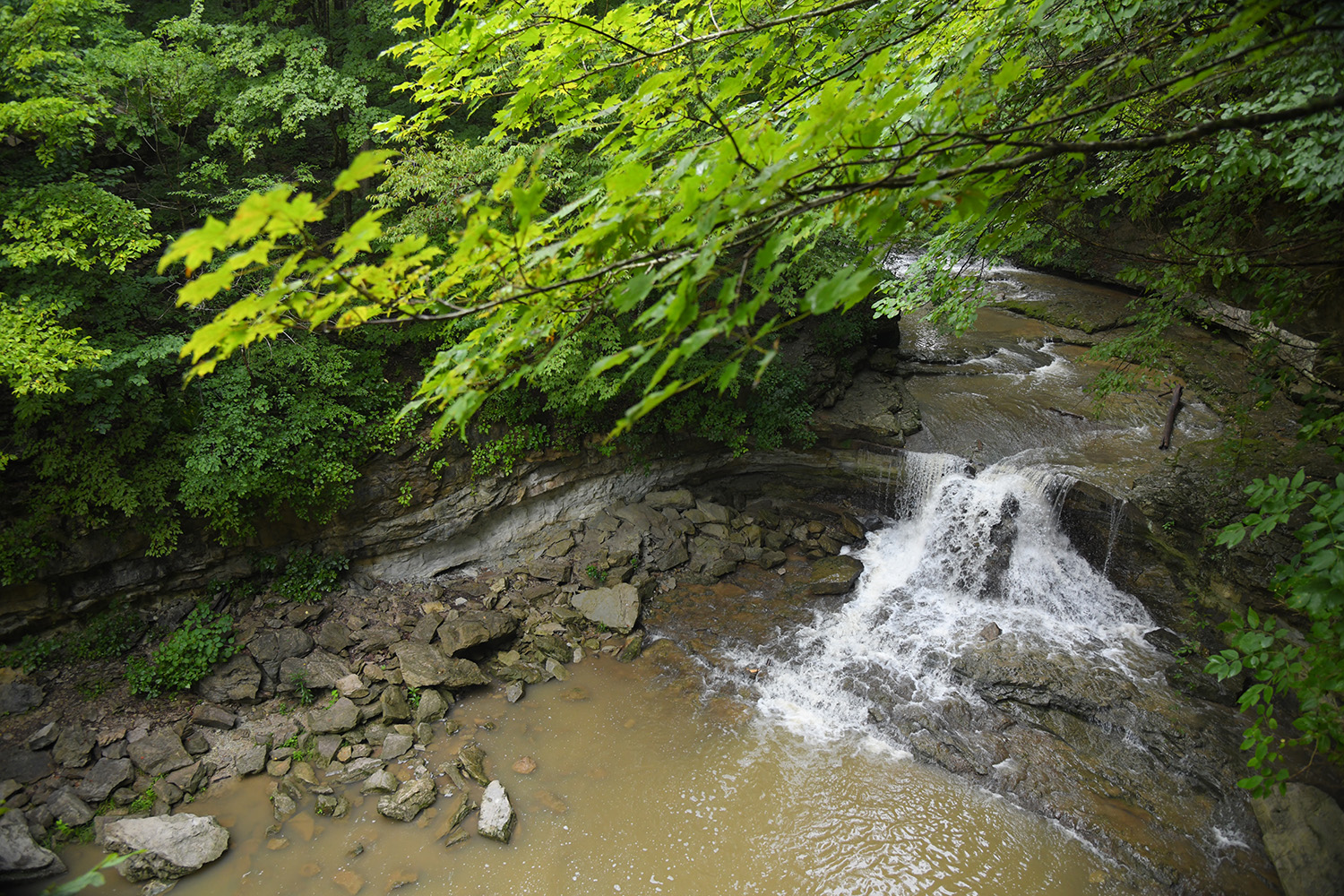
They called it “the Grand Canyon of Indiana” when McCormick’s Creek State Park opened in 1916. And it was no accident that the dedication of this first state park took place on July 4 during the centennial year of Indiana statehood, to the accompaniment of speeches, music, a picnic, and fireworks.
A century later, McCormick’s Creek is still worth celebrating — and there’s a lot more space to do it in. The park now encompasses almost 2,000 acres, more than five times its original 347, along with several other natural curiosities. Visitors can overnight at the 76-room Canyon Inn or a cabin and enjoy the restaurant, indoor pool, tennis courts, and a climbable fire tower.
From there it’s a short but rugged hike to the canyon and nearby waterfall — or a moderate jaunt to Wolf Cave and the Twin Bridges, naturally formed stone arches. Spelunkers should bring a flashlight and expect to do a belly crawl on a potentially muddy cave floor.
Unfortunately, a harsher side of nature — an EF-3 tornado in March 2023 — has left visible scars. Originating within the park, the 153-mph twister caused two fatalities, felled thousands of trees, and ravaged the campground and the Wolf Cave Nature Preserve. About four out of 11 miles of trails, all in the park’s northwest section, will remain closed indefinitely.
Pro tip: The old Statehouse Quarry, accessible by hiking trail, furnished limestone that formed the foundation of the state capitol during the late 19th century.
Spring Mill State Park
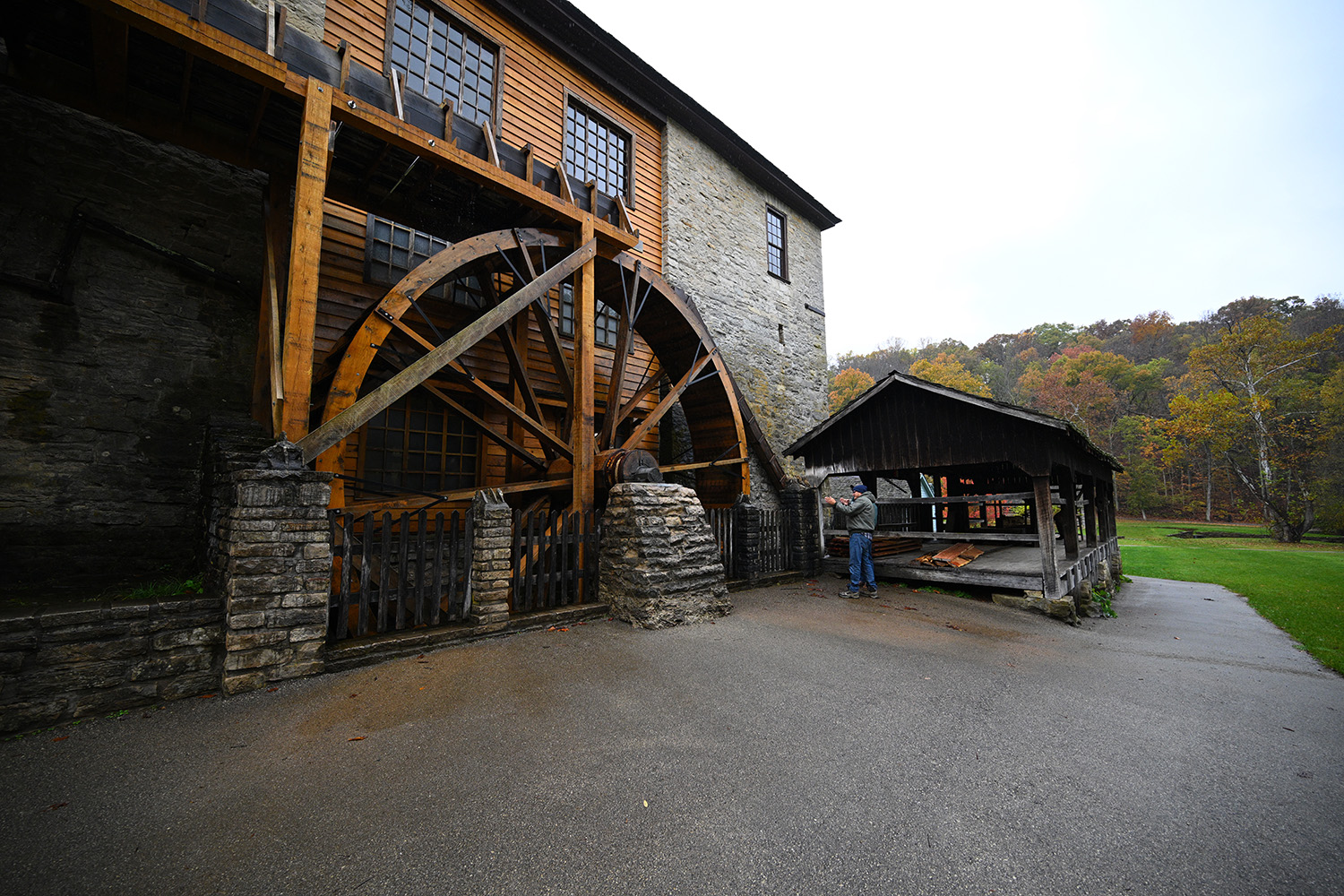
Spring Mill State Park is as old as pioneer times and as new as the space age — and you can sample both without leaving the park. Nature’s highlights are even older, including a parcel of virgin forest and several caves, one of which hosts underground boat tours.
At Pioneer Village, costumed interpreters re-enact 19th century life in about 20 historic buildings (most reconstructions and relocated originals), mimicking the Spring Mill community that once thrived here. The star attraction, a 200-year-old restored grist mill, resumed grinding corn a year ago after breaking down in 2021. It was rebuilt using tornado-toppled timber from McCormick’s Creek State Park.
A more recent pioneering past is honored at the Virgil I. “Gus” Grissom Memorial Museum, which features the Gemini 3 capsule and space suit used by the astronaut from nearby Mitchell. He perished in 1967 when fire broke out inside Apollo 1.
Elsewhere on the 1,358-acre property, Spring Mill Inn offers 71 rooms plus cabins, along with the Millstone Dining Room and a swimming pool. Guests can also enjoy the 11 miles of hiking trails, the two-mile mountain bike trail, and basketball and tennis courts. And one of the park’s three nature preserves, named for the Mitchell Karst Plain, recognizes the unusual topography of the area — “a limestone plain riddled like Swiss cheese with sinkholes,” in the words of WLFI-TV, Lafayette.
Pro tip: The grist mill grinds corn on weekends from late April through October, and the resulting cornmeal — sold by the bag at Spring Mill — is a coarser-than-store-bought kind that makes excellent cornbread.
Turkey Run State Park
With a little more luck, Indiana’s second state park might have become its first. And with a little less luck, it might have become veneer.
The state tried to buy Turkey Run State Park’s original 288 acres of predominantly virgin forest at auction in May 1916, but couldn’t beat a $30,200 bid by Hoosier Veneer Co. To the rescue came a groundswell of donors, including the owners of the Indianapolis Motor Speedway, and the resulting $40,200 offer closed the deal.
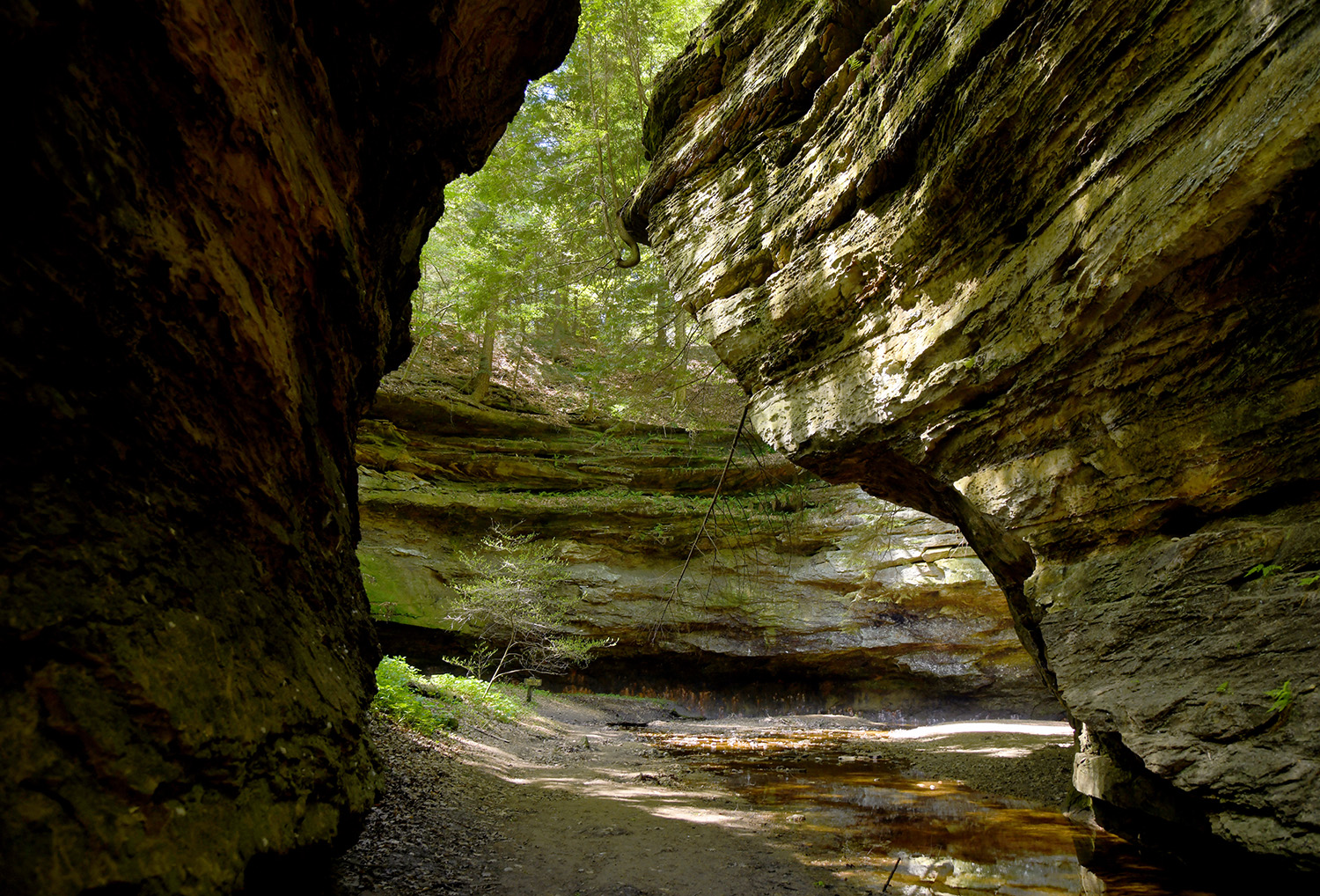
Today, the park is a 2,400-acre geological wonderland, with 14 miles of trails through sandstone ravines and gorges sculpted by glacial meltwater. Colorfully named geological features — Punch Bowl, Ice Box, Camel’s Back, and Gypsy Gulch — invite exploration. And while some trails are rated “rugged” or “very rugged,” it’s a risk/reward prospect, as evidenced by Midwest Living magazine’s 2023 choice of ladder-equipped Trail 3 as the “Best Hike in the Midwest.”
The park abounds with manmade treasures, too: Two covered bridges, a coal mine, a log church, and a suspension bridge across Sugar Creek, which divides the park. There’s even a planetarium. Turkey Run Inn has 61 rooms plus cabins, along with the Narrows Restaurant and an indoor heated pool.
Just don’t go looking for running turkeys.
Pro tip: Trails can get waterlogged, muddy, and slippery, so bring sturdy waterproof hiking boots with treads.
One pass, endless adventures.
Purchase your Indiana State Park Entrance Pass at stores.innsgifts.com/permits