By Mike Lunsford
I am one of those optimistic sorts who declares spring’s arrival as soon as I slip the muddy bonds of February. A true believer in “meteorological” seasons, I contend that spring is here on March 1, despite its usual snowy backsliding. Among the reasons to feel this way is a little bit of white and violet and green called harbinger of spring.
Before virtually any other sign of the new season appears, before trees bud and frogs croak, harbinger of spring is here, a small but mighty usher that opens the door to wood anemones and spring beauties, prairie trillium, and blue phlox. Although I walk down into my woods in all seasons, including a fair amount of time in the wind and snow of winter to inspect beaver dams and pond ice, I can also find harbinger of spring as early as February pulling itself out of the frozen ground amid last fall’s leaves and fallen twigs.
Of course, by late March and early April, the curtain has been pulled back on the new season, and I begin to see a lot of old friends in the usual spots: the wild ginger that grows on a hillside where an old power line was removed, the buttercups that flourish near a meandering branch tucked away in my in-laws’ beautiful woods, the Star-of-Bethlehem that pops up under a magnolia tree near my cabin.
I nearly always choose to be in the places where I know spring wildflowers prosper, some nearly hidden by the woods’ undergrowth by very early May. Among them, light-catching waterleaf that grows in great lavender stands in the low places near our pond, deep purple larkspur I first see along an old railroad grade, and brilliant firepinks whose bright red stars thrive amidst yellow trout lilies on an east-facing hillside that sits above an otherwise swampy and smelly wetland.
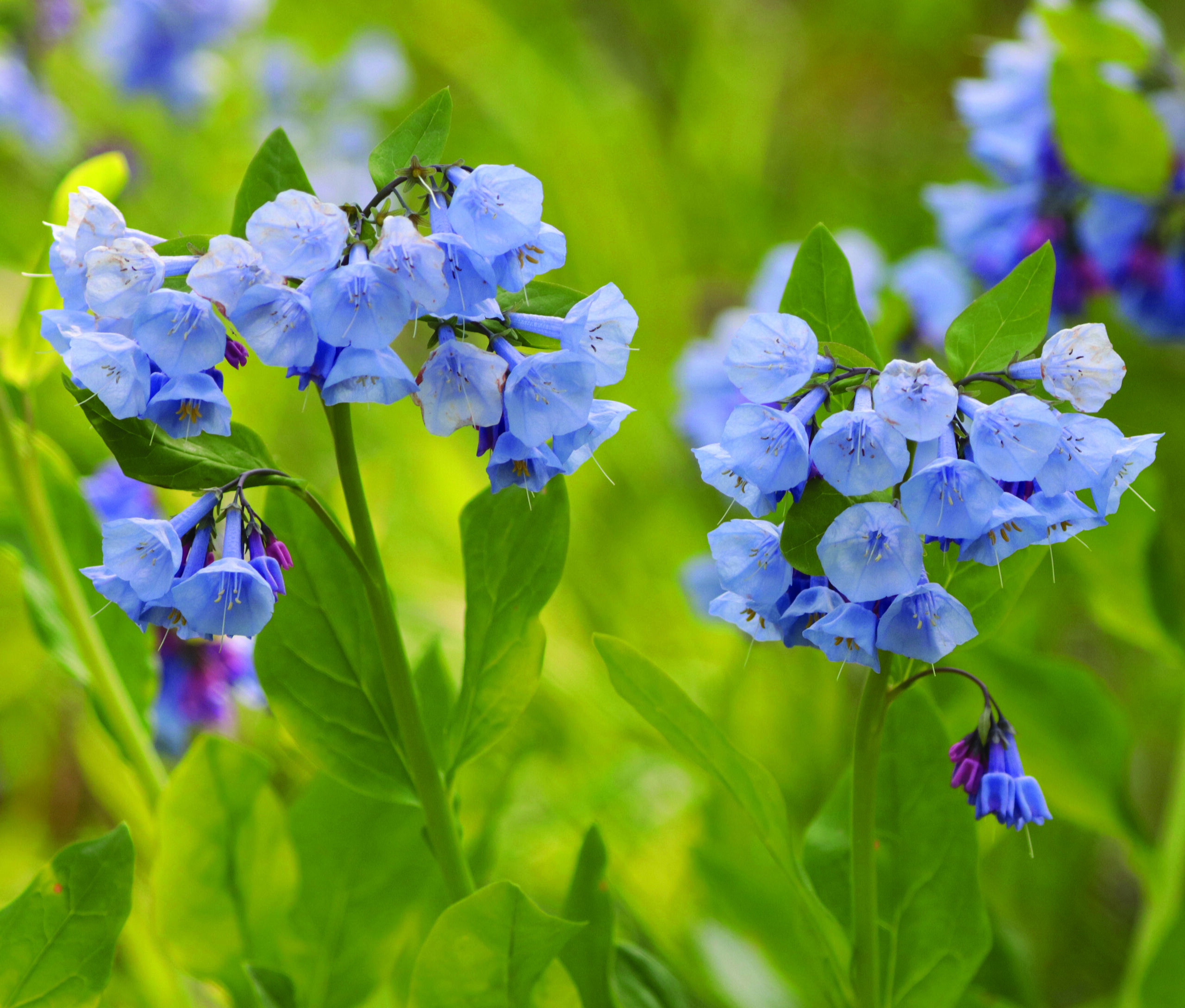
I enjoy Virginia bluebells too, a thick-stemmed and showy mixture of blooms that only last a few weeks. Always abuzz with bumblebees — their primary pollinators — bluebells aren’t as common as they once were. Because they are drawn to growing in flood plains, I know I can find them each spring in an oxbow that juts out into the creek, a place that holds little else but fallen boxelders and rogue maple trees.
A few months ago, I learned that the word “harbinger” has Germanic and French and Middle English origins and that it was a title given to those who went ahead of an army or traveling nobility to find lodging and food, hence the idea of announcing an arrival. Spring is here; a tiny flower has told us so.