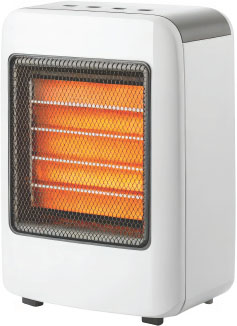
Drafty room? Before reaching for your space heater, consider whether it’s better to plug it in or simply turn up the thermostat.
Space heaters are designed to warm small, targeted spaces — not your entire home. If you find yourself relying on one often, it may be time to address your home’s energy efficiency.
FIX EFFICIENCY FIRST, THEN SUPPLEMENT WITH A SPACE HEATER
Improving your home’s efficiency helps it retain heat, reduces drafts and reduces your energy use. Many solutions are affordable and DIY-friendly, such as:
• Seal air leaks. Use caulk and weather stripping around windows and exterior doors to prevent drafts.
• Add insulation where it matters. Attic insulation has the biggest return on investment, and loose-fill insulation is an affordable option.
• Check your heating system. Schedule regular service for your furnace or heat pump. If it’s outdated or struggling, it could be time for an upgrade. Give Noble REMC a call to learn about our rebates and incentives for choosing energy efficiency.
• Use programmable thermostats. These can help reduce energy waste by heating only when and where needed.
Once your home is sealed and insulated, a space heater can be used to increase comfort and warm specific rooms, like a home office or bedroom, without turning up the heat for the whole house.
A space heater is like a ceiling fan; it can improve comfort in a small area, but it’s not a whole-house solution.
STAY SAFE WHILE STAYING WARM
• Place the heater on a solid, flat, nonflammable surface — never on carpets or rugs.
• Plug the heater directly into the wall outlet. Never use extension cords or power strips.
• Keep children, pets and anything flammable, such as curtains or bedding, at least 3 feet away from the heater.
• Never leave a space heater unattended, especially around children or pets.
• Turn off the heater when you leave the room or go to sleep.
• Unplug it when not in use to prevent electrical hazards.