By Stephanie Bernaba
Before Indiana became known for its farms and cities, it was a land primarily of water. When government surveyors worked across the territory between 1799 and 1834, they encountered massive tracts of soggy, poorly drained land where solid ground gave way to marsh for miles.
Northwestern Indiana spent half the year under standing water. Benton County was predominantly wetlands. Indiana was a landscape so dominated by wetlands, so teeming with waterfowl, wild rice, and unknown depths, that today’s residents would barely recognize it as the same place.
These swamps have vanished, converted either into farmland or roads, or buried beneath suburban developments, but their stories reveal an untamed and beautiful terrain where people escaping slavery found refuge from bloodhounds, where locals attempted to harvest peat as their Irish ancestors had, and where naturalists discovered endless inspiration among the cattails and knotty growth.
Fletcher’s Swamp and the Underground Railroad
Fletcher’s Swamp has completely disappeared, but it once covered approximately 200 acres just east of Indianapolis’ Old North Side, stretching between what are now called Cottage Home and Martindale-Brightwood. This wetland sat centered roughly where the I-65 and I-70 interchange would eventually be constructed. Today, the area near Massachusetts Avenue reveals no trace of its existence.
A December 1889 description in the Indianapolis Journal painted a picture of a dismal swamp that even hunters couldn’t enter except during the harshest winter cold. Frost rarely broke through the dense blanket of moss and accumulated leaves that had built up over centuries, kept perpetually damp by underground springs.
During the 1830s, this forbidding swamp became a critical station on the Underground Railroad. Calvin Fletcher, a Vermont native, lawyer, and farmer who controlled approximately 1,600 acres covering much of the Near East Side, worked actively against slavery and regularly allowed escaped slaves safe passage through his property.
Wetlands made ideal hiding spots because slave-hunting bloodhounds lost the scent in water and mud. Freedom seekers used removable wooden planks as stepping stones across the swamp, eliminating their trails by taking up the planks behind them as they moved forward.
An 1889 Journal account captured Fletcher’s secret mission. A tenant farmer noticed Fletcher riding toward the swamp each morning carrying a sack. One sunrise, curiosity led the farmer to follow at a distance. Fletcher dismounted, walked into the vegetation, and called out. The swamp responded — vegetation waving, water splashing, and finally, a tall, muscular Black man emerged wearing clothes made from coffee sacks. He took the sack from Fletcher, exchanged a few inaudible words, and disappeared back into the swamp.
The swamp may also have sheltered unlikely refugees during the Civil War years. Confederate prisoners who escaped Camp Morton, a Union Army prison located just west of the wetland, found cover in the dense thickets and boggy ground. Stephen Keyes Fletcher claimed decades later that escaped prisoners regularly hid in his father’s swamp.
The swamp’s fate was sealed, though, after the war ended. Hundreds of newly freed African Americans traveled north from Kentucky and other Southern states to Indianapolis. Calvin Fletcher allowed them to harvest timber for building cabins and cultivate small vegetable patches, paying them by the cord for the
wood they delivered from the swamp’s edges.
Fletcher’s son, Calvin Jr., finally drained the remaining wetland during the 1870s by dredging it and connecting it to the “Old State Ditch.” Thousands of acres of Indiana wetlands met a similar fate when they were converted into conventional farmland.
Bacon’s Swamp: Broad Ripple’s peat bog
An 1891 newspaper identified Fletcher’s Swamp as one of two major “bayous” affecting valuable property around Indianapolis’ expanding borders. The second was Bacon’s Swamp, which proved equally fascinating and more scientifically significant.
Broad Ripple now occupies the area where the sizable Marion County bog once existed. Google Maps still labels a small lake “Bacon’s Swamp,” but this is merely a manufactured
remnant of what was once a freshwater wetland.
The Wisconsin Glacier’s retreat created both Fletcher’s and Bacon’s swamps approximately 20,000 years ago, leaving depressions that filled with water. Over time, these bodies filled with sediment and decaying plant material, while oxygen levels at their depths dropped, much as in the aging process of living organisms. Bacon’s Swamp matured into one of the southernmost peat bogs in the United States.
This swamp also took its name from a farmer who operated an Underground Railroad station. Hiram Bacon arrived from Williamstown, Massachusetts, in 1821 with his wife, Mary Blair. Despite studying law at Williams College, Bacon’s poor health led him west to survey for the government. After his assignment was complete, he chose to stay in Indiana.
The Bacons ran a sophisticated operation for assisting freedom seekers. A 1931 Indianapolis Star article detailed the arrangement: the house stood on the east side of the road, with the large barn on the west. Inside the barn, a wheat bin could only be accessed by ladder from outside and remained concealed beneath piles of hay. Another hiding spot existed in the cider house bin. Freedom seekers remained there until darkness allowed them safe transport to the next station. At night, they hid in the peat bog directly across from the Bacon dairy operation.
Their 400-acre farm occupied approximately the same area where the Glendale Town Center stands today. During the mid-1800s, most of eastern Broad Ripple would have been covered in boggy terrain. By the 1930s, the farmhouse stood empty.
Walter C. Kiplinger, who was an Indianapolis chemistry teacher and tree doctor, wrote a detailed 1916 Indianapolis News article about the peat bog. His description focused on an area approximately one mile north of the State Fairgrounds, located near 50th Street and Arsenal Park.
Kiplinger marveled at the depth and vastness of the peat, saying that it rivaled the most lavish Irish peat bogs. Local newspapers published serious proposals for peat harvesting from 1905 through the 1920s, before the idea was abandoned.
Europeans have burned peat for millennia. Though peat is not technically a fossil fuel, it produces odorless, smokeless heat. Rural Ireland and Britain relied on it as an affordable fuel source for centuries, and it also provides Scotch whisky’s smoky flavor.
During World War I, American and Canadian peat bogs exported sphagnum moss to Europe, where cotton shortages forced army doctors to experiment with peat-based wound dressings. The moss was also an effective natural antibiotic.
Central Indiana nearly joined the peat fuel movement during the early 1900s. E.H. Collins, a Hamilton County farmer located a mile north of the State Fairgrounds, promoted what he called “earth that would burn” during the summer of 1905. He estimated that his 30-acre bog contained approximately 400,000 tons of harvestable peat, and newspapers envisioned a future in which peat would become residents’ primary source of heat.
That future, sadly, never arrived. Indianapolis’ economic challenges and demographic shifts accelerated Broad Ripple’s suburban growth during the 1950s, placing increasing pressure on the remaining swampland.
In February 1956, three children died attempting to rescue a puppy that had fallen through ice on one of the swamp’s lakes.
Residents called for the “deadly swamp” to be condemned and eliminated. The soggy ground continued to challenge developers for decades, swallowing up roads in both 1914 and 1937. Eventually, only a small pond remained.
The Grand Kankakee Marsh, Indiana’s Everglades
While Fletcher’s and Bacon’s swamps were significant, the Grand Kankakee Marsh surpassed them in both size and scope. Kankakee Marsh earned the nickname “Everglades of the North” because it extended across northern Indiana.
Trevor Edmonson of The Nature Conservancy describes how the landscape has changed: “Some say this was one of the largest inland wetland systems in North America. Looking around today, you need to squint hard and read the landscape carefully to detect its presence.”
The diverse patchwork of vast floodplains, wild creeks, thick backwaters, and wet meadows that once defined Northern Indiana can now be traversed without much notice. The same can be said for the fragmented, industrialized Calumet Region wetlands and the isolated pockets of creeks in Northeastern Indiana.
The marsh nurtured diverse wildlife. More than 500,000 acres of wetland habitats, including swamps, marshes, and shallow lakes, contained a wide variety of plants. Cattails, sedges, water lilies, and various aquatic grasses grew throughout the marsh. These plants sustained numerous animal species, including migratory birds, waterfowl, turtles, frogs, and fish.
Beaver Lake in Newton County covered 28,500 acres in 1834. Railroads transported hunters, trappers, and fishermen from Chicago into the marsh, and the trains returned loaded with fish, game, and marsh grasses used for packaging materials. Hunting lodges operated throughout the area.
Native American tribes, specifically the Miami and Potawatomi, depended on the marsh long before settlers arrived. Its resources were harvested for food, and the wetlands were used for transportation and trade. They also incorporated the marsh into their spiritual practices.
Significant changes began in 1884 with the implementation of dredging, river straightening, tiling, and ditching projects targeting the Kankakee River and its surrounding marshes.
Industrialization and agricultural expansion during the late 1800s and early 1900s resulted in the draining of hundreds of acres of marshland and the straightening of neighboring rivers. As a result, the ecosystem changed irrevocably, and the natural water systems never recovered.
By 1917, Beaver Lake had shrunk from 28,500 acres to 10,000 acres. Today, it exists only on maps.
The environmental consequences were severe. Shrinking wetlands reduced habitats for plants and animals. Migratory birds lost a vital stopover, and the waterfowl population declined sharply. Altered water flow and increased sedimentation lowered the water quality and harmed aquatic life. The loss of wetland plants also reduced water retention, leading to increased flooding in nearby communities.
What’s left
Wetland preservation is now a state priority, marking a reversal of years of destruction. Wetlands provide beauty, wildlife habitats, and naturally filter and replenish groundwater. Edmonson notes that these once swampy, undervalued areas are now among Indiana’s most cherished landscapes.
Recent years have seen restoration efforts for places like the Grand Kankakee Marsh, with organizations, environmental groups, and government agencies collaborating to reconstruct wetlands, improve water quality, and restore habitats.
What The Nature Conservancy now calls the Efroymson Prairie at Kankakee Sands was once part of this vast wetland complex. The Nature Conservancy and other conservation partners recognize that not all is lost. Over the decades, they have worked urgently to protect, promote, and steward the remaining critical wetlands across Indiana.
At Kankakee Sands, they have restored some of the natural flow across many acres and have seen the ecosystem begin to recover. This recovery will take time, if not generations, to return to its natural state.
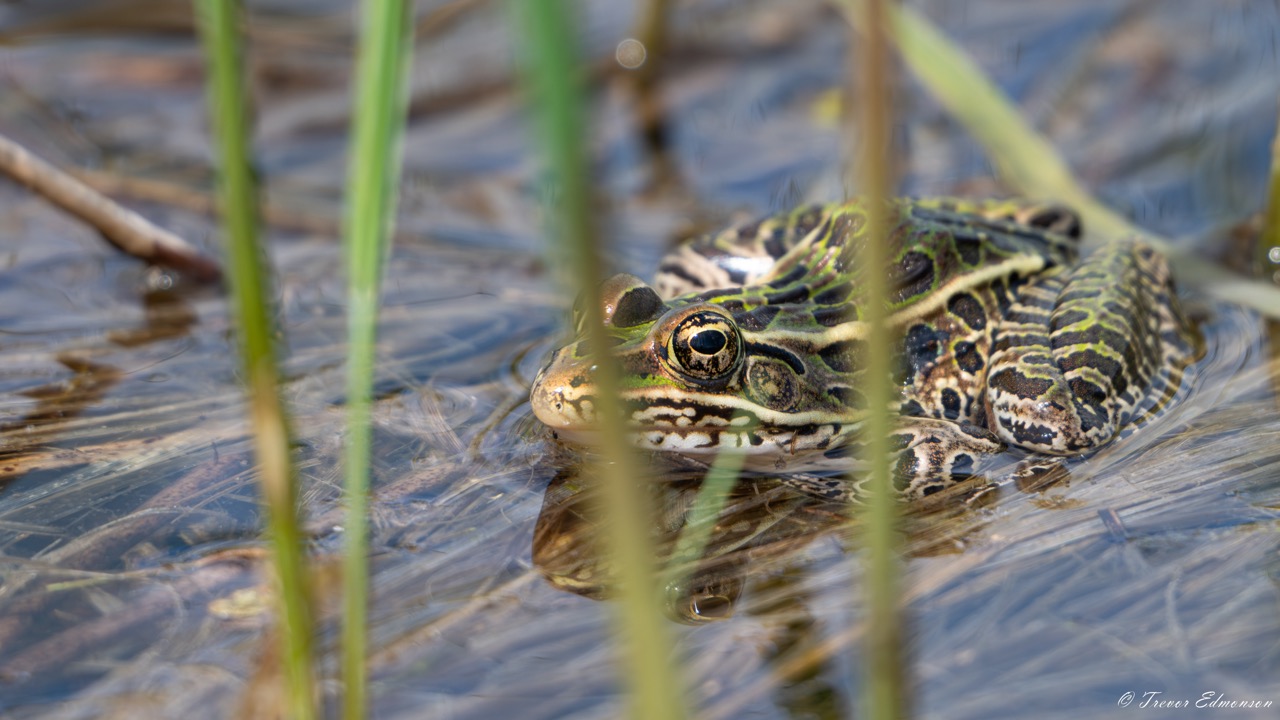
“A couple of decades ago, we could only really read about the lush and biodiverse wetlands of the Grand Kankakee Marsh,” Edmonson said. “Today, as I walk through a restored flooded sedge meadow and hear an American bittern calling and see a variety of frogs and flowers at my feet, I can begin to bring that history to the present. I am constantly in awe of what we can accomplish when we work together for nature. While people have significantly altered the landscape, we also have the power and opportunity to heal it.”
Indiana has established numerous nature preserves protecting wetland communities throughout the state. Beanblossom Bottoms Nature Preserve in Monroe County protects vital bottomland forest habitat. Northern Indiana features several preserves, including the Crooked Lake Nature Preserve, which spans Whitley and Noble counties, the Loon Lake Nature Preserve in Steuben County, and the Springfield Fen Nature Preserve in LaPorte County.
Twin Swamps Nature Preserve in Posey County protects important wetlands in southwestern Indiana. The Kankakee Fish & Wildlife Area maintains over 4,000 acres of habitat for migrating birds and other wildlife, offering visitors a glimpse into the rich history of the Grand Kankakee Marsh.
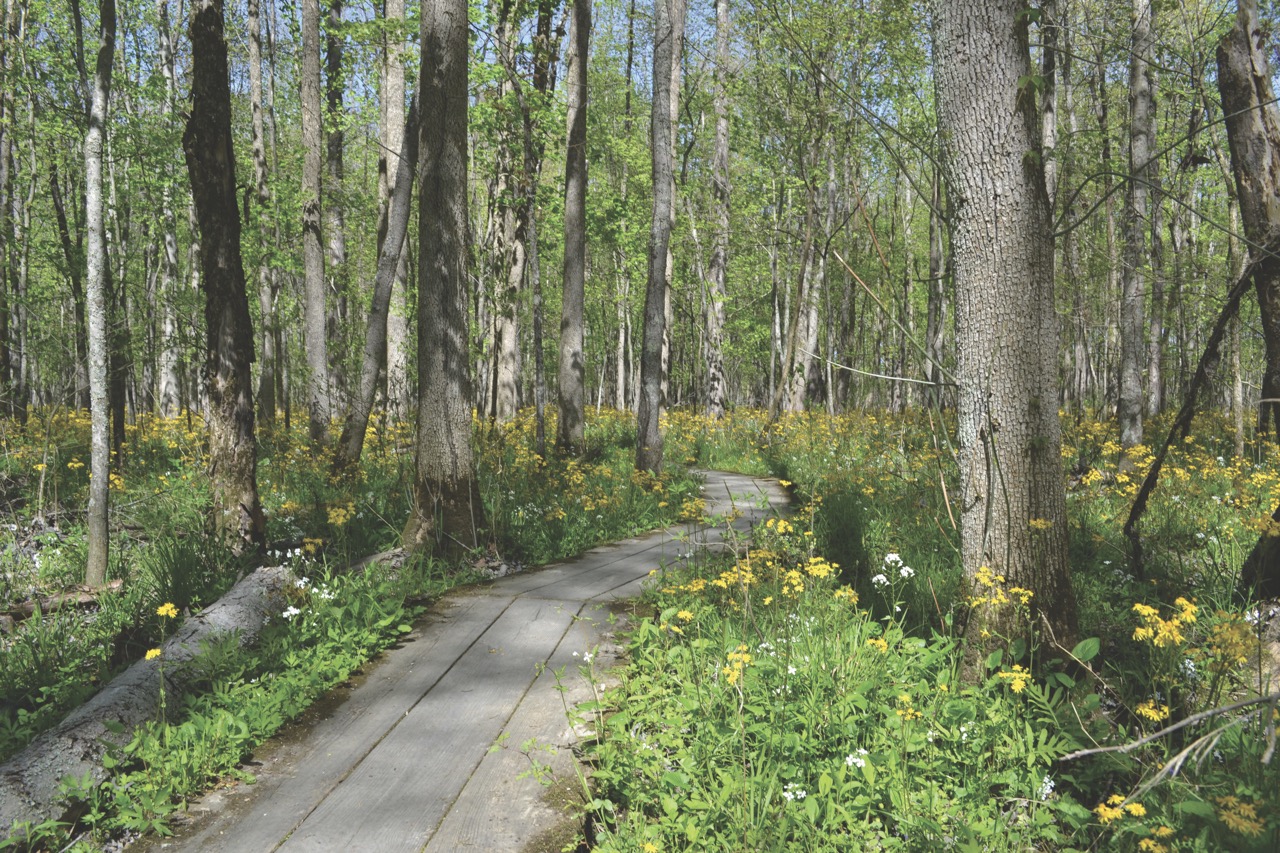
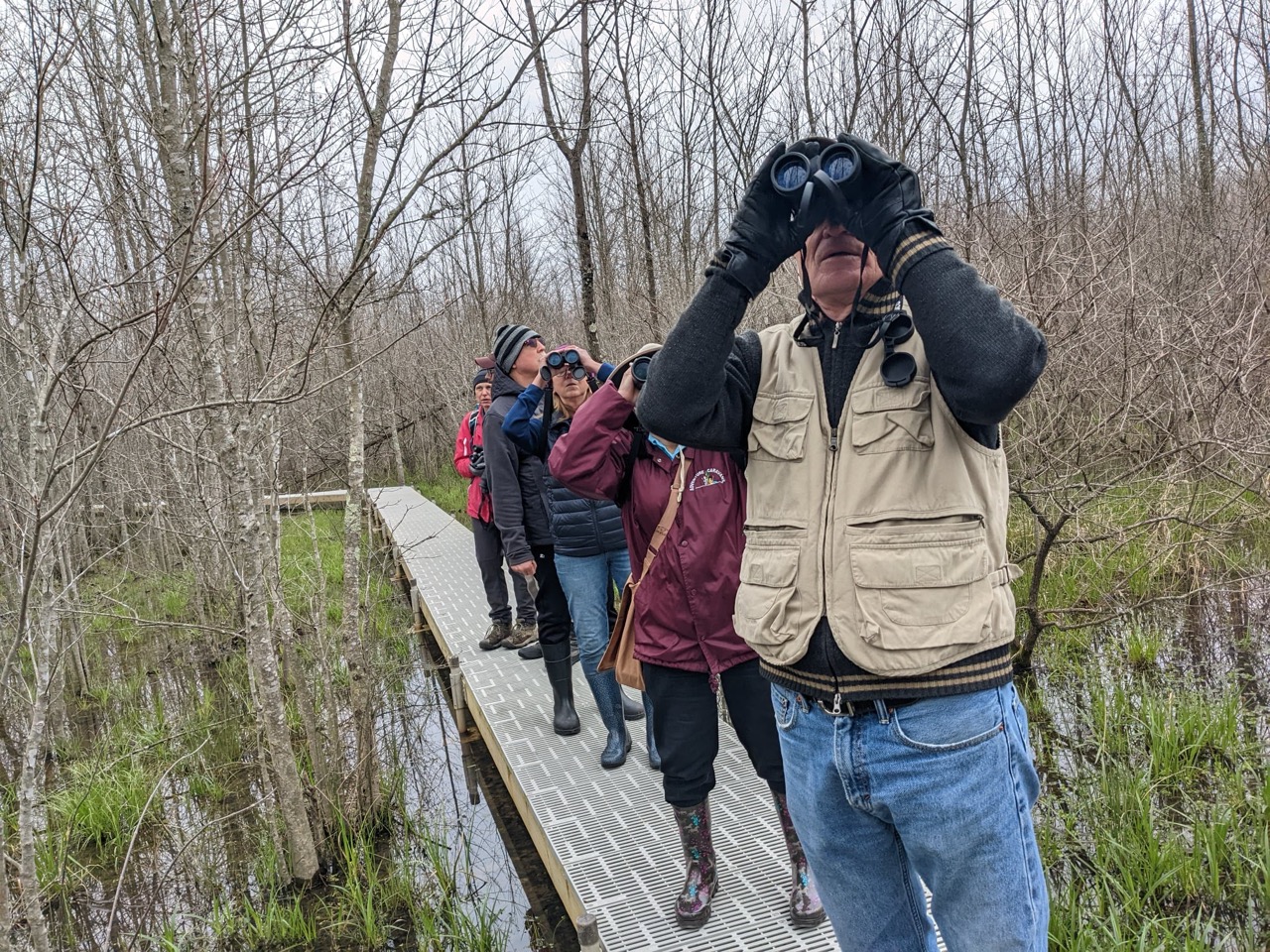
For visitors, the Wet Prairie Trail at the Kankakee Sands Welcome area offers a glimpse into this recovered ecosystem. Edmonson particularly loves the wetlands in June, when the sedges are at their most robust, plants are blooming, and the insects and butterflies return.
Though large areas of Indiana wetlands have been lost forever, their storied history lives on. Thanks to widespread conservation efforts, the spark of life has finally returned, allowing Indiana’s wetlands to thrive once again.
Editor’s note: A different perspective
The Limberlost Swamp near Geneva found an unlikely ally in author Gene Stratton-Porter. Despite the swamp’s dangers, she recognized its value as both a living laboratory and an inspiration for both her fiction and nature writing. We will explore Stratton’s remarkable life and legacy in the March issue.