
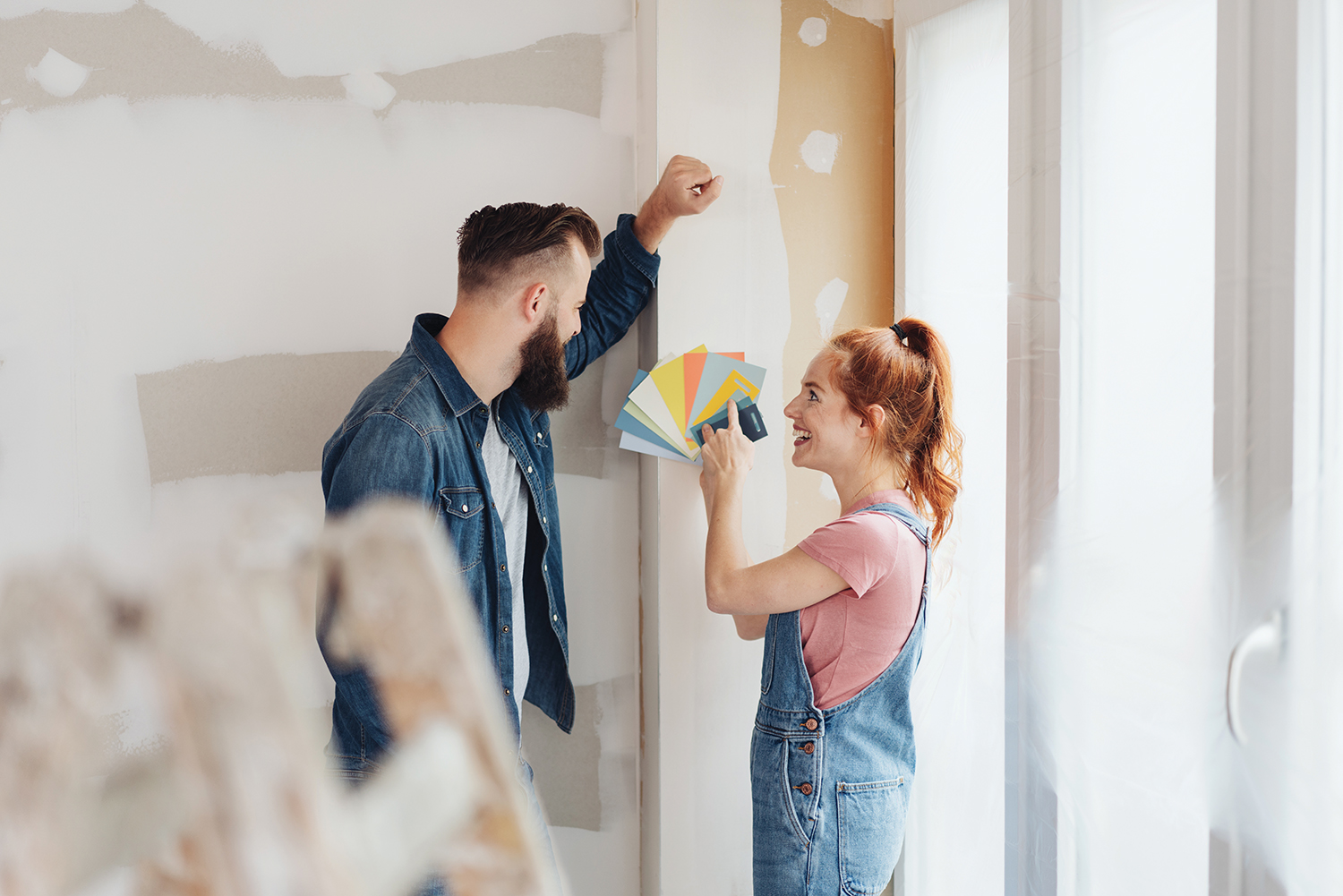
By TJ Leininger
Changing the color of your walls is a way to add personality and warmth to your home, but if you want to take a room to another level, try adding real or faux texture with paint, joint compound, and tools. It adds charm, hides imperfections, and can even increase durability.
The simplest method is using a paint product with built-in texture, such as Rust-Oleum Stops Rust Hammered paint or Krylon Fusion All-In-One textured spray paint and primer. Many options mimic wood, metal, and stone in a wide range of colors. For subtle dimension without extra work, you can also use additives like Zinsser Roll-A-Tex Sand Finish.
If you prefer more depth and richness, joint compound is the way to go. There are dozens of tried-and-true styles to choose from, such as knockdown, orange peel, shoelace, and slap brush.
From flat to full of life
Once you’ve picked your colors and products, cleaned and primed the walls, and tested your method on a small patch, you are ready for application. Rag rolling is a simple technique to create a fabric-like texture using two colors. After applying the base color and waiting 24 hours, lightly dip a cheesecloth or linen rag in the top-layer color, scrunch it, then roll or dab it onto the wall. Work in one small area at a time to keep the finish consistent. Other tools that work well for mimicking texture include sponges, stiff-bristled brushes, and sprayers.
If you’re using joint compound, follow the package directions when preparing. The consistency should be similar to thick pancake batter. Select the proper size of drywall knife for the texture style you’ve chosen. Then start in a corner and work your way inward in manageable sections. The edges of the previous patch should still be wet when you begin next to it, to ensure a seamless transition. Once you’ve completed the compound step and waited at least 24 hours for it to dry, finish by applying a primer and paint color with a thick-nap roller.
An imperfect masterpiece
If the end product doesn’t live up to your vision, don’t sweat it. Most texture mistakes are easy to fix. You can scrape off joint compound with a putty knife and repeat your application steps, or reset the area with a skim coating — a thin layer of joint compound that creates a smooth surface. Be sure to feather the edges so that everything blends cleanly. Most importantly, remember, textured walls aren’t meant to be perfect. A little variation adds character. Trust your eye, take your time, and you will end up with walls that are anything but ordinary.
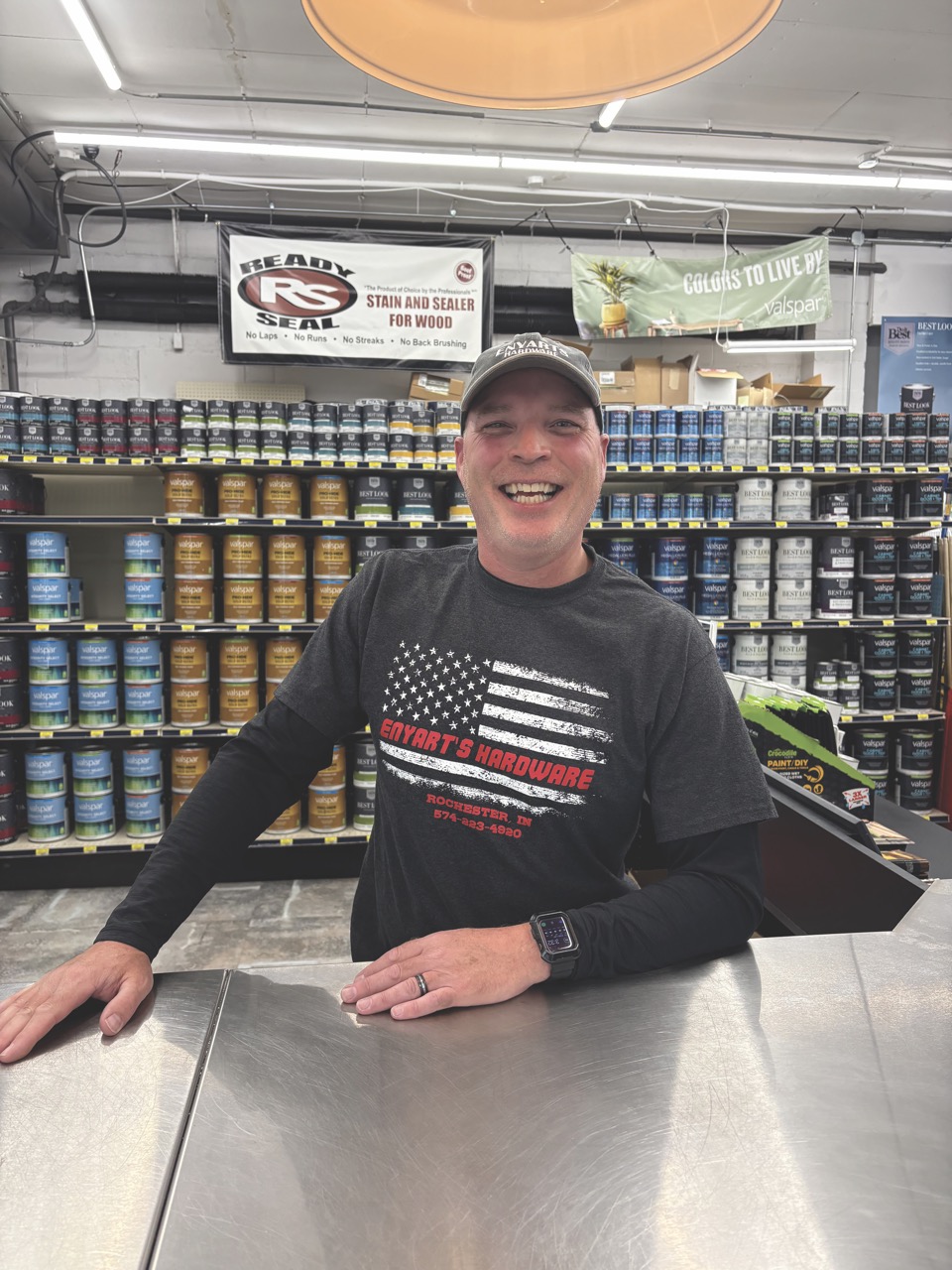
TJ Leininger is the store manager of Enyart’s Hardware in Rochester, a Do it Best member. Do it Best is a Fort Wayne-based home improvement cooperative supporting thousands of hardware stores, home centers, and lumberyards throughout the U.S. and worldwide.
(This article is for informational purposes only. Indiana Connection and Do it Best assume no liability for the accuracy or completeness of the information contained herein, or for injuries, property damage, or the outcome of any project.)