By Brian D. Smith
Justin Morseth returned from the Iraq War a lucky man. Despite serving as an infantry captain on the front lines of the conflict, he managed to avoid serious injury. His meritorious service earned him two Bronze Stars — one with the added distinction of Valor — and when he left the U.S. Army in 2003, he seemed ready to resume normal life in Indiana.
But he and his wife, Megan, would soon discover that he wasn’t quite as unscathed as he thought. Behavior that made sense in Iraq, such as carrying a knife to the bathroom and feeling anxious when stuck in heavy traffic, persisted into civilian life. Nightmares haunted his sleep; anxiety and depression plagued his days. Eventually, Morseth would be diagnosed with not only post-traumatic stress disorder (PTSD), but also a traumatic brain injury that had escaped detection in Iraq. Meanwhile, prescription medications aimed at helping him only worsened his condition.
Then an unconventional form of relief arrived — on four paws. During one of his sweating, trembling nightmares, the Morseths’ rescue dog, an Alaskan Husky named Samson, leaped onto their bed and snuggled against Morseth, comforting him. “Samson seemed to pull him out of his dark spaces,” said Megan, and the lesson wasn’t lost on her. If one rescue dog could save one military veteran from a PTSD crisis, she wondered, how many other veterans with PTSD could be saved by other rescue dogs? And how many rescue dogs (and cats) could be saved by veterans? With her husband’s support, she pitched the idea to more than 50 animal shelters. She repeatedly got no response or an answer of no — until the Humane Society for Hamilton County offered her a meeting and a receptive ear.
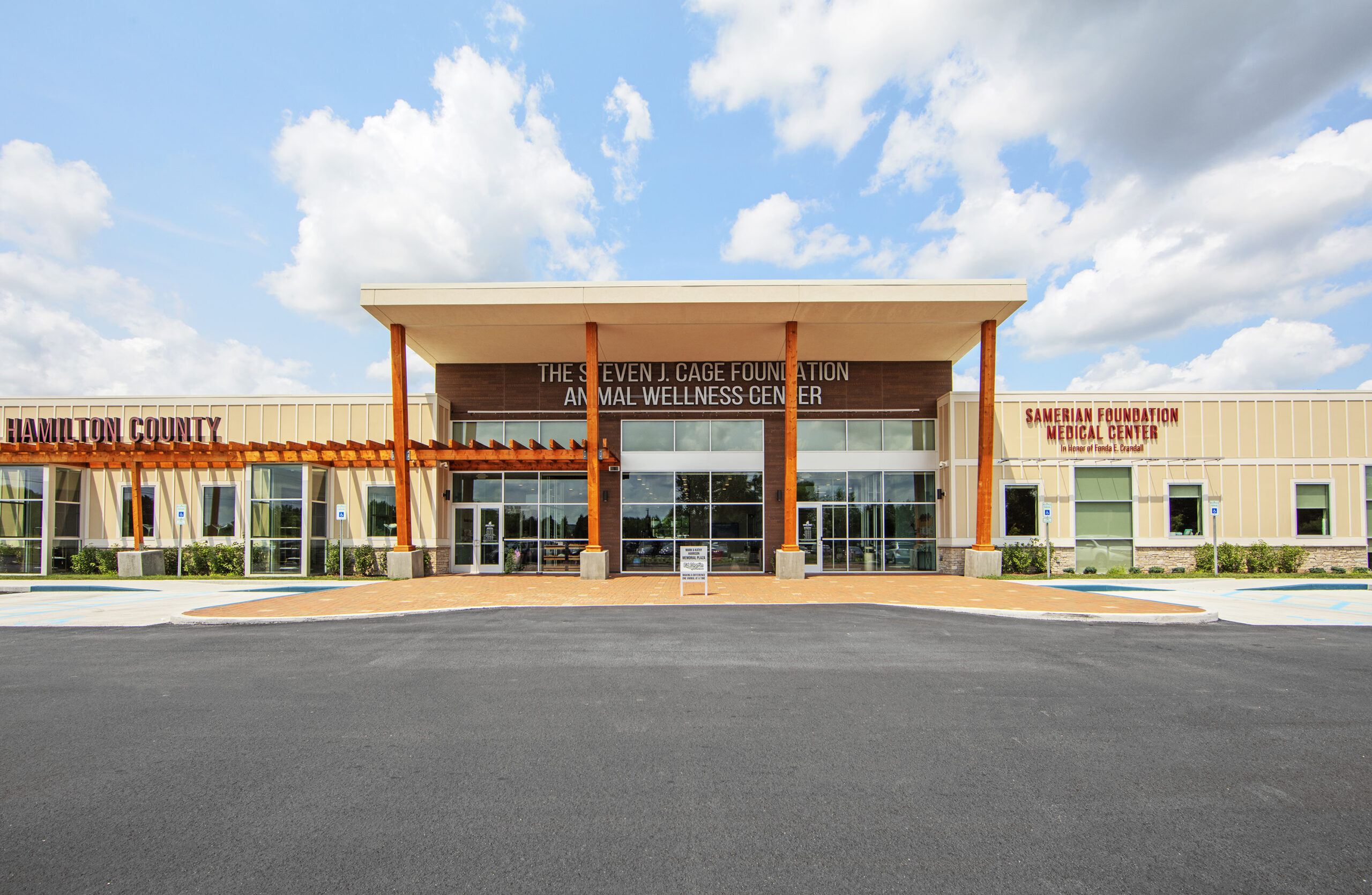
The resulting program, Pets Healing Vets, debuted in 2012 and continues to this day, connecting rescue dogs and cats with qualifying Indiana veterans suffering from PTSD or traumatic brain injury (TBI). Not only is the adoption fee waived, but the Fishers facility also pays for the lifelong care and feeding of the animal, including food, vaccines, prescriptions, dental cleanings, annual check-ups, and other necessities. Although other shelters across the nation feature programs pairing military veterans with rescue dogs and cats, Pets Healing Vets is believed to be unique in footing the bill for pet food and healthcare throughout the animal’s lifetime — exemplifying its motto of “Saving lives on both ends of the leash.”
And the program isn’t limited to Hamilton County veterans. “We serve all Hoosiers,” said Gina Smola, the shelter’s director of operations. “They just need to live in Indiana.” About 40 veterans currently participate in Pets Healing Vets, a few of whom moved out of state after joining the program.
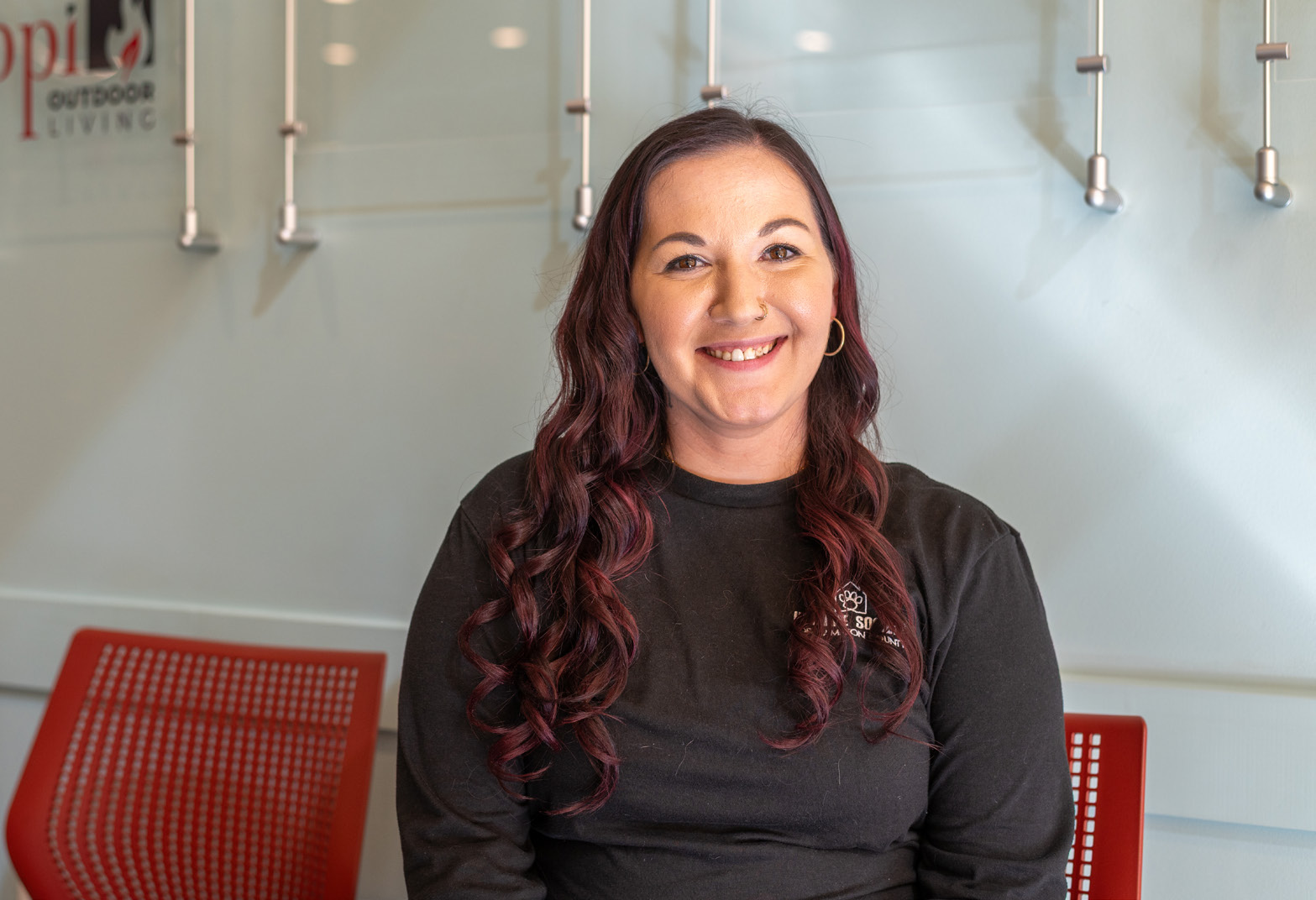
Gina Smola, director of operations for the Humane Society for Hamilton County (Photo by Kiley Lipps)
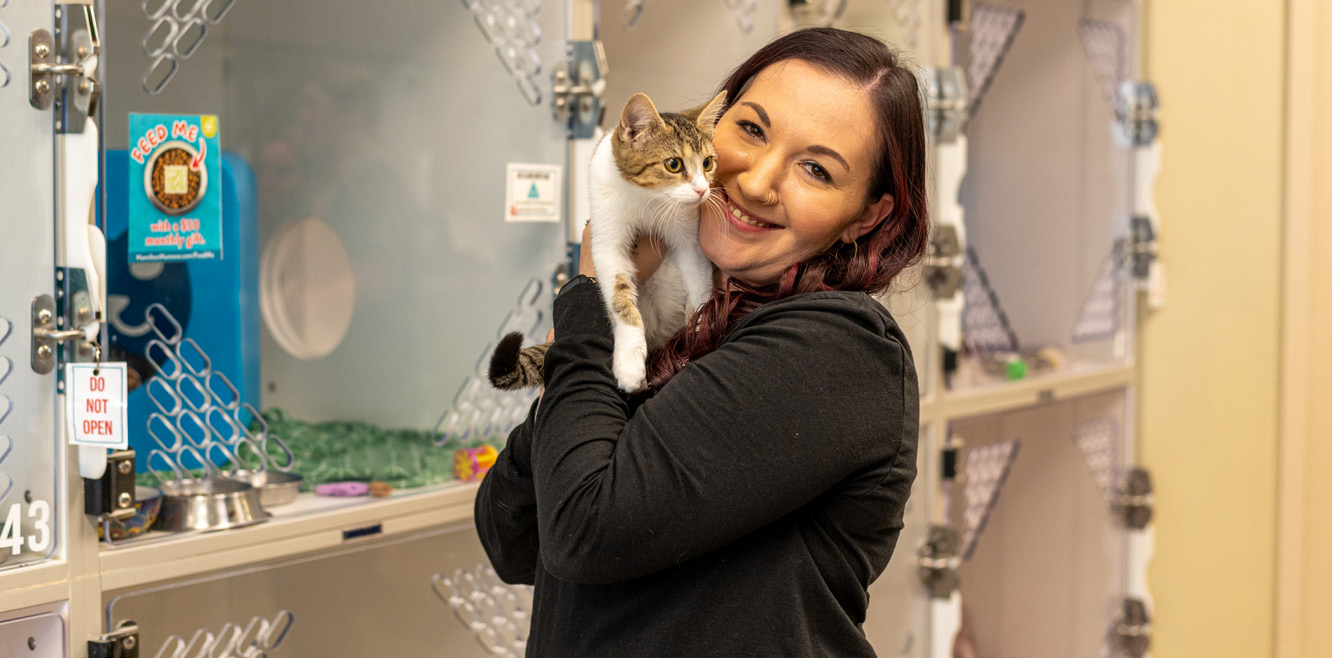
Pets Healing Vets currently has two cats participating in the program. “We would love to expand the number of cats matched with veterans,” said Smola. (Photo by Kiley Lipps)
But not all ex-service members are eligible, even if they have an Indiana zip code. Program applicants must supply documentation from a medical professional confirming a PTSD or TBI diagnosis and declaring that pet ownership would be safe and beneficial. They must also have received an honorable discharge from the military. A dishonorable or bad-conduct discharge automatically disqualifies a veteran from participation, as does a history of violent crime.
Finally, it’s important to remember that the pets that heal vets are companion animals, which offer emotional support, not service animals, whose specialized training enables them to assist disabled individuals, such as guiding people who are blind. Even so, the Hamilton County adoptees receive professional training before heading to their new home, and the shelter also furnishes free follow-up behavior counseling or additional training as needed during the pet’s lifetime.
Making the right connection
For a successful applicant, the adoption process involves more than just bopping over to the Humane Society and picking a doggie in the window. “We get to know the veteran, exactly what their needs are, whether they want a cat or a dog,” said Smola. “I’ve had vets that don’t want a clingy animal and vets that want an animal that will protect them. There are social butterflies and some that don’t want to leave the house.”
They get to know the animals, too — whether they’re aloof or outgoing, quiet or yappy, tranquil or excitable, whether they get along with other dogs, cats, or children, and what their former living conditions were like.
And when pet meets vet, Smola expects love at first bark … or meow. “We want to make sure there’s a connection — that sparks are flying,” she said, sounding more like the proprietor of a matchmaking service. “We want to make sure the animal checks all the boxes. They have to be able to meet each other’s needs.”
Whether it’s pet adoption or people dating, opposites don’t necessarily attract. Some animals that jump at the sound of fireworks or thunderstorms do well with veterans who also flinch at boisterous bursts.
‘We saved each other’
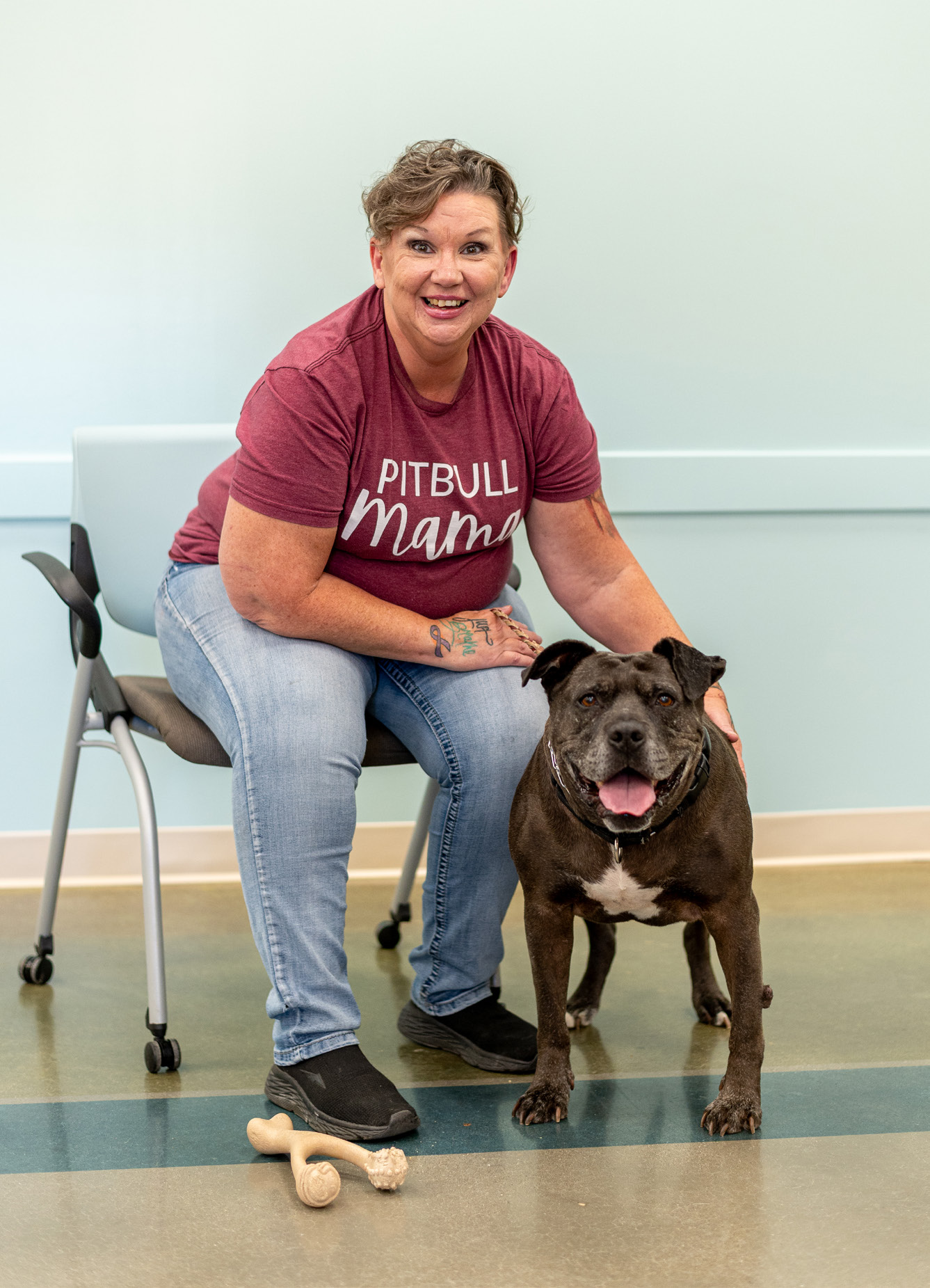
And some of the most traumatized pets find happiness with some of the most traumatized owners — as in the case of a dog named Caesar and his adoptive “mom,” Army veteran Emily Pence, who has PTSD. But hers didn’t come from the horrors of war. Assigned to a Patriot battery in Germany, Pence was sexually assaulted by a male superior. Too intimidated to report the offense, she left the service the following year, but continued to suffer psychologically after her discharge.
It’s a plight that Smola knows well. “I didn’t serve in the military,” she said, “but I have severe PTSD, anxiety, and depression due to being sexually abused throughout my childhood. That’s why I relate to shelter animals, because they have obviously been failed by someone in their life.”
Pence was nearing her emotional limit by the time she went looking for a canine companion at the Humane Society. “My PTSD and my anxiety were really high,” she said. “I was lucky to sleep two or three hours a night. It’s like the old saying goes, if I hadn’t gotten help, I would be six feet under or behind bars.”
She had seen a flyer for Pets Healing Vets, and her youngest son encouraged her to get a dog. Pence pored over the dog photos on the Humane Society website, chose seven possible pets, and arranged to see them in person. “I walked in and a lady came up behind me and said, ‘Are you Emily?’” she recalled. “I looked at a dog I’d seen online, and there was just no connection. Then she brought out Caesar. But before she brought him out, she told me
his story.”
It was not easy to hear. The 70-pound pit bull terrier had lost his previous home under ghastly circumstances: A mass slaying claimed every human occupant but one. Police took Caesar and his two siblings to a shelter, but it lacked a no-kill policy and might have euthanized all three of them had the Humane Society for Hamilton County not stepped in to take custody of
the trio.
What transpired between Pence and Caesar had nothing to do with sympathy. “When she brought him out, it was instantaneous,” she said. “I just had this feeling when I got close to him. Like he was mine, and I felt the love. I wanted to bring him home that day.” It took another month for his “Gotcha Day,” as pet owners refer to the day they bring home an adopted animal, but in 2021, she took ownership of the forlorn pooch.
Now she’s sleeping better and feeling the same comfort that Justin Morseth found when his dog became a snuggler. “When I’m sick, Caesar is right by me,” said Pence, who resides near Lapel. “When I’m having a bad dream, he will get up close to me as much as he can. I think we kind of saved each other.”
A social butterfly
The day Jose Sierra came to the Humane Society to get a dog, they showed him three — after which Sierra couldn’t make up his mind. “We’ll talk about it,” he said, but the discussion didn’t last long. He was quickly overruled by his fiancée, Sarah Evans, who had sat in on the session.
“No, we’re getting Hank,” she told Sierra, recalling the pitbull-boxer mix they had seen. “You seemed to click with him.” And seven years later, it’s obvious she made the right call.
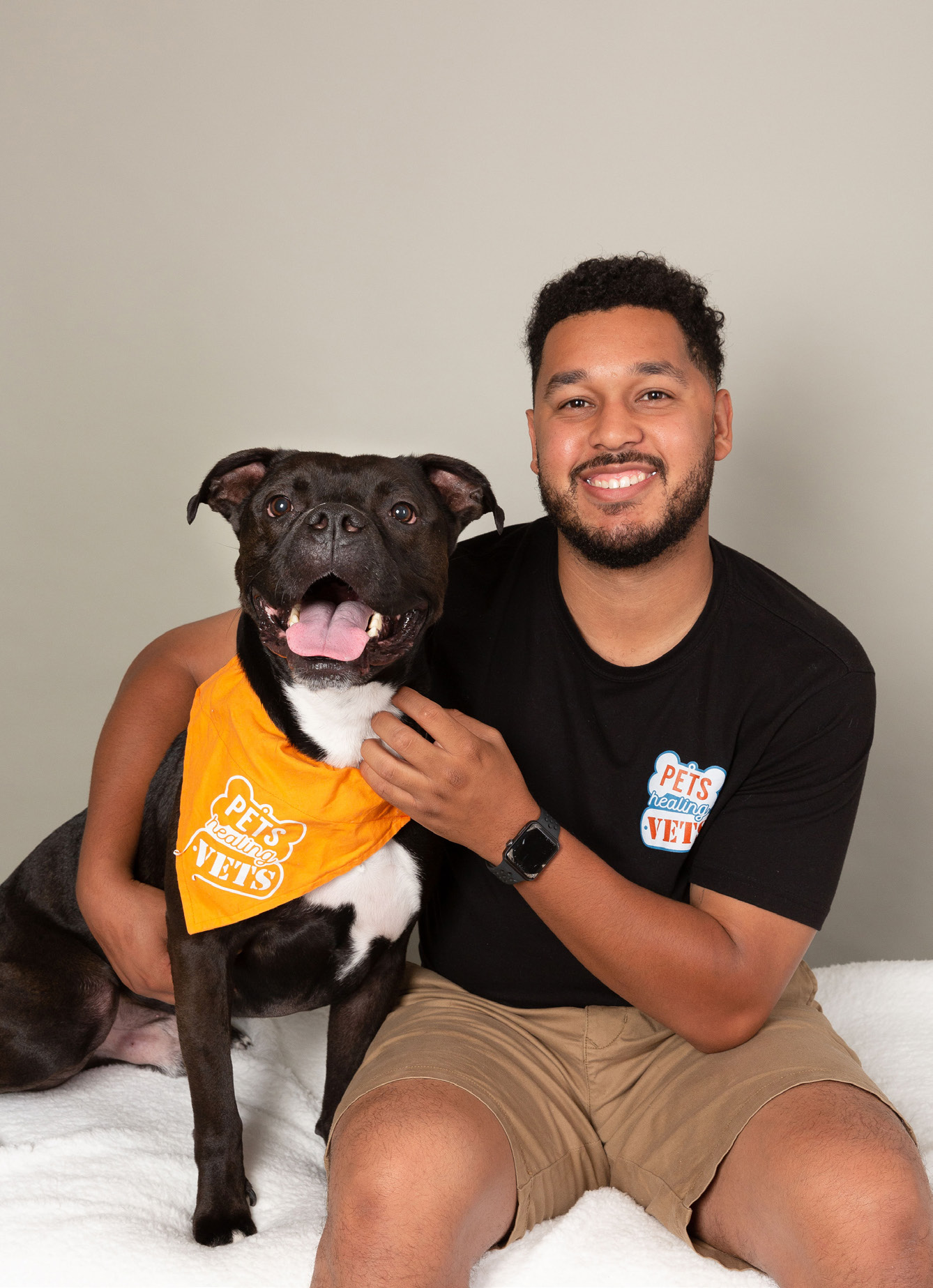
Back then, Sierra was mired in depression after a brain injury prompted his medical discharge from the Army. On top of that, the Tennessee native had moved to Indiana to join his parents, who came here for an employment opportunity. “I’m usually a social person, but I didn’t know anybody here. And I didn’t want to go by myself,” he said, “so I would just work and go home.”
Enter Hank, whom Sierra described as a social butterfly.
“Now that he’s here, I’m forced to go out and walk him, talk to other people walking their dogs, and socialize,” said Sierra, of Cicero. It’s not surprising that he chose a rescue dog over a pooch with a pedigree. He grew up with parents who belonged to a volunteer rescue team for pit bulls.
Hank had lived with two previous families and was found wandering behind a Walmart. Life has improved considerably since. Besides paying for his food and veterinary care, Pets Healing Vets even covers the cost of nail trimming.
And it never hurts to get spiffed up, especially for a dog that’s mastered the art of cultivating human attention at dog parks. “Hank just ignores the other dogs now,” said Sierra. “He goes and meets the owners. He kisses babies and kids like he’s President.”
An instant boost to life
Eric Smith’s introduction to a coonhound named Dolly wasn’t exactly a match made in heaven. “They brought her out and gave me some treats to give to her,” he recalled. “She wasn’t interested. She was looking at a squirrel in a tree.”
The Humane Society had five other adoptable dogs waiting in the wings for his consideration. Yet Smith waved them off and motioned toward Dolly. “That’s the one,” he said.
Her independent attitude appealed to Smith, who wasn’t looking for a high-maintenance pet that demanded constant affection — just a companion. His life in and after the military may have had something to do with that. Wounded only six months into his deployment to Iraq, he wound up blind in one eye, out of the military on a medical discharge, and feeling lost and lonely. “Once you leave the Army, you lose that camaraderie,” said Smith, of Lebanon. “It put me in a deep, dark depression. I was an extrovert, but when depression set in, it turned me into an introvert.”
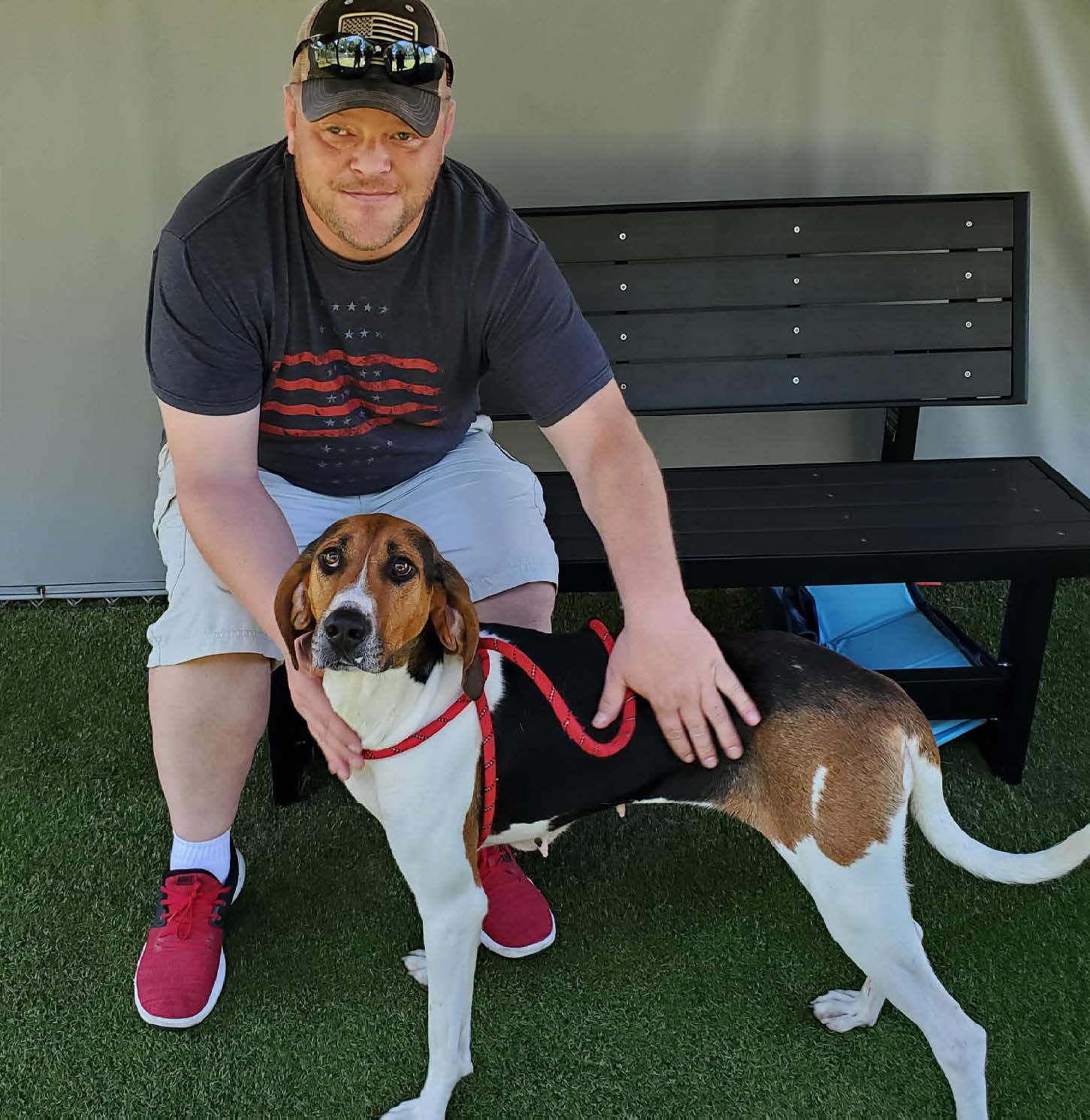
He spent the next decade heavily medicated for depression and PTSD, but neither that nor extensive therapy coaxed him back into the civilian world. His parents suggested getting a companion animal, and while checking out animal shelters, Smith discovered Pets Healing Vets. And before long, he was saying, “Hello, Dolly!”
Despite her detached nature, or perhaps because of it, Dolly has changed her owner’s life in tangible ways. Smith seems to regard her with a sense of bemusement, recounting her quirky behavior in a dry, observational style. For instance: “She’s a very lazy dog. She doesn’t even like toys. I haven’t found one she likes, not even a ball. I’ve even taken her to PetSmart, and she wasn’t impressed with the toys.” Or: “I’ll go into a room when she’s in it, and she will leave that room. She’s not a clingy dog, which works for us both.”
But Dolly has provided more than entertainment. She was an “instant boost” to his life, enabling him to cut back significantly on his medication, he said. Smith has also re-entered the workforce, transporting elderly patients to medical appointments. “It’s got me out talking to people, interacting,” he said. “I love their stories. I’m a big history nerd and like hearing their version of what happened. I’m feeling closer to normal.”
Smith isn’t where he was before his combat injury and will never be exactly the same. But for a young veteran who spent a decade in the grip of PTSD and depression, there’s reason enough to celebrate a certain blasé coonhound, not to mention the shelter and its adoption program that brought her into his life. “You can tell they’re there for the right reasons,” he said of the Humane Society. “They care tremendously for the animals.”
They care tremendously for the veterans, too, often bestowing, for at least a few hours a day, the greatest gift they could give a PTSD patient — peace of mind, even if it takes a tail-wagging courier to deliver it.
About Pets Healing Vets
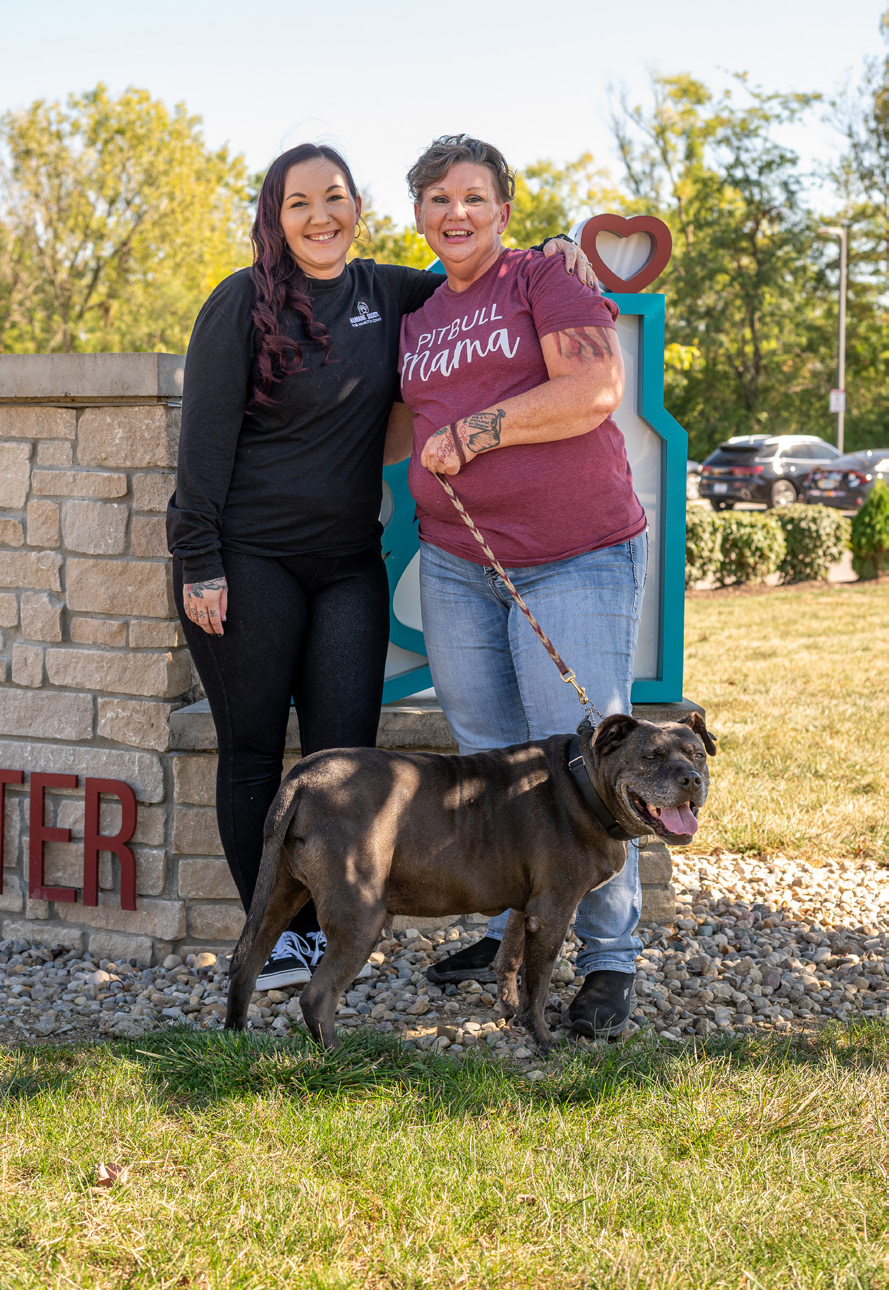
Pets Healing Vets connects rescue dogs and cats with qualifying Indiana veterans suffering from PTSD or traumatic brain injury. Although other shelters across the U.S. feature programs pairing military veterans with rescue dogs and cats, Pets Healing Vets is thought to be the only program covering the cost for pet food and healthcare throughout the animal’s lifetime.
If you’re a veteran interested in learning more or you would like to support this program, you can contact the Humane Society for Hamilton County at hamiltonhumane.com or by calling 317-773-4974.