
President/CEO
The rapid growth of artificial intelligence, especially energy-intensive technologies like generative AI and large language models, is presenting several challenges for electric utilities across the country. These technologies depend on large data centers that consume massive amounts of electricity, and the demand is expected to continue to rise.
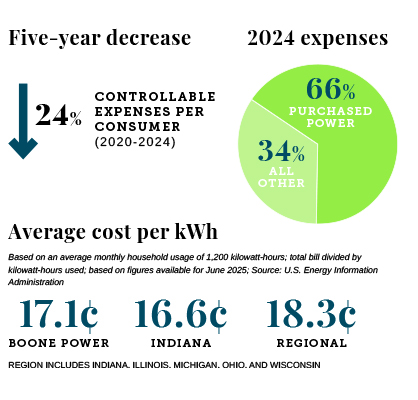
For Boone Power, purchased power accounts for two-thirds of our expenses. While we can’t directly control those expenses, we have representation on the board of directors for our wholesale power provider, Wabash Valley Power Alliance. It’s a cooperative just like we are.
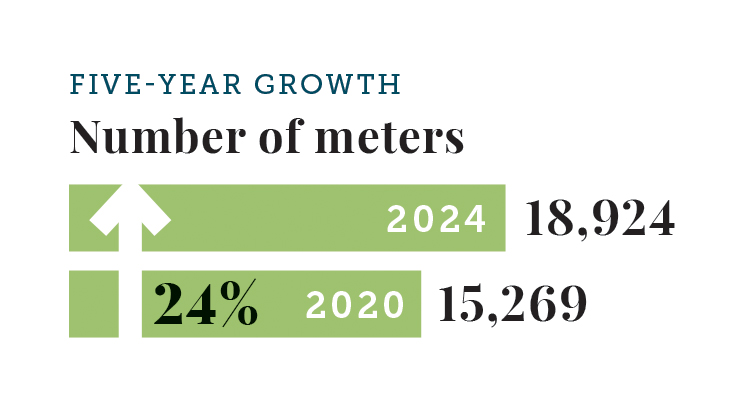
Even with these pressures that growth presents, growth also helps keep rates stable. From 2020 to 2024, the number of meters we serve increased by 24%. At the same time, we decreased our controllable expenses per member by 24%. Growth helps us spread costs across more consumers, which helps keep rates stable for everyone.
We keep a close eye on our financial health with regular cost-of-service studies. These reviews help ensure we’re upholding our mission: to provide safe, reliable, and reasonably priced electricity for our members. We take seriously our responsibility to maintain a fair and reasonable rate structure.
Since 2020, we’ve seen the cost of utility infrastructure rise sharply. Utility poles now cost 25 to 40% more, transformer prices have jumped 70 to 100%, and wire has increased by 50%. To keep up with these rising expenses and avoid sudden, steep increases, for the past several years, we’ve put in place a small annual adjustment. For example, as was noted on February 2025 billing statements, we instituted a 1.95% increase this year. This steady approach helps us manage costs in a responsible way.
As we’ve shared in past magazine articles and via our other channels, to keep up with local growth, we’re building a new facility for Boone Power so we can hire more employees, house more trucks, and store more equipment. While it’s a significant investment, the cost impact on our members will be small — about a half-a-cent per kilowatt-hour for the average General Service member.
And as I’ve explained, growth generates revenue, which in turn provides rate stability and delays the need for substantial rate increases.
We also pay attention to how our rates compare to other utilities. Boone Power’s average General Service member uses 1,200 kilowatt-hours per month. The cost per kilowatt-hour for this average user is 17.1 cents. By comparison, the regional average (includes Indiana, Illinois, Michigan, Ohio, and Wisconsin) is 18.3 cents, and the Indiana average is 16.6 cents, according to the U.S. Energy Information Administration.
Electricity costs overall have risen more slowly than many other everyday items. From 2018-2023, the cost of electricity went up 4.9%, compared to nearly 6% for gasoline and bread.
I understand that the costs of goods and services affects us all, but I want you to know that Boone Power will always take our not-for-profit cooperative business model seriously. We remain committed to fairness, reliability, and transparency.