Many people think they should put away their gardening gloves in the fall. Not so. Keep wearing the gloves for a few more weeks for these tasks. Doing this maintenance now will make spring easier.
Water
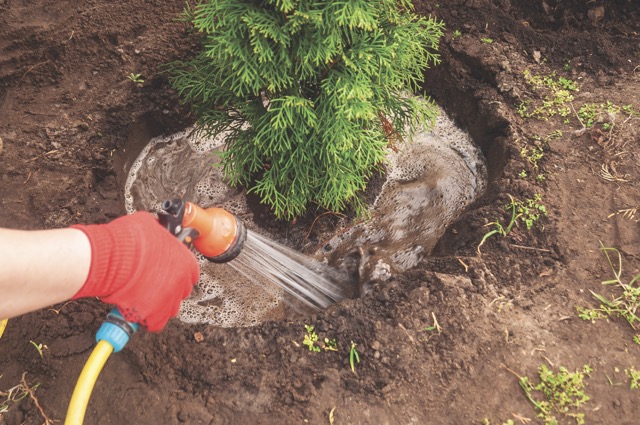
Watering is critical this time of year for newer trees and shrubs planted in the last two or three years. It’s also important for evergreens, including needle-type like arborvitae (Thuja spp.) and leaf-type like holly (Ilex spp.). The drying winds of winter take a toll on the leaves and needles of evergreens. Sending these plants into winter with good moisture content protects them for next spring’s beauty.
Fertilize
September and October are the two best times to fertilize the lawn. Fall is also the best time to treat perennial weeds like dandelions in the yard. Always read and follow the label directions on the landscape products.
Now is not a good time to fertilize trees, shrubs, vines, and perennials. Fertilizer encourages plant growth, which we don’t want to promote at this point in the year. New growth won’t have time to harden off or prepare for winter. Wait until late winter or spring, when you see new growth beginning, to fertilize.
Prune
Hold off on pruning spring-blooming trees and shrubs this time of year. Pruning spring-blooming plants like lilac and forsythia now cuts off the flower buds for next year. Avoid pruning evergreens, too. You can prune summer- and fall-blooming shrubs during this time, like elderberry (Sambucus spp.) and ninebark (Physocarpus spp.).
To cut back or not
The standard rule used to be to cut back perennials and rake out garden litter from the beds as part of the fall clean-up. The practice was tied to concerns about insects or disease spending the winter harboring on our plants or their litter.
Many gardeners concerned about the declining population of native bees, beetles, and other fauna don’t cut back their perennials until spring. Our native insects, such as leafcutter bees, winter over in the hollow stems of perennials, or the bugs snuggle down amid the garden litter.
Birds munch on the flower heads, which not only helps them, but the scene also brightens our winter day.
Some concerns exist when you don’t cut back, such as for plants that self-sow, like black-eyed Susan (Rudbeckia spp.).
Whether you cut back or not is up to you. If you don’t want to leave all your plants upright, have a trial bed where you don’t cut back and see how you like it. Your resident fauna will.
Jo Ellen Meyers Sharp blogs at hoosiergardener.com.