
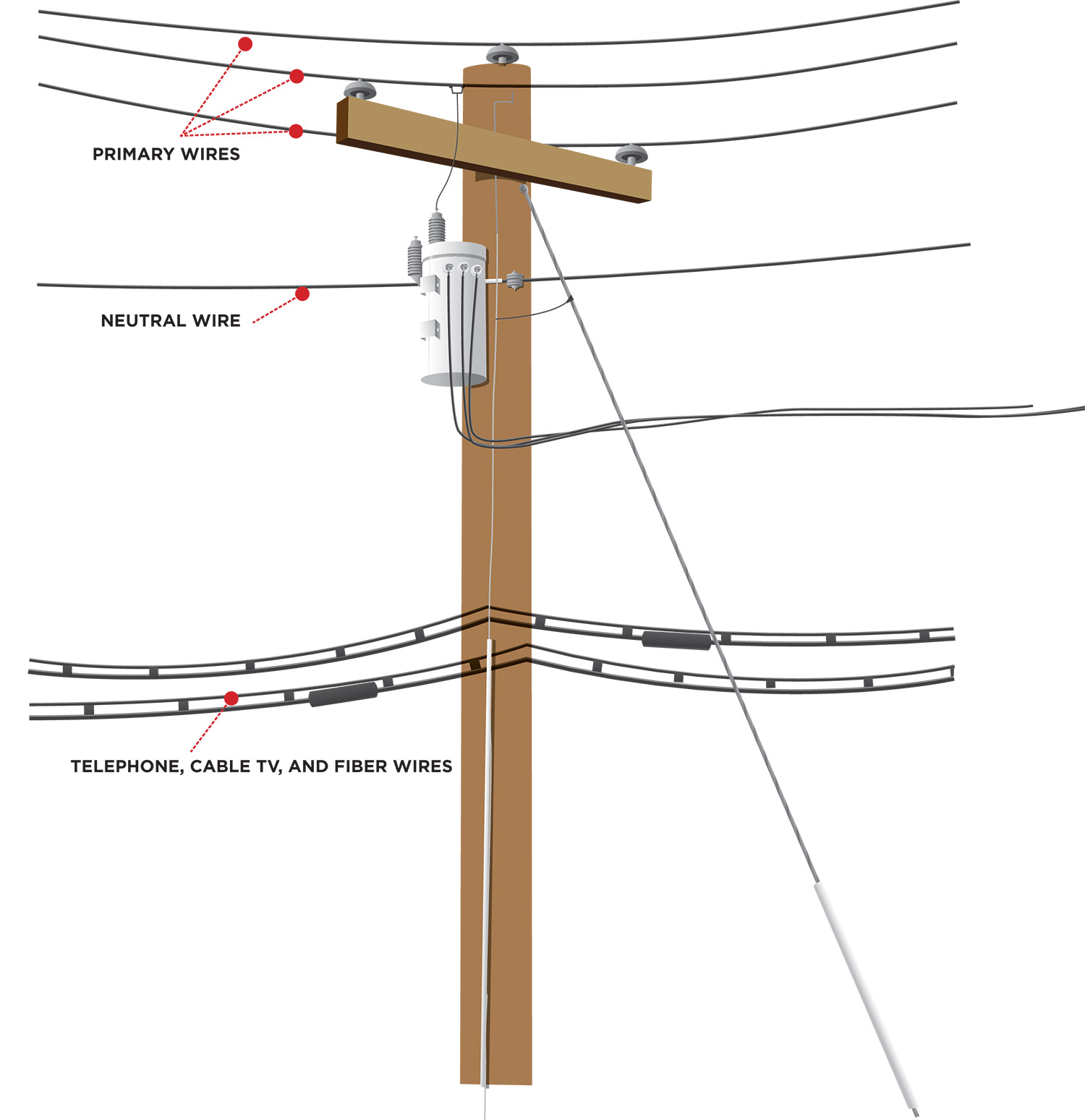
Utility poles seen along roadsides are commonly called “telephone poles.” However, most poles you see today are owned by the electric utility. In rural areas, pole attachments are critical to expanding broadband internet, telecommunications, and cable services. In communities served by REMCs, third-party providers often seek to attach cables, lines, or other equipment as a cost-effective option for their services.
The process of attaching to REMC-owned poles involves several steps designed to ensure safety, reliability, and joint-use access. Once a contract has been established between the cooperative and the attaching entity, they will move through several steps:
1. Application and review
An attacher, such as an internet service provider, submits an application to the REMC. The application includes detailed maps, pole identification numbers, proposed equipment specifications, and the intended use. The REMC reviews it to ensure it meets engineering standards, safety codes (such as the National Electrical Safety Code or NESC), and internal policies.
2. Pole survey and engineering assessment
The REMC conducts a field survey and engineering assessment. A pole is evaluated to determine if it can accommodate the new attachment without compromising its structural integrity or safety. The survey checks for adequate space in the pole’s “communications space,” required clearance from existing equipment and lines, and proximity to other utility infrastructure. If the pole is found to be unsuitable, a “make-ready” process is triggered.
3. Make-ready work
Make-ready work prepares the pole for a new attachment. This may include rearranging existing attachments, replacing the pole with a taller one, or upgrading supportive hardware. The REMC provides a cost estimate and timeline for this work. Once approved and paid for by the attaching party, the REMC or a licensed contractor completes the necessary work. This phase ensures all attachments meet safety standards and the pole remains stable and functional.
4. Attachment installation
Once the make-ready work is complete, the attaching party can install its equipment. This installation must comply with NESC guidelines, contract provisions, and REMC-specific standards. The REMC may inspect the installation to verify compliance with all standards and ensure it does not interfere with existing utilities.
5. Ongoing monitoring and maintenance
After the attachment is installed, the attacher is responsible for maintaining its respective equipment while the REMC retains the right to inspect, audit, and enforce compliance over time. When new electric poles are installed to replace aging or broken poles, the attacher is required by Indiana law to relocate their lines to the new poles.
The Indiana REMC infrastructure continues to serve as the backbone for essential services, including broadband deployment. This pole attachment procedure ensures public safety, system integrity, and fair access.