
One of the most important ways that members of cooperatives, like Boone Power, exercise their ownership is by electing the board of directors.
The Boone Power board is comprised of nine directors. Each year, three directors are elected to serve three-year terms. Boone Power members can participate in the cooperative’s director election each spring. Article IV of our bylaws (available at boonepower.com/bylaws) outlines the process in detail. Here is a condensed summary:
How the process works
Nominating committee: Each year, a committee of fellow members is appointed by the board to identify candidates for any upcoming vacancies. The eligibility of any petitioners and incumbent candidates is verified.
Member petitions: Any member residing in the districts up for election may seek election by petition. This process requires a member to collect signatures from 3% of the members in their district and submit an interest form. In 2027, directors will be elected from districts 4, 5, and 6. Both the signatures form and the interest form are available at boonepower.com/board-of-directors and are due by Jan. 20.
Elections: Members can vote for candidates in each district up for election each year, regardless of the district in which they reside. Members have several options for voting, including online, by mail, or in person.
Why some elections are uncontested
Boone Power’s elections don’t require multiple candidates. Serving as a director is a significant responsibility, which is outlined on the next page. Some years, the incumbents are the only members to express their desire to serve (in this case, continue serving) as a board director. When that happens, the election still takes place in accordance with our bylaws.
Why your vote still matters
Even in years when races are uncontested, your participation is vital. By casting a ballot, you:
- Help us reach the quorum required by our bylaws, ensuring the election is valid.
- Affirm your directors’ commitment to serve.
- Demonstrate that members remain actively engaged in cooperative governance.
The cooperative difference
Cooperatives operate under the principle of Democratic Member Control. The election process ensures that members always have both the right to run and the right to vote. Members’ participation, whether by voting or serving on the board, ensures Boone Power remains a member-led, member-owned organization.
Stay tuned to upcoming magazine issues and our website for more details about the 2027 election.
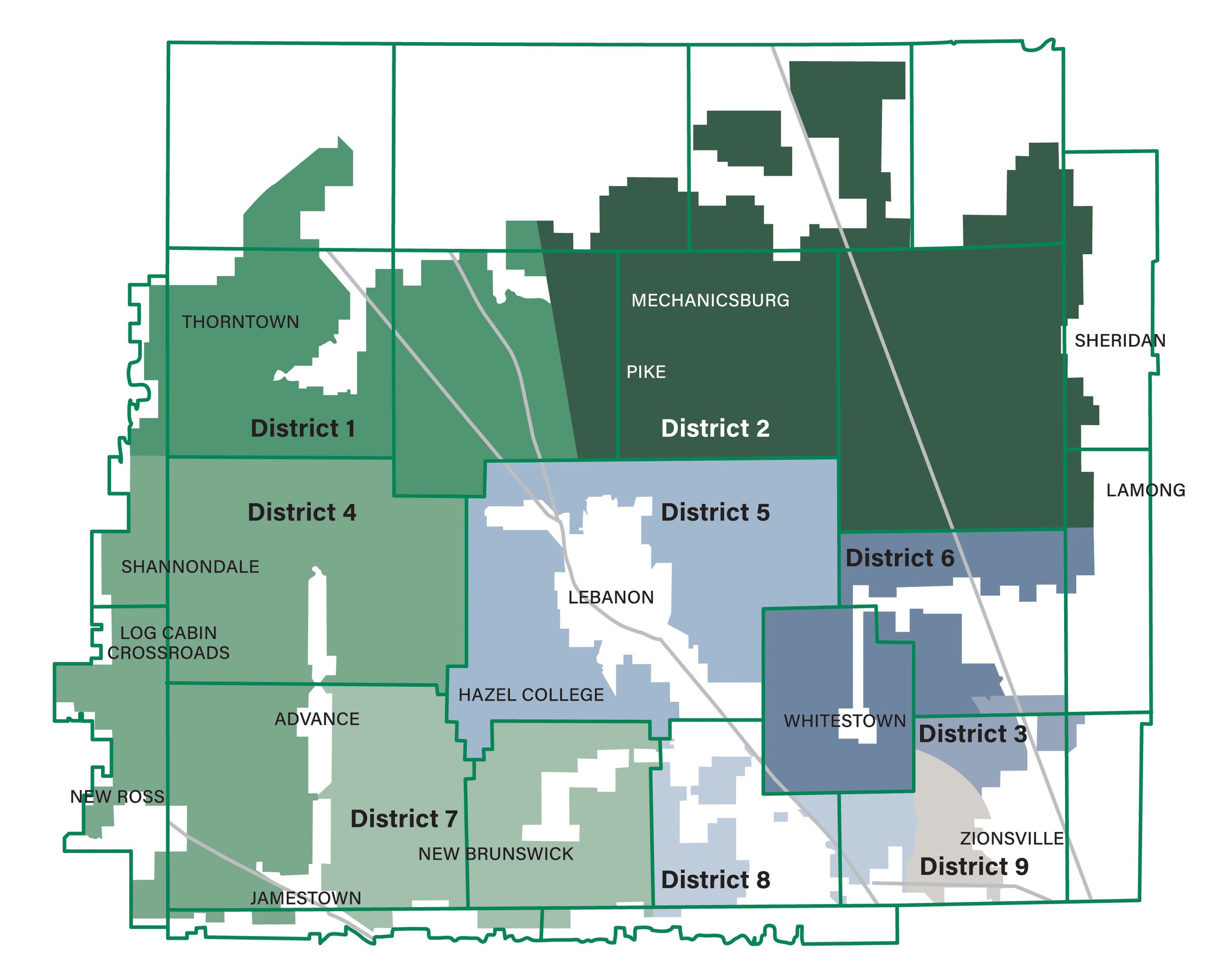
Director seats up for election
Districts 4, 5, and 6 will be elected in 2027.
Districts 7, 8, and 9 will be elected in 2028.
Districts 1, 2, and 3 will be elected in 2029.
Boone Power Territory Map
What does a Boone Power director do?
Serving on the Boone Power Board of Directors involves participating in monthly meetings, attending training, and helping to guide the cooperative in the best interests of all members.
Directors have several responsibilities:
Governing the cooperative: Directors establish policies and oversee the cooperative’s business affairs. Board decisions are made collectively at regular meetings.
Planning for the future: Directors help provide the resources needed to operate the cooperative, including reviewing and approving annual budgets.
Making informed decisions: Directors are expected to review information, consider challenges and objectives, and act in the best interest of the full Boone Power membership.
Attending and participating: Directors are expected to attend and actively participate in regular board meetings, committee meetings, the Annual Meeting, and special meetings when needed.
Continuing to learn: Directors must participate in at least two qualifying training sessions annually to develop the knowledge and skills required for their role. They are encouraged to pursue continuing education to earn accreditations through the National Rural Electric Cooperative Association.
Following cooperative rules and responsibilities: Directors must follow the cooperative’s Articles of Incorporation, Bylaws, and established policies; act in good faith; and disclose and avoid conflicts of interest.