
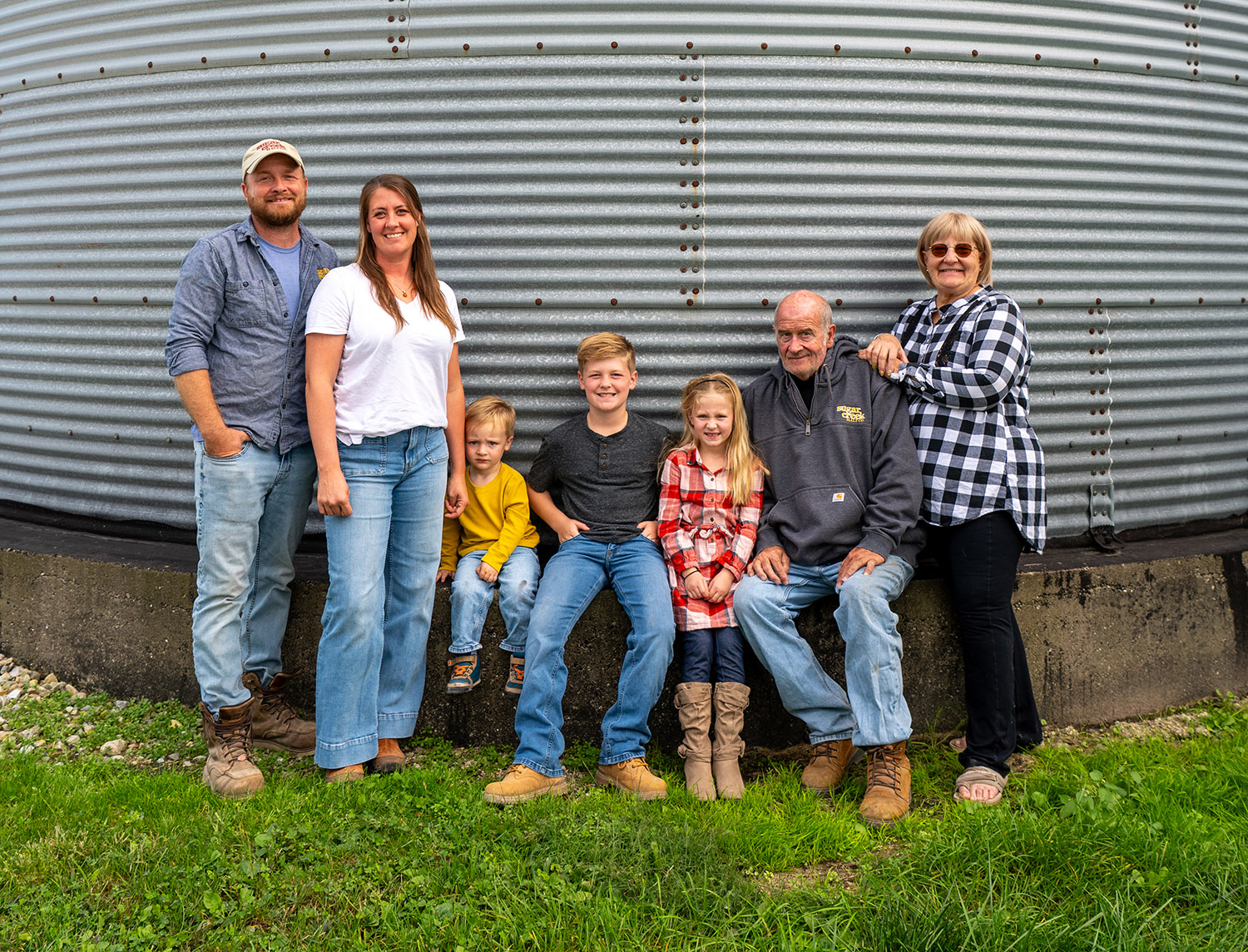
BY STACEY MCARTHUR
Years ago, Caleb Michalke would have thought working on a farm was the last path he would ever choose. He grew up on a 450-acre family farm in Lebanon, Indiana, where he helped raise as many as 7,000 hogs a year and grow Indiana staples such as grain, corn, and soybeans.
When it was time for college, Caleb attended Purdue University and studied abroad in Europe. He returned to the United States for a bit, then left for Lima, Peru, where he worked in the Andes Mountains and studied sustainable agriculture.
He returned to Indiana to graduate and marry his Western Boone High School sweetheart, Whitney Galvin-Michalke. She had begun teaching at Speedway Junior High School, and he became a Future Farmers of America teacher in Lebanon.
It took just a few years for Caleb to become restless. He missed the outdoors, and memories of childhood on the farm kept flitting through his mind. He had enjoyed working with his family, battling any type of weather, and staying active. “I didn’t appreciate it until I got older,” said Caleb, “but I also didn’t want to return to the same type of farming.”
He began daydreaming about the rich, diverse beers from different regions across Europe and tried his hand at homebrewing. He started brainstorming ways to combine this passion with farming. “He wanted to mesh the worlds he loved — agriculture, history, and brewing,” said Whitney.
An idea takes root
Caleb was looking for a unique place in the market. Independent breweries kept popping up, and brewmasters were already experimenting with hops to shape flavors. “I started thinking about all the ingredients in beer, and malt just nailed it,” Caleb said. “It’s the foundation of any good beer.”
Not many malthouses existed nationally. Those that did commonly were associated with Montana, Idaho, or commercial facilities. Because Indiana is wet and humid, many people think malting barley isn’t easy to grow here. “After researching, we learned barley had been grown in Indiana and was a common crop before Prohibition. We just needed to find the right varieties suitable and compatible with the weather,” Caleb said.
They had answered the question of whether they could grow malting barley. Now they needed to prove their whole idea could work. “Caleb and I pitched this crazy idea of making money off malt to his parents,” Whitney said. “They said, ‘Yes.’”
“I had enough equipment for him to use,” said Caleb’s father, Jim Michalke, “and he could start on my farm, just as I started on my dad’s farm. I told him to give it a shot. If you fail, you can just do something else.”
Choosing the right varieties
Jim and Caleb already understood Indiana grain. They had mastered how it grew, how it behaved, and how much depended on getting every step right from field to harvest.
However, knowing grain wasn’t the same as knowing malt. To take his next steps, Caleb learned how to coax a kernel into germination, when to stop the process, and how drying and temperature would shape the final product.
They decided to tap into heritage grain varieties historically grown locally and overseas. In England, they bought a packet of seeds saved in a world heritage seed bank — a 19th-century heirloom cultivar from Austria that performs well in Lebanon’s climate. They bought the rights to this variety of barley, grown between World War I and World War II in a climate comparable to the Midwest. “We named it Edelweiss,” Whitney said. “We brought it home and planted it, continued to harvest it for a few years, and saved back seed. Now we have fields full of it.”
Another pick was Boone County White Corn. It’s a dent corn that originated in Thorntown, Indiana — the Michalke’s hometown — and at the World’s Fair in Chicago in 1893, it won a first-place premium. Even though other farmers may grow the grain, they don’t malt it, Whitney explained.
These old-world varieties are much more flavorful than mass-produced grains. “When you commercially feed the masses, flavors begin to disappear,” Caleb said. “We want to bring those flavors back to life.”
By 2015, after nearly two years of research and experiment, Sugar Creek Malt Co. was up and running. Currently, they produce 1 million pounds of malt. A new facility is going up next month, and it will be fully operational next spring. “Our goal is to triple our production,” Whitney said.
Caleb collaborates closely with distillers like Mel Lytton of Travelers Distillery, who comes from a long line of distillers and specializes in whiskey. All his grain is sourced from Sugar Creek. Lytton appreciates that he can get Indiana malt just miles away from his distillery.
“We have a personal relationship with Caleb,” said Lytton. “It’s more like a partnership with them instead of a customer and salesman. They understand more about malting than I ever have, and malt is such an important part of our product.”
Along with Lytton, the Michalkes partner with local breweries, including Klooz Brewz, Moontown Brewing, and Pax Verum Brewing Co. They also work with well-known breweries throughout the Midwest, such as Seedz Brewery in Michigan, Scratch Brewing Company, Cruz Blanca, and Suncatcher Brewing in Illinois, and Sway Brewing & Blending Co. and New Glarus Brewing Company in Wisconsin.
The Michalkes have also grown their business outside the United States. Whitney explained that they ship around the world. “Currently, we have a huge spike in Toronto,” she said. They also ship to Mexico and are ready to ship even more internationally.
The art of malting
Sugar Creek Malt Co. blends science and creativity. Each batch of malt requires the same attention to detail and seven straight days to complete. First, the grain — most often barley, but also wheat or rye — is soaked in water. The grain absorbs the moisture and “wakes up” almost as if it’s been planted in the ground.
The wet grain is spread out and begins to sprout. This is called germination. Enzymes break down stored starches that will later convert to sugar. The maltsters must carefully control the moisture and airflow.
Then the grain goes into a kiln, and the heat stops the germination. Flavors vary depending on how long the grain is heated and what smoke is used. Sugar Creek Malt Co. experiments with hundreds of flavors, such as chocolate, caramel, coffee, marshmallow, and Tabasco. All of this creates a unique profile.
“Caleb pushes the boundaries,” said Jim. “It’s easier to do that in a small to mid-size malt house.”
Going whole hog with expansion
About five years ago, Caleb and Whitney bought a piece of Caleb’s grandfather’s land in Thorntown. By that time, they were also raising three young kids, Arlen, Maris, and Jack. With the farm, the family, and a long commute to Speedway, Whitney decided to take a break from teaching. “We work every day, but we can take the kids with us,” she said.
Whitney and Caleb chose to expand by starting a small hog farm. “Jim thought the fact that we were getting into the pig business was crazy,” Whitney laughed. Jim got out of the business during COVID.
“Even though the malt was great, depending on one crop is shaky,” Caleb said. “Combining pigs and barley makes sense since barley is a good protein to feed the hogs.”
These weren’t the hogs Caleb knew as a kid. They are raising what’s called heirloom hogs. Caleb once again took something he was familiar with and turned it into a new type of investment. Rich in history and descended from centuries-old European breeding, only a handful of farms keep them. “Heritage breeds have old-world genetics. They take longer to mature,” he said. “Everything we do is a nod to history.”
They keep the sows and piglets on their land with the malt house and then take them to the farm in Thorntown to forage. “Caleb never liked the way traditional hogs were raised,” said Caleb’s mother, Heather Michalke.
These are raised from farrow to finish and graze freely. They grow to be 15 months old instead of six, like the traditional hogs Jim raised. “Our hogs were lean,” said Jim. “These heritage hogs are higher in heart-healthy oleic and linoleic acid due to the foraging diet. Their age, breed, diet, and active lifestyle lead to darker, more flavorful, tender, and marbled meat.”
Preserving the land for the future
Farming has a long history in the Michalke family. John “Jack” Michalke, Caleb’s great-grandfather, was born in 1906 and farmed near Wabash. Over half a century ago, Caleb’s grandfather, James Sr., began farming in Lafayette. Ironically, like Caleb, Jim didn’t expect to continue the tradition. He graduated from Purdue University with an engineering degree and met Heather, a biology and chemistry student. The land lured Jim back, just as it had Caleb. Heather, who grew up in a Chicago suburb, was trained on the farm by Jim’s parents.
“We are so fortunate we are in a generational family that has farmed because if we weren’t, we would not have been able to afford the land,” said Whitney. “It’s getting harder everywhere. Farming was so prolific, and now we’re on the tail end.”
“Farmland can become a factory or subdivision in a matter of months,” Heather said. “You can’t ever recreate that land as farmland. Once you get out of farming, it is very hard to get back in.”
To carry on the family tradition, Caleb and Whitney are ensuring their children can be fifth-generation farmers if they desire. “We have built and will preserve land, so if our kids want to keep farming and have a plot of earth, they can,” said Whitney. “No matter what they decide to do in their future, just like Jim and Heather told us, we support their passions and will be here to help make their dreams come to fruition.”
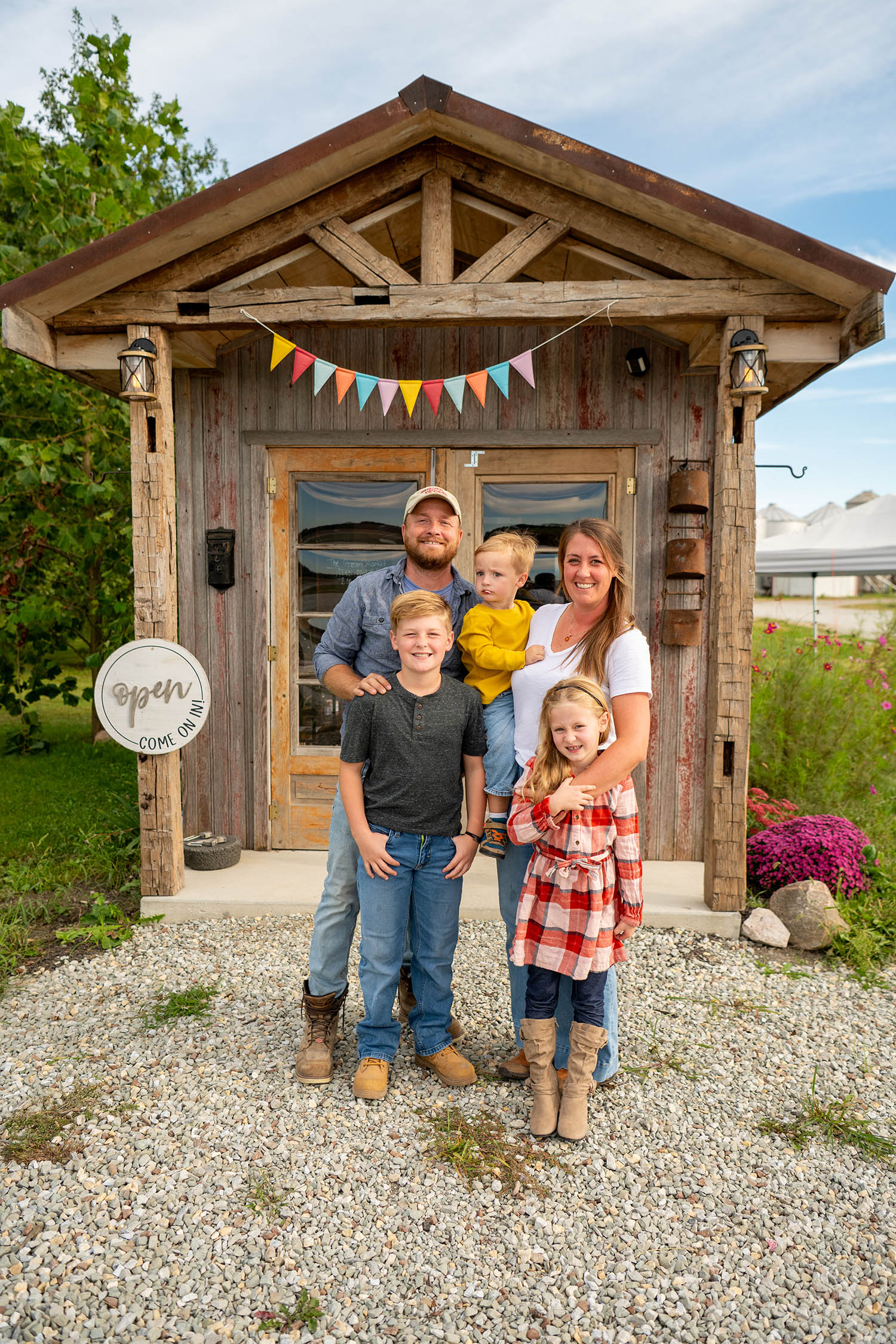
The Michalkes support other local farms with The Granary, a roadside market that sells items such as honey, lavender products, and freezer meats.
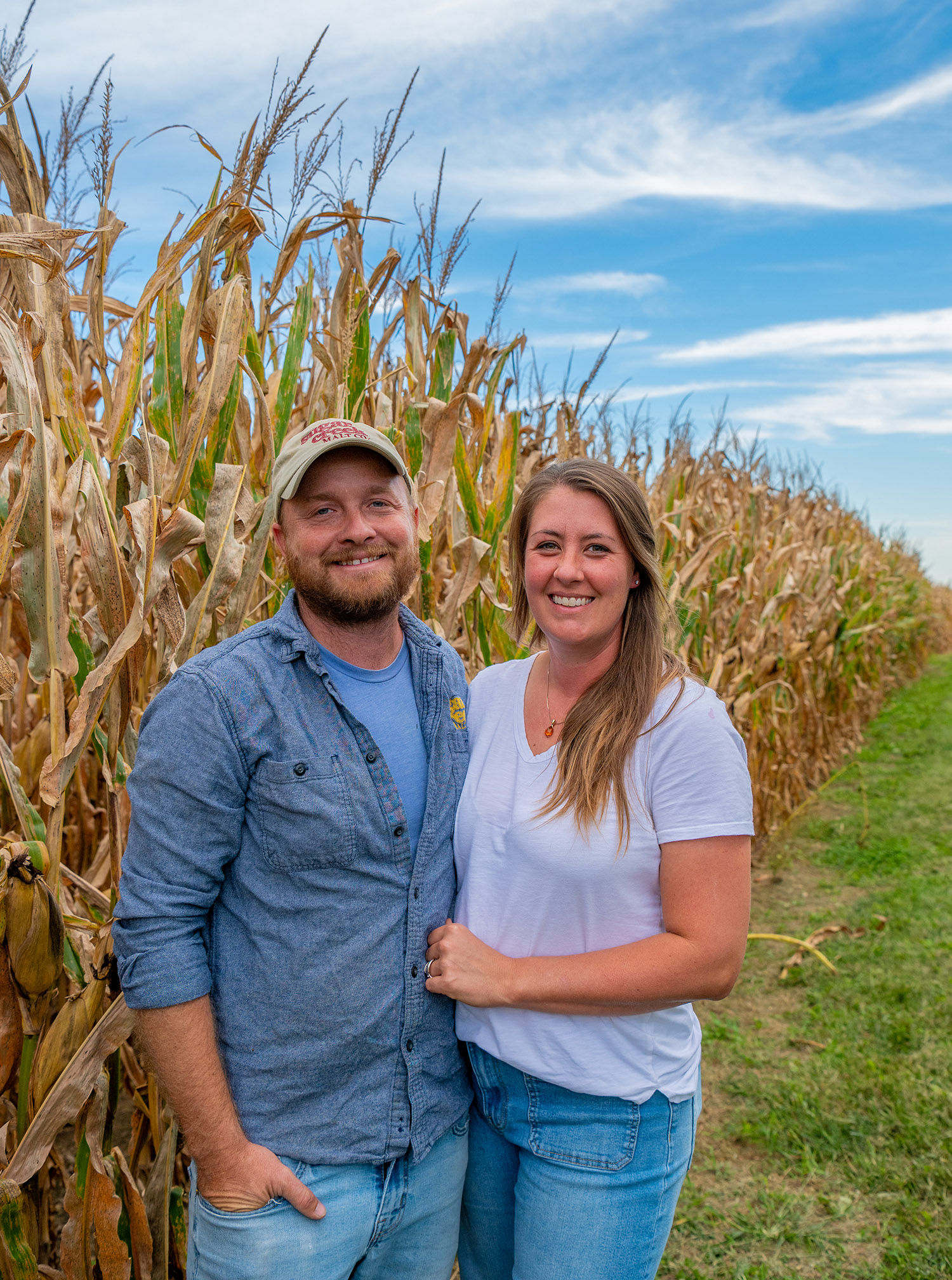
High school sweethearts, Caleb and Whitney, are fully focused on the farm business after spending a few years teaching.
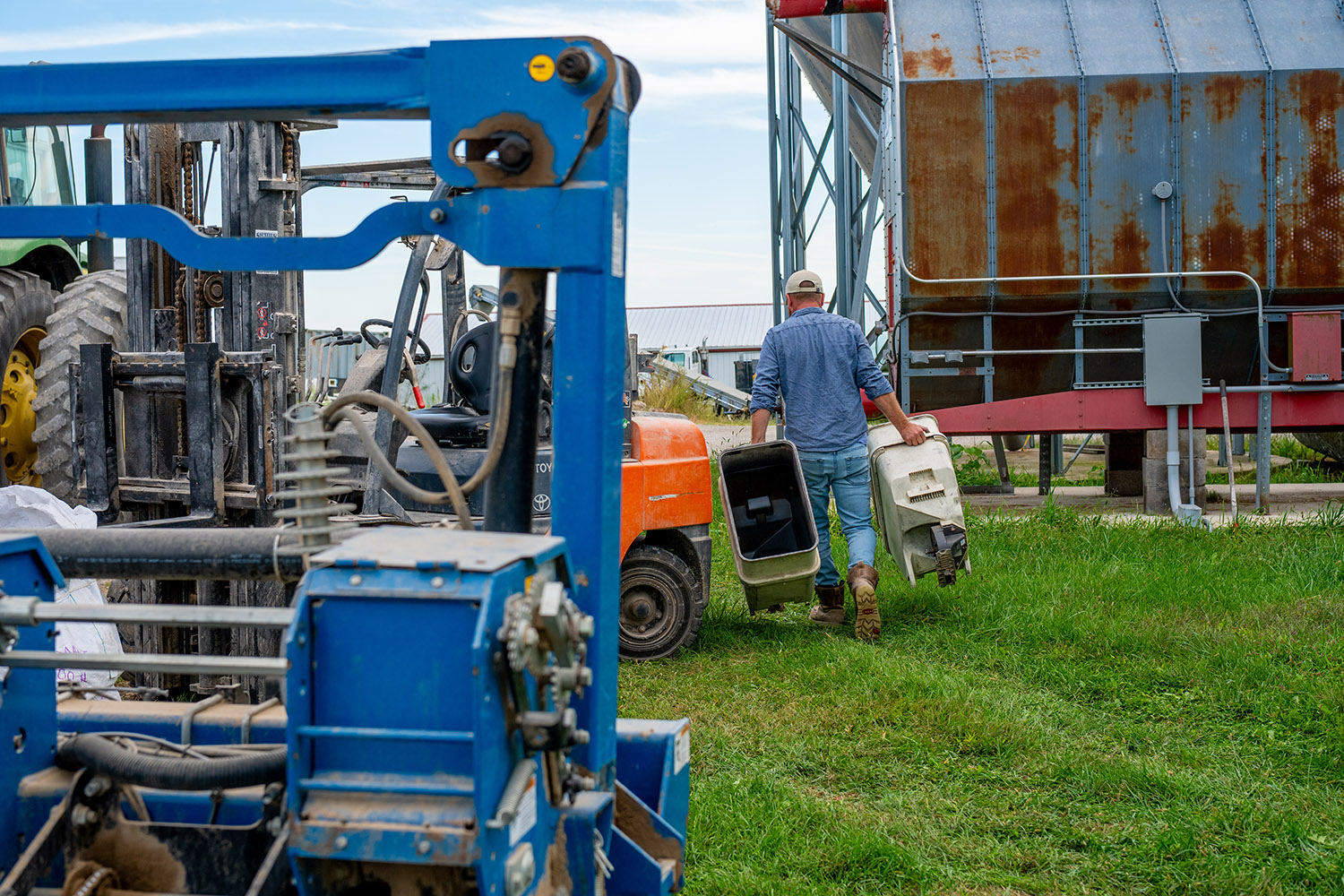
All of the farm’s equipment is powered by electricity from Boone Power, their electric cooperative.
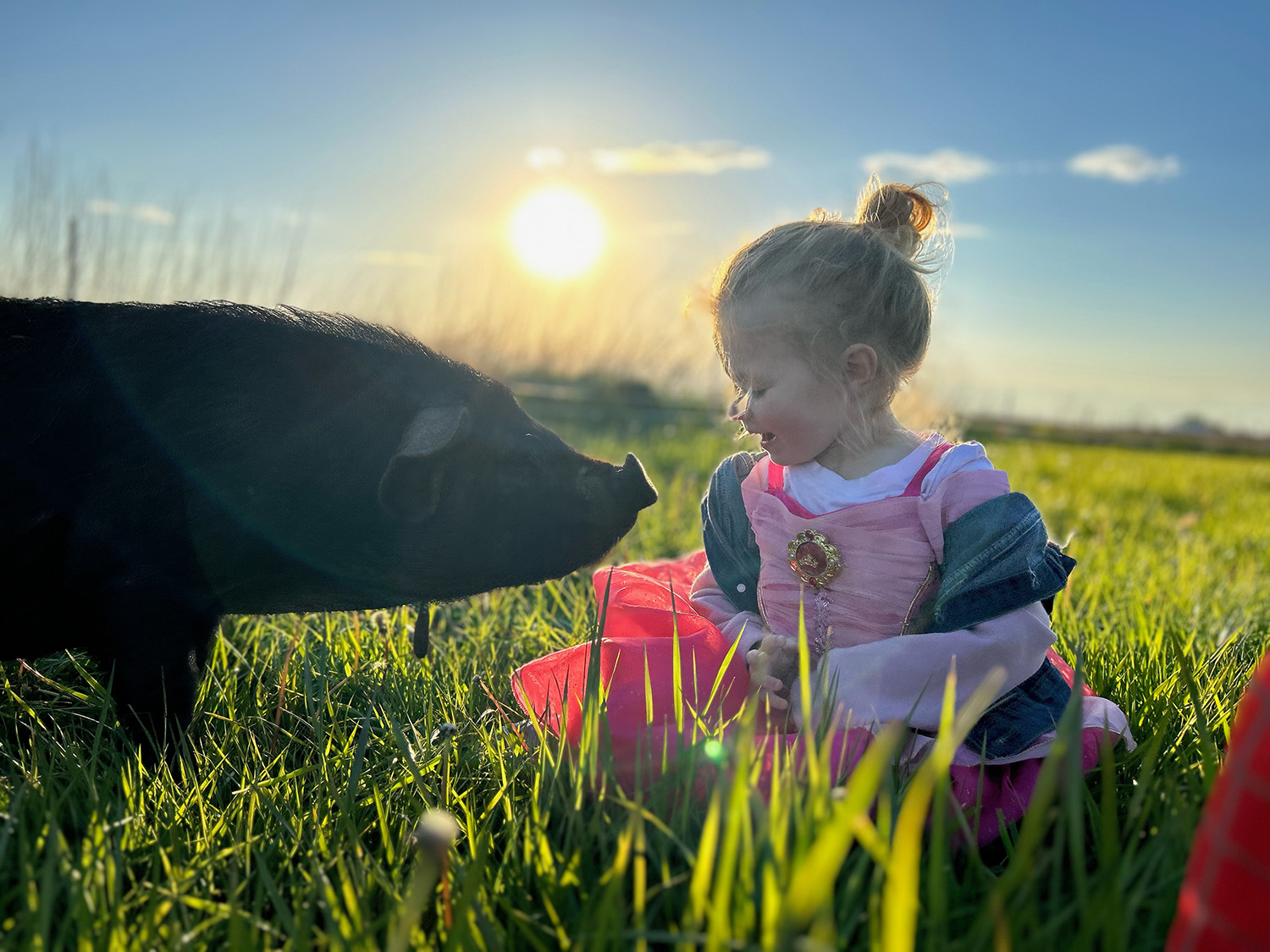
The Michalke’s daughter, Maris, sits with one of their heirloom hogs.