BY MIKE LUNSFORD
If there is a tree that foretells autumn before all others, it’s the buckeye. Their once-hearty compound leaves yellowing and frail, and in many instances, already carpeting the forest floor by late September, buckeye trees seem to give up the ghost early.
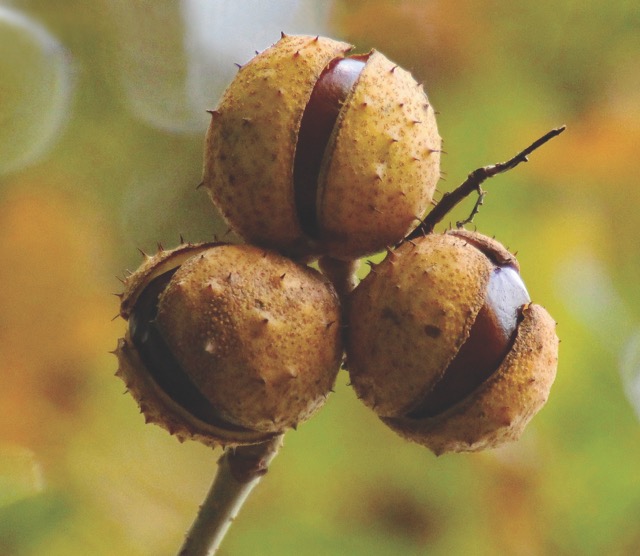
It’s the buckeye’s fruit, of course, that becomes the center of attention this time of year. All at once, it seems, buckeyes, for months hidden inside their knobby and spiked butternut-yellow hulls, drop to the ground as mid-fall still carries its summer heat.
Once down, like paw paws before them, they are snatched up by deer and squirrels and the occasional groundhog. Since I have plenty of buckeye trees in my woods, I often beat the rush, shaking the lowest-hanging limbs so I can collect a few prizes before they disappear. Some of the hulls burst along their seams upon impact with the hard ground or simply split after a day or two to dry. Inside the hulls, I nearly always find a pair of moist buckeyes, sometimes three, nestled together, fraternal more than identical twins.
Old-timers used to believe that a “buckeye in your pocket” was a source of good luck; many others believed in their ability to ward off rheumatism or cope with the pain of gout. It’s been said that carrying buckeyes — named for their resemblance to a deer’s eye — makes it safer to travel and luckier to gamble. I just think they are so unique as to merit attention, so I air some of them out to keep in an old canning jar, while others are left on window sills and desktops, just something to collect along with rocks, shells, and fossils.
Indiana’s buckeyes are the product of the “Ohio Buckeye Tree.” According to my old friend, the late Marion Jackson, whose field guide, “101 Trees of Indiana,” is essential reading for nature enthusiasts, buckeyes rarely survive in the canopy of other trees but prosper along roadsides and in fencerows. Its wood, lightweight and lacking durability, isn’t worth much, yet it was once used to make artificial limbs.
A second name, “stinking buckeye,” comes from the “offensive odor” it gives off when its leaves or bark are bruised.
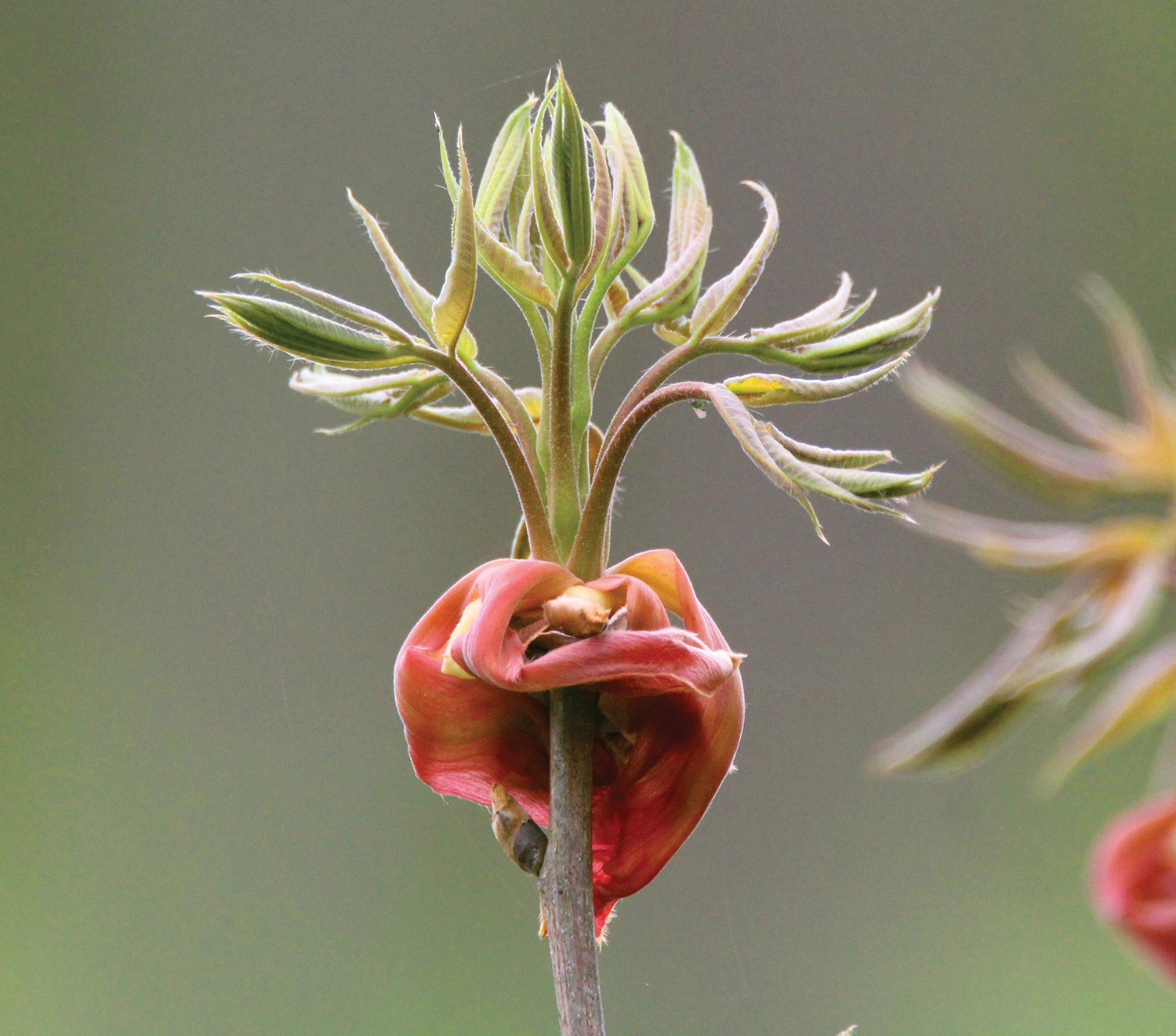
Although this may not be the time of year to mention it, I first notice buckeye trees in springtime. Their budding saplings — often at eye level — produce a most exotic bloom, their yellow-green flower clusters attracting scores of bees. But soon enough, buckeyes turn to the business of producing those “chocolate-colored seeds,” toxic to us, but highly prized nonetheless.