The urge to go outside and pick a few spring flowers is strong as we move away from winter.
Some people are reluctant to cut spring bulbs because it removes a lot of color from the landscape. Wanting to cut spring flowers for indoor enjoyment is as good a reason as any to throw a few more tulips and daffodils in the ground every fall.
The aforementioned tulips and daffodils are the most popular bulbs to be planted. When planting them, select varieties that bloom early, mid- or late season. Not only does this extend beauty in the landscape, but it also provides more opportunities to bring that beauty indoors.
Look for unopened flowers
With tulips, daffodils, and other spring bulbs, cut the flowers while the buds are formed but tightly closed. Snipping flowers before they fully open extends their life in a vase.
Mornings are the best time to cut flowers. Be sure to cut only the flower stem. The plant’s leaves need to stay attached until they turn yellow, brown, and fall flat. This allows the leaves to replenish the underground bulbs for next year’s flowers.
Make the cut at a 45-degree angle. The stem’s angle provides more surface for water uptake. Stems sitting flat on the bottom of the vase have limited water uptake. Remove any leaves attached to the stem.
It’s alive!
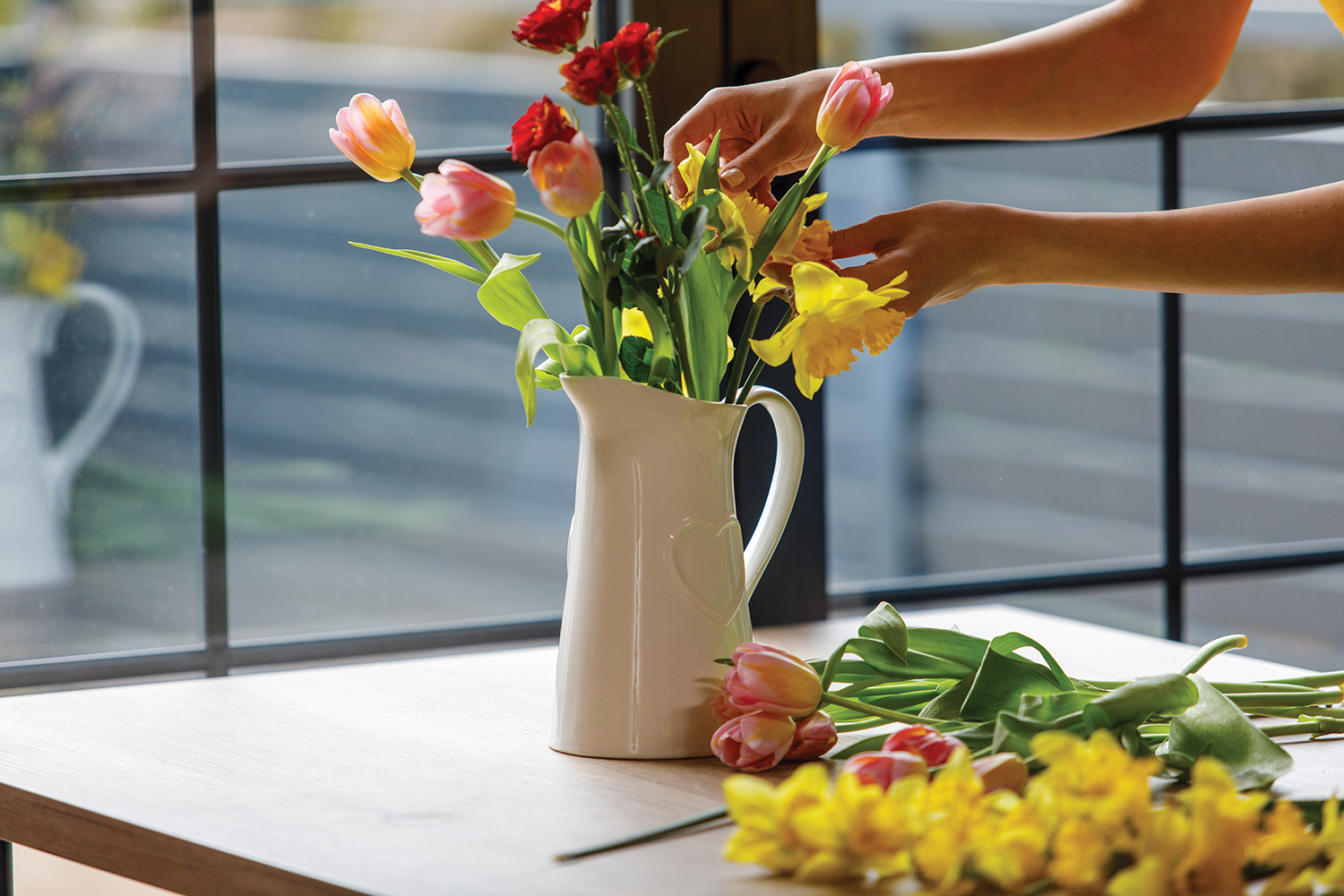
Tulips have an interesting growing habit. In the vase, the flower opens during the day and closes at night. Tulips also continue to grow or stretch toward the light, even when cut and in the vase.
When cutting spring bulbs we must contend with killer daffodils. Gardeners already know daffodils are toxic to animals, which is why they rarely bother the bulbs or the flowers.
Killer sap
Daffodils emit a toxic sap called mucilage which can clog the stems of companion plants, preventing
them from taking up water. Avoid this by changing the water in a vase of mixed flowers every day.
Or, when the daffodils are first cut, place the stems in cool water overnight. This draws the mucilage out. The next morning, discard the water and rinse the stems of the daffodils. Add the daffodils to your vase of mixed flowers.
Place the vase in a cool area away from direct sun or heat. Change water every few days. As a stem begins to die, pull it from the vase, recut the remaining stems and refresh the water. Be sure to take a whiff. Many tulips and daffodils are fragrant.
Jo Ellen Meyers Sharp, a member of Garden Communicators International, blogs at hoosiergardener.com