
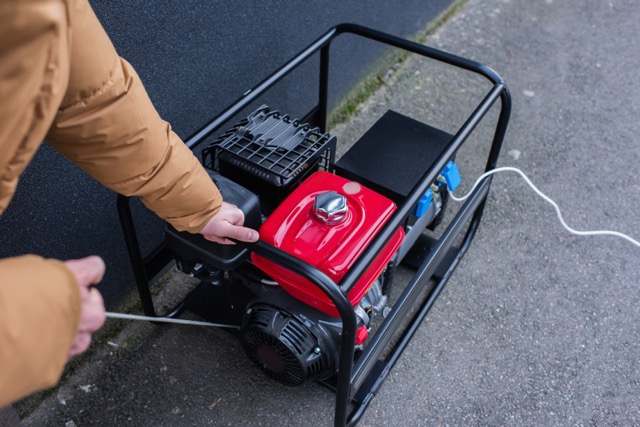
When preparing for winter weather, many homeowners rely on whole-house and portable generators to power their homes in the event of a long-term power outage. While these generators are great resources for your home, there are three major risks that you should consider.
Risk 1: Carbon Monoxide Poisoning
To prevent carbon monoxide (CO) poisoning, keep generators outdoors, away from doors, windows, and vents that could allow CO indoors. CO can’t be seen or smelled. If you start feeling sick, dizzy, or weak while using a generator, get to fresh air immediately and call for assistance. To better prepare your home, install CO
alarms in central locations on every level of your home and outside sleeping areas.
Risk 2: Electrocution or electric shock
Water and electricity do not mix, which stands true with generator safety. To avoid electrocution, do not use them in wet conditions to prevent electric shock.
Before plugging in a generator, check that the cord is undamaged and the plug has all three prongs, especially a grounding pin.
Never plug a stationary generator into a wall outlet to keep utility workers, neighbors, and household members from electrocution dangers. This process is called “backfeeding” and can be deadly to those nearby. Backfeeding sends power out through the main breaker to the transformer. It then converts it to volts and tries to energize local utility lines. Workers attempting to restore power might unexpectedly encounter this high voltage, which could cause fatal shock.
To prevent backfeed, have a professional install a transfer switch.
Risk 3: Burns and fire
It’s always a good idea to have an extra fuel source when utilizing a generator. Store fuel for the generator in an American National Standards Institute-approved container in a cool, well-ventilated place. Check the instructions or the label on the generator to determine what type of fuel to use. To guard against accidental fire, do not store it near a fuel-burning appliance, such as a natural gas water heater, in a garage.
Before refueling your gas-powered generator, turn it off and let it cool. Gasoline spilled on hot engine parts could ignite. Keep children and pets away as well. Many generator components are hot enough to burn you during operation.
Considering these three risks when installing or utilizing your home’s generator will help ensure the safety of you, your home, and others.
Generator dos and don’ts
DO operate a generator outdoors in an area with plenty of ventilation.
DO install CO alarms inside the home to provide an early warning of carbon monoxide.
DO NOT plug a generator into the wall without installing a transfer switch to prevent backfeed.
DO turn the generator on before plugging in appliances.
DO NOT touch the generator with wet hands to avoid electrocution.
DO turn off the generator before refueling with gasoline to allow it to
cool down.
DO NOT overload the generator.
DO use a heavy-duty, outdoor-rated extension cord rated at least equal to the sum of the connected appliances.
DO NOT use a generator as a permanent solution.